Reports are circulating that the Chinese Communist Party has urgently halted travel to the United States amid what some describe as growing internal unease.
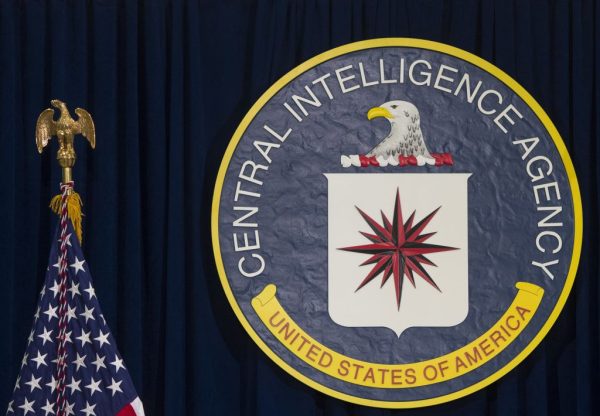
Last week, the U.S. Central Intelligence Agency released its third recruitment video aimed at officials inside the CCP system. In the days that followed, discussion online suggested Beijing’s reaction went beyond routine countermeasures. Commentators described an atmosphere resembling a broad tightening of controls.
Within two days, a notice attributed to a Zhejiang-based university began spreading on Chinese social media. The document referred to a “severe situation regarding travel to the United States” and announced the immediate suspension of all student exchange programs to the U.S. It also pledged full reimbursement for non-refundable airfare and hotel costs.
The notice did not identify the institution. However, Zhejiang Province has only one university designated under China’s elite “985” program, Zhejiang University. Online users quickly concluded that it was the school in question. No public confirmation has been issued, but the reaction online was swift.
Commenters from other provinces asked whether government-sponsored study programs, overseas conferences and exchange scholar placements would also be halted. One user from Hebei questioned whether even full scholarship recipients would be prevented from departing. A commenter from Henan replied: “I received a full scholarship, but now I’m not allowed to go.”
Success
You are now signed up for our newsletter
Success
Check your email to complete sign up
Some online observers described the decision as an example of what they called the “Prisoner A effect,” a term used to characterize what they view as heightened defensive reactions to U.S. intelligence outreach. The university’s willingness to absorb financial losses led some to speculate about broader restrictions. “Is this the beginning of closing the country?” one comment read.
CIA message and speculation over conflict
The timing of the reported suspension has been widely linked to the CIA recruitment video targeting military officers and insiders within the system.
One line in the video drew particular attention: “Those who have never experienced the flames of war are eager to send us to the battlefield.” Online commentators interpreted the message as both psychological pressure and a signal of U.S. strategic assessment. Some speculated that U.S. intelligence may believe Beijing is considering military action involving Taiwan or the South China Sea, possibly as a way to deflect rising domestic strains.
Against that backdrop, restrictions on student travel are viewed by some analysts as serving more than a protective function. While framed as safeguarding students, they may also limit the overseas movement of elite families at a sensitive moment. The measures, in this view, reduce intelligence risks while keeping key individuals and assets within China’s borders.
Observers outside China have warned that, for citizens hoping to emigrate, the present moment could represent a narrowing window.

Exit controls on officials tighten
Beyond universities, discussion has focused on expanding exit controls for officials.
Hu Liren, a former Shanghai entrepreneur, said in a recent livestream that customs enforcement has reached an unprecedented level of strictness. He said measures introduced under the banner of anti-corruption have in practice become a mechanism for tighter political control.
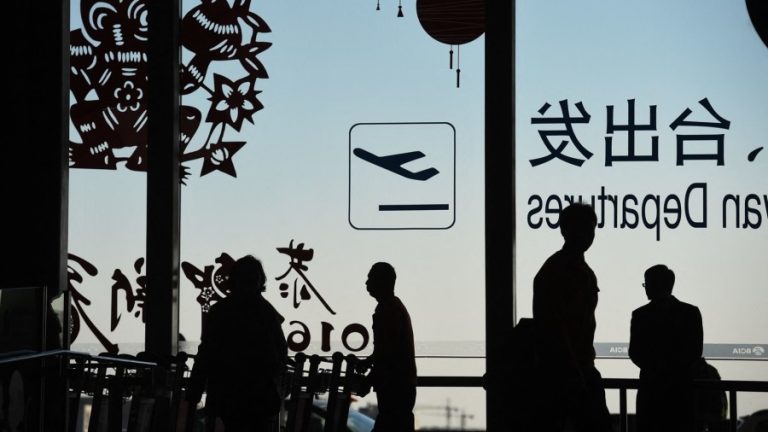
According to Hu, customs systems are integrated with databases maintained by public security authorities and the CCP’s Organization Department. Fingerprint scans immediately reveal whether a traveler is a civil servant, an executive at a state-owned enterprise, or an employee with formal establishment status in sectors such as healthcare or education. Once identified, such individuals are stopped from leaving the country.
Hu described the current enforcement approach as “better to wrongly stop a thousand than to let one go.”
Those intercepted, he said, not only lose the ability to travel but also face notification of their work units and extended political review. The previous practice that allowed some officials to travel abroad once per year has, he claimed, effectively ended.
Hu also cited what he described as a recent sweep of a central state-owned enterprise, in which 53 officials were detained. He estimated that roughly one million officials were investigated last year, involving assets totaling approximately $1.5 trillion. He alleged that these funds did not enter the state treasury but instead flowed into what he called a “Xi family dynasty” fund pool. Confiscating the assets of a single official, he said, could generate 50 million yuan, making it a rapid source of revenue.

Southeast Asia sees increased interest
Hu said that amid tightening controls, a sense of foreboding is spreading within parts of the official class. Some officials, he claimed, privately remark that “this may be the last New Year we spend outside prison.”
He cited data indicating that registrations for travel to Southeast Asia, particularly Thailand and Cambodia, have risen by 30 percent to 50 percent this year. He characterized the trend not as leisure travel but as strategic preparation. Officials and middle-class families are, in his account, seeking investment pathways and retirement visas while they remain available.
New communities of recent Chinese arrivals have emerged in parts of Cambodia, reflecting what he described as precautionary relocation. Those moving assets abroad, he said, fear that if borders tighten further, wealth and status within China could be vulnerable in future political campaigns.
A shift toward tighter closure
From the reported suspension of U.S. exchanges at Zhejiang University to expanded fingerprint-based border checks for officials, the developments have been interpreted by some observers as components of a broader shift.
What appears in isolation as scattered news items is, in this reading, part of a larger transition toward a more restrictive national posture.
For segments of China’s elite and politically attentive citizens, the sense that external channels are narrowing has become increasingly pronounced.
By Chen Jing
(The article represents only the author’s personal position and views.)