The U.S. Supreme Court ruled 6-3 on Feb. 20, 2026, that President Trump’s sweeping global tariffs imposed under the International Emergency Economic Powers Act were unconstitutional. The administration moved within hours to replace them, invoking Section 122 of the Trade Act of 1974 to impose a 15 percent global levy, while launching expedited trade investigations to build a more durable tariff framework. Analysts warn, however, that the ruling has shifted leverage ahead of Trump’s planned visit to Beijing in late March, where CCP general secretary Xi Jinping is expected to push for concessions on Taiwan.
The ruling, in Learning Resources, Inc. v. Trump, held that the International Emergency Economic Powers Act does not authorize the president to impose tariffs. Chief Justice John Roberts, writing for the majority, said the law’s grant of authority to “regulate importation” could not bear the weight of a global tariff regime. “IEEPA contains no reference to tariffs or duties,” Roberts wrote, adding that no previous president had ever read the law to confer such power. The decision invalidated the sweeping “reciprocal” tariffs and the separate “trafficking” tariffs on China, Canada, and Mexico that the administration had imposed throughout 2025 using emergency declarations.
The White House responded the same day. Trump signed an executive order invoking Section 122 of the Trade Act of 1974, a provision designed for balance-of-payments emergencies that no president has previously used to impose tariffs. The initial rate was 10 percent on all imports worldwide, effective Feb. 24. The next day, he raised it to 15 percent, the maximum the statute allows. Treasury Secretary Scott Bessent said the move would result in “virtually unchanged tariff revenue in 2026.”
Section 122 tariffs expire after 150 days unless Congress extends them, setting a deadline of July 24, 2026. To build a more permanent replacement, the administration directed the U.S. Trade Representative to launch expedited Section 301 investigations into trading partners’ practices, using the 150-day window to construct a new legal foundation for long-term tariffs. U.S. Trade Representative Jamieson Greer said the ruling would not derail ongoing bilateral negotiations and that countries with existing deals would be expected to honor their commitments. Legal scholars have questioned whether Section 122’s balance-of-payments requirement is met, and further court challenges are expected.

Taiwan signed a trade deal eight days before the court voided its legal foundation
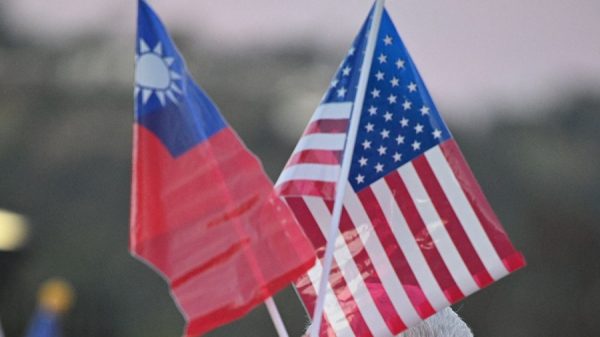
The ruling created immediate uncertainty for Taiwan’s trade relationship with the United States. On Feb. 12, just eight days before the Supreme Court decision, officials from Washington and Taipei had signed an Agreement on Reciprocal Trade, the most significant bilateral trade pact between the two in decades. Under the deal, Taiwan’s tariff rate under the old IEEPA framework was lowered from 20 percent to 15 percent.
Success
You are now signed up for our newsletter
Success
Check your email to complete sign up
With the IEEPA tariffs struck down, the legal basis underlying that agreement is now unclear. Greer told Fox News that countries with negotiated deals must honor their commitments even if the tariff framework has changed, meaning Taiwan could still be expected to uphold its side of the bargain while receiving no guaranteed benefit from the reduced rate it negotiated. The new 15 percent Section 122 tariff happens to match the rate Taiwan had bargained for, but it rests on a different, temporary, and potentially vulnerable legal authority.
Taiwan’s cabinet, the Executive Yuan, convened an internal meeting to coordinate its response. A cross-ministerial task force led by Vice Premier Cheng Li-chiun is reviewing the implications. Officials said Taiwan’s core objective is to preserve the benefits associated with most-favored-nation treatment, particularly regarding Section 232 tariffs on steel and aluminum, which the administration raised to 50 percent in 2025 and which were unaffected by the Supreme Court ruling.
Executive Yuan spokesperson Lee Hui-chih said preliminary assessments suggest the direct economic impact on Taiwan will be limited, since the effective tariff rate remains roughly where it was under the negotiated deal. The government is monitoring whether the existing reciprocal trade agreement and an investment memorandum of understanding should be submitted to the Legislative Yuan for formal review. Further steps will be announced once internal consultations are completed.
The ruling could shift leverage ahead of Trump’s Beijing visit
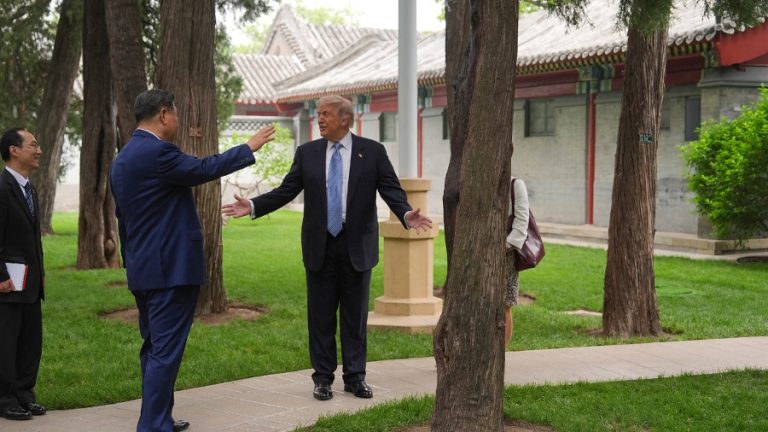
For Taiwan, the most consequential effect of the ruling may be geopolitical rather than economic. Trump is scheduled to visit Beijing from March 31 to April 2, his first trip to China since 2017. CCP general secretary Xi Jinping is also expected to make a state visit to Washington later this year. Some analysts say the Supreme Court decision has complicated Trump’s negotiating position heading into the summit.
Wendy Cutler, a former U.S. trade representative and senior vice president at the Asia Society Policy Institute, told CNBC the ruling constrained the administration’s signature economic policy tool. During a phone call earlier this month, Xi told Trump that Taiwan is the “most important issue” in U.S.-China relations, a framing that overshadowed the commercial deals Trump touted at the time, including Chinese purchases of American energy and agricultural products.
Minxin Pei, a professor of political science at Claremont McKenna College, told CNBC that Xi might be “open to giving Trump a better commercial deal” in exchange for a statement on Taiwan that Beijing could claim as a victory. The administration’s rapid pivot to Section 122 and Section 301 authorities suggests it intends to maintain trade pressure through alternative legal channels, but the 150-day expiration on the current tariff creates a window of uncertainty that Beijing may seek to exploit.

Taiwan’s opposition parties demand answers on the trade agreement’s status
In the Legislative Yuan, Taiwan’s parliament, the opposition Kuomintang called on the government to clarify whether the Feb. 12 reciprocal trade agreement retains substantive legal effect under the new U.S. tariff framework. The party urged the administration to reassess potential consequences for industry and employment, explore the possibility of resuming negotiations with Washington to protect export sectors, and engage industry representatives through parliamentary channels in formulating countermeasures.
Huang Kuo-chang, chairman of the Taiwan People’s Party, said the Supreme Court ruling had altered the legal basis underlying the agreement and urged President Lai Ching-te and the prime minister to outline a clear response strategy. Huang called for the government to consider whether revisions to the agreement are warranted, taking into account the interests of domestic industries, labor groups, farmers, and fishermen. Party legislators called on the administration to specify how it intends to respond to the new U.S. tariff mechanism and to mitigate risks from continued policy uncertainty.
The broader picture for Taiwan is one of layered exposure. The Section 122 tariff expires on July 24 unless Congress acts. The Section 301 investigations the administration has announced could produce new, potentially higher, country-specific tariffs that replace it. Section 232 tariffs on steel and aluminum remain in full force at 50 percent. And the reciprocal trade agreement Taiwan signed just days ago may or may not survive the legal transition in Washington.
Taiwan’s export-oriented economy, which sends roughly 15 percent of its goods to the United States, depends on stable trade terms with Washington. The government’s immediate task is to protect its trade interests, maintain industrial stability, and preserve negotiating space as U.S. trade policy shifts to new legal authorities. The deeper concern for Taipei is strategic: the possibility that Beijing uses the period of transition to press for concessions on Taiwan at the upcoming summit, trading commercial sweeteners for political ground on the issue Xi has called the most important in the relationship.
By Dong Fang