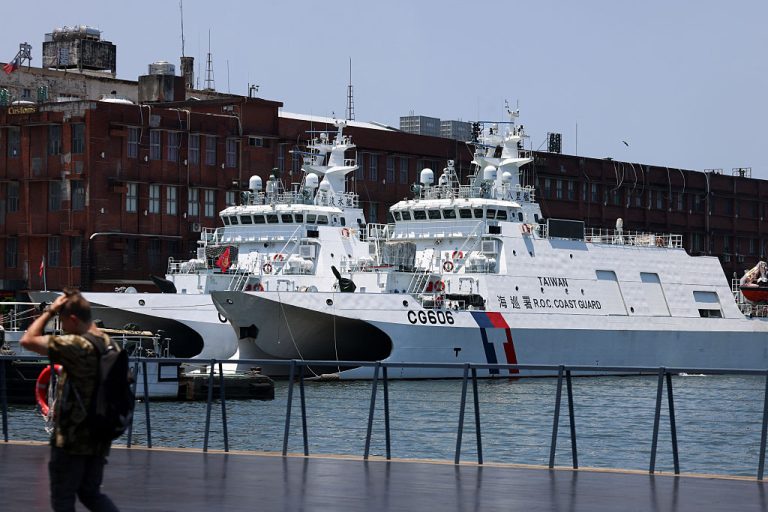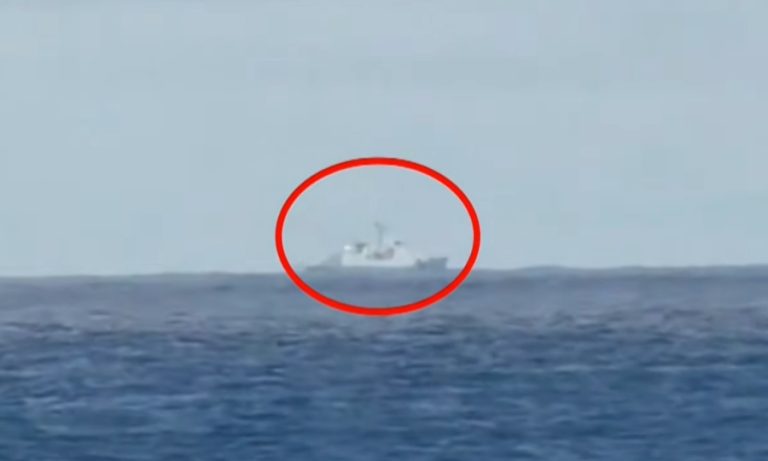
Chinese Coast Guard vessels have recently conducted several days of so-called “law enforcement patrols” in waters east of Taiwan, intercepting and questioning international vessels and claiming to carry out so-called “corrections” of illegal activities.
British experts warned that the Chinese Communist Party (CCP) is preparing the groundwork to isolate Taiwan and surrounding waters, posing a threat to maritime trade and security across the Indo-Pacific region.
According to a commentary published by the British think tank Royal United Services Institute (RUSI) on July 8, the CCP’s activities in the Western Pacific are threatening the maritime trade in the Indo-Pacific.
The commentary authored by Philip Shetler-Jones, Senior Research Fellow for Indo-Pacific Security at RUSI; Caroline Tuckett, Associate Fellow for International Security at RUSI and a former officer in the Royal Navy and Peter Olive, a retired Royal Navy Commodore warned recent Chinese activities in Taiwan’s eastern waters should no longer be viewed simply as a continuation of previous patterns of behavior because the targets of the CCP’s so-called “law enforcement” activities are no longer limited to Taiwanese vessels, and because such operations have expanded from the Taiwan Strait to waters east of Taiwan.
The CCP intends to reshape regional and international maritime norms, making its activities in waters east of Taiwan a potential “watershed moment.” The CCP’s actions in the area indicate that it is preparing for a strategy of “quarantine”, said the experts.
Success
You are now signed up for our newsletter
Success
Check your email to complete sign up
‘Quarantine’ as a gray-zone strategy
“Quarantine” differs from “blockade,” according to them, which typically requires the deployment of naval forces. A “quarantine” operation would likely be led by the Chinese Coast Guard and would be presented publicly as a matter of “law enforcement” rather than an attempt to initiate armed conflict.
Beijing uses the banner of “law enforcement” because this approach can reduce international concern and the likelihood of outside intervention. Once the situation enters the realm of “lawfare” (legal warfare), Taiwan may not necessarily hold an absolute advantage.
The experts further stated that because the CCP claims sovereignty over Taiwan, it could portray a “quarantine” operation as a matter of “China’s internal affairs.”
Although a “quarantine” operation would not yet amount to a military invasion, they warned that it could still pose serious threats to Taiwan’s society and economy, while pressuring Taiwan to negotiate arrangements with Beijing—an outcome that would be highly advantageous for the CCP.
The CCP has been implementing this strategy for a long time
In reality, the CCP has been laying the groundwork for using “quarantine” as an alternative to invasion for some time. In 2021, Beijing began establishing the necessary legal framework to facilitate such a strategy, granting the Chinese Coast Guard authority to assert sovereignty and jurisdiction over waters surrounding Taiwan and broader maritime areas, including the ability to regulate international commercial shipping.
In 2023, the CCP transformed its legal claims into concrete actions by exercising so-called “jurisdiction” over Taiwanese commercial vessels operating around Kinmen. During military exercises in 2024 and 2025, the Chinese military, maritime militia, and China Coast Guard conducted coordinated operations. In the first half of this year, the CCP deployed thousands of militia vessels to conduct real-world simulations aimed at disrupting sea routes between Japan and Taiwan.
The British experts warned that a CCP “quarantine” of Taiwan would severely impact the global economy, drawing significant attention from media outlets, experts, and scholars.
It noted that disruptions and interference affecting global shipping have become increasingly “normalized” in recent months. The recent disruptions in the Strait of Hormuz were cited as one example. They suggested that Beijing may view this environment as providing a favorable “cover” that could reduce the risks associated with its own maritime actions.
Such disruptive operations were previously considered taboo by the CCP because Beijing sought to avoid international criticism and because China itself remains highly dependent on global trade.
READ MORE:
- Taiwan to Open Representative Office in Phoenix, Strengthening Taiwan–US Partnership
- Taiwan Wins Global Anti-Money Laundering Award for Prince Group Investigation
- Taiwan Investigates Attack on Akio Yaita as Possible Case of Transnational Repression
A ‘quarantine’ of Taiwan would hurt Beijing
On the other hand, some analysts have argued that implementing a “quarantine” or “blockade” around Taiwan would ultimately harm Beijing itself. Beijing would face “counter-quarantine” or “counter-blockade” measures from the United States and its allies, potentially causing a devastating collapse of China’s trade-dependent economy and even threatening the survival of the CCP regime.
However, they stated that recent developments indicate China’s economy has demonstrated resilience and improved its ability to manage supply-chain challenges. It cited China’s energy and material reserves during the Strait of Hormuz blockade as an example, noting that these reserves have so far withstood the pressure.
By contrast, they argued that Western countries and Indo-Pacific nations have comparatively weaker risk tolerance and preparedness.
They warned that Taiwan, other Indo-Pacific countries, and their partners outside the region must therefore recognize the urgency of the issue, accelerate preparations, and take timely action to prepare for potential changes in the regional security environment.
The European Union takes notice
The CCP’s recent activities in the Taiwan Strait and surrounding areas have also drawn growing attention from the European Union.
According to a report by Liberty Times, Taiwan’s Representative to the EU Hsieh Chih-wei (谢志伟) stated that the European Parliament’s plenary session on July 7 passed by an overwhelming majority a report titled: “Policy Recommendations on the Changing Geopolitical Situation in East Asia and the Need to Strengthen Cooperation with Like-Minded Partners in the Region.”
The report called for stronger cooperation with regional partners in response to evolving geopolitical challenges in East Asia.
Hsieh Chih-wei wrote in a Facebook post that the European Parliament has once again demonstrated its support for Taiwan and its strong commitment to peace and stability across the Taiwan Strait.
He noted that the report mentioned “Taiwan” 44 times and repeatedly emphasized the importance of robust cooperation among Japan, South Korea, and Taiwan for the European Union.
The report stated that “like-minded countries must strengthen cooperation with one another” and reaffirmed the importance of “maintaining peace and stability across the Taiwan Strait.” It also expressed opposition to any attempts to unilaterally change the status quo through coercion.