Henan province sits between the Yellow River and the Huai River, at the geographic and symbolic heart of Chinese civilization. Luoyang was an imperial capital. Kaifeng was the seat of the Northern Song. The CCP has always been eager to claim this heritage, weaving it into the Party’s insistence that China’s civilizational greatness and Communist rule belong to the same story.
The people of Henan know better. By the 1940s, a folk saying had distilled life on the Central Plains to four words: “water, drought, locusts, Tang,” shorthand for floods, famine, insect plagues, and the predatory soldiers of Kuomintang general Tang Enbo. After the CCP took power in 1949, the saying barely changed: “water, drought, lies, Party.”
In 2025, when Henan TV’s Spring Festival Gala cut to black mid-broadcast, the screen filled with a classical literary flourish: “the long night ends at last, the mountains and rivers under the bright moon.” Against what has actually happened in this province over the past seventy years, the words land as something closer to mockery.
The Great Chinese Famine: tens of millions dead, and the party made counting them a crime
Mao Zedong’s Great Leap Forward, launched in 1958, produced the worst famine in modern history. Official CCP figures have hovered near 20 million dead. Independent scholars, many of them Chinese researchers whose work was confiscated at home and published only abroad, put the toll far higher. Some estimates exceed 45 million, out of a population of roughly 800 million.
The CCP has never allowed a definitive accounting, and that absence is itself a form of control. When the scale of a disaster cannot be established, responsibility cannot be assigned. Every attempt to reckon with Mao’s legacy, with the Party’s fitness to rule, founders on this deliberately maintained void.
Success
You are now signed up for our newsletter
Success
Check your email to complete sign up
The city of Xinyang in southern Henan offers a close-up view of how the machinery worked. Xinyang became one of the famine’s most devastated areas, severe enough to draw rare intervention from Beijing. The provincial CCP’s explanation is instructive: official reports blamed the starvation on “class enemies” who had infiltrated local government and carried out “counterrevolutionary restoration.” Millions of people starving because of Party agricultural policy became, in the official record, an act of sabotage by hidden enemies.
Local officials took the fall. Death statistics were suppressed after senior cadres decided that continued reporting would harm the Party’s image. Mao acknowledged mistakes in general terms, but the system that produced the famine came through untouched. Admitting that the Great Leap Forward itself was the cause would have meant calling the Party’s central program a crime. So the regime sacrificed a few expendable cadres and preserved itself.
Jasper Becker’s Hungry Ghosts remains the most thorough English-language account. Internal CCP documents on the Xinyang incident, obtained years later, show how ruthlessly the Party policed even its own internal records.
The Jiao Yulu myth: how the CCP turned famine into a story about party virtue
After tens of millions starved, the CCP needed a different kind of story. It found one in Jiao Yulu, a county Party secretary in Lankao, Henan, who became a national icon after dying of liver cancer while fighting local poverty and land degradation. Films were produced. Radio broadcasts moved millions to tears. His dedication was genuine: he organized land reclamation, planted paulownia trees to hold eroded soil, and begged peasants not to abandon their villages.
Lankao stayed poor for decades after his death. What finally brought improvement was the household responsibility reforms of the late 1970s, which returned land-use rights to individual farmers and dismantled the collective farming system the Party had imposed. The saintly official changed nothing. Reversing the Party’s own policies did.
Early official accounts of Lankao’s suffering were later edited to emphasize Party virtue and play down systemic failure. One man’s sacrifice became a way to avoid confronting a system that had killed on a staggering scale. Meanwhile, a local official later confessed to fabricating harvest numbers in 1958, inflating production reports to please superiors, the very practice that led to mass starvation across Henan. The structure rewarded obedience and crushed honesty, so the lies traveled upward while the food vanished.
Hu Yaobang, the reform-minded CCP general secretary forced out in 1987 for sympathizing too openly with student calls for political liberalization, learned the same lesson at a much higher level. There is a ceiling on integrity inside the Party, and the Party decides where it sits.
The Banqiao Dam collapse: over 200,000 dead, erased from Chinese memory
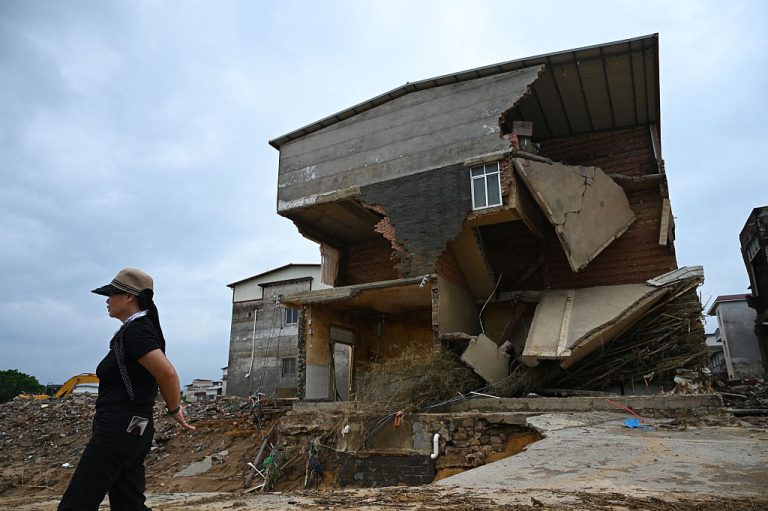
In August 1975, Typhoon Nina brought catastrophic rainfall to southern Henan. The Banqiao and Shimantan dams failed one after the other. Walls of water tore through counties, leveling villages and destroying rail lines. Tens of thousands spent the night in treetops, waiting for rescue that in many cases never arrived. International estimates put the combined death toll from flooding, subsequent famine, and epidemics above 200,000, making it one of the deadliest infrastructure disasters ever recorded.
The CCP suppressed the story almost entirely. Official casualty figures stayed artificially low. Public discussion was restricted for decades. Most Chinese citizens born after 1980 have never heard of it. Over 200,000 people died, and the Party simply removed the event from the national memory.
A story that has circulated among insiders for years illustrates the distance between the CCP’s self-image and its conduct. During the night of the flooding, the son of Ji Dengkui, then a member of the Politburo, the CCP’s innermost decision-making body, reportedly tried to reach Deng Xiaoping by phone for emergency instructions. Deng, who held effective power over the government, was allegedly unavailable because he was playing mahjong. True or apocryphal, the story endures because it captures something real about how fragile the Party’s mythology of selfless leadership actually is.
Tiananmen 1989: the massacre that locked in authoritarian rule
When Hu Yaobang died in April 1989, the memory of his forced resignation and the political reform he had represented turned grief into protest. Student demonstrations spread from Beijing to cities across China.
Then, during a state visit by Soviet leader Mikhail Gorbachev, CCP General Secretary Zhao Ziyang made an extraordinary admission on live television: Deng Xiaoping, despite holding no formal leadership title, remained “at the helm” of all major decisions. In a system that depends on concealing where power actually resides, this public revelation was devastating. The broadcast reached an international audience and could not be undone. The CCP’s fiction of collective leadership was exposed.
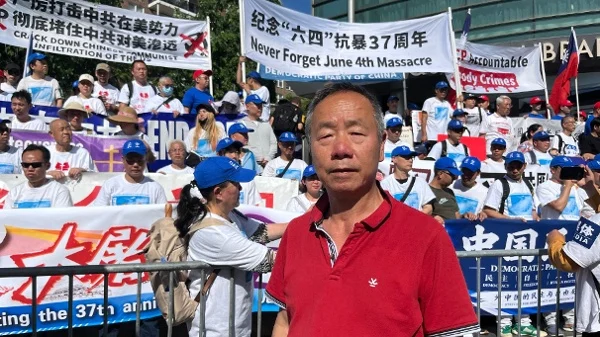
In early June, troops entered Beijing. Soldiers opened fire on unarmed civilians. The death toll from the Tiananmen Square massacre has never been established because the CCP has never permitted an independent investigation, and the Party has spent every year since working to erase the killings from Chinese public life.
Zhao Ziyang was stripped of all positions and confined to house arrest for the remaining fifteen years of his life. His name disappeared from official Party history. The Tiananmen Square massacre closed the door on political reform in China. The authoritarian system that hardened in its aftermath governs the country today.
Prosperity as anesthesia: the CCP’s post-Tiananmen bargain
After the Tiananmen Square massacre, the CCP faced a legitimacy crisis and answered it with a transaction: material improvement in exchange for political silence.
Hong Kong commentator Tao Jie once described a glittering Christmas tree “made in China,” hung with the severed limbs of the migrant workers who assembled it in dangerous factories. The image is brutal, but it captures a prosperity that has never been separable from the human cost of producing it.
Deng Xiaoping is widely quoted as saying, “as long as their days get better, they will forget everything.” Whether or not the words are exact, the logic they express has governed the CCP’s relationship with its own history for decades. Economic growth as anesthesia. Consumerism in place of accountability.
The Yellow River loess remains, layer upon layer. The CCP’s prosperity sits on the surface. Underneath lie the Great Famine, the Banqiao dam collapse, the Tiananmen Square massacre, and questions the Party has spent seventy years making sure nobody can answer.
The views expressed are solely those of the author.
By Su Xiaokang