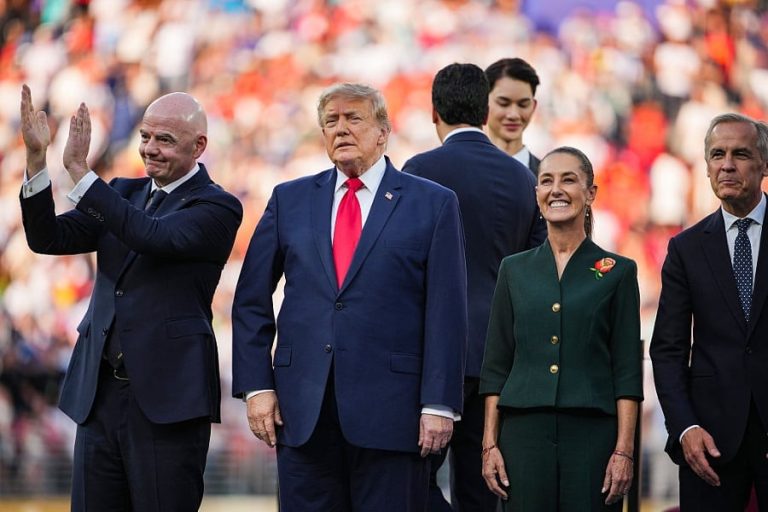
On Feb. 24, during the annual State of the Union address, President Trump announced a new economic plan aimed at significantly expanding financial planning and savings opportunities for American workers, particularly those without current retirement plans or employer-matching programs.
“My administration will provide these forgotten American workers with the same retirement plans as every federal employee,” Trump said in his speech. “We will match up to $1,000 annually for your savings.”
Cracking down on insider trading: Trump focuses on Congress and Wall Street
This was Trump’s second State of the Union address, during which he also called on Congress to strengthen self-regulation, ban stock trading based on nonpublic information, and emphasized that financial and criminal regulators would enforce the rules.
Trump proposed the Stop Insider Trading Act, which would strictly limit stock trading by members of Congress and their families, clarify exemptions, and increase penalties for failing to report stock holdings and trades.
“While ensuring every American benefits from stock market gains, we must also ensure that Congress cannot profit from insider information,” Trump said. He mentioned former House Speaker Nancy Pelosi, causing a slight reaction in the audience.
Success
You are now signed up for our newsletter
Success
Check your email to complete sign up
Pelosi has long been under scrutiny due to her husband Paul Pelosi’s stock trades, though she has not been charged with any crime and denies wrongdoing. Similar issues have involved members of both parties and even Federal Reserve officials. In 2022, Federal Reserve Chair Jerome Powell signaled tighter investment rules.
Republican lawmakers previously proposed legislation under which violations could incur fines and, in serious cases, be referred to the Department of Justice. Multiple polls indicate that about 70 percent–90 percent of Americans support banning Congress members from trading individual stocks, one of the rare bipartisan ethics measures to gain widespread support in recent years.
Meanwhile, Democratic lawmakers have called for investigations into whether Trump’s own tariff policy reversals encouraged insider trading. ProPublica data show that several government officials and congressional aides executed precisely timed stock trades before tariff adjustments, legal under current rules but damaging public trust.
Since returning to the White House in 2025, Trump has also pardoned several allies convicted of financial crimes, including Republican Congressman Chris Collins, previously convicted of insider trading.
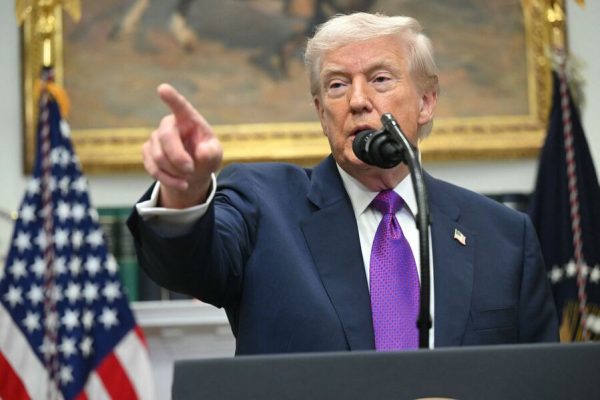
On retirement savings, Trump noted that about half of American workers have no retirement plan or employer-matching savings plan. Under traditional 401(k) plans, employees can save pre-tax income, with proportional employer matching.
BlackRock CEO Larry Fink warned last year that most people’s savings are far below what is needed for retirement, with an average need of around $2.1 million, while very few come close.
Trump linked retirement savings plans to stock market performance and emphasized the need to regulate congressional trading behavior.
How the new plan works and controversies
According to CBS, Trump said the new plan would cover roughly 56 million U.S. workers lacking employer-sponsored savings plans. He said it would be modeled on the federal employees’ Thrift Savings Plan, with the government providing up to $1,000 in matching funds annually.
The plan would expand on the Biden administration’s Secure Act 2.0 (2022), which allowed the federal government to provide up to $1,000 in 50 percent matching for low- to middle-income workers. Trump stated the new plan would resemble low-fee stock and bond fund investment accounts, giving workers fair investment opportunities.
However, experts question the plan’s financial feasibility and doubt it can fundamentally solve the retirement savings crisis. With or without employer accounts, U.S. workers’ retirement savings are generally insufficient. According to the National Institute on Retirement Security (NIRS), the median savings is only $40,000, while ideal retirement savings is around $1.5 million. Cato Institute policy director Romina Boccia argues that the U.S. needs simplified, universal savings accounts rather than additional tax-advantaged plans or subsidies.
U.S. Treasury Secretary Scott Bessent said the new plan would become an important component of the American retirement system and help alleviate financial insecurity.