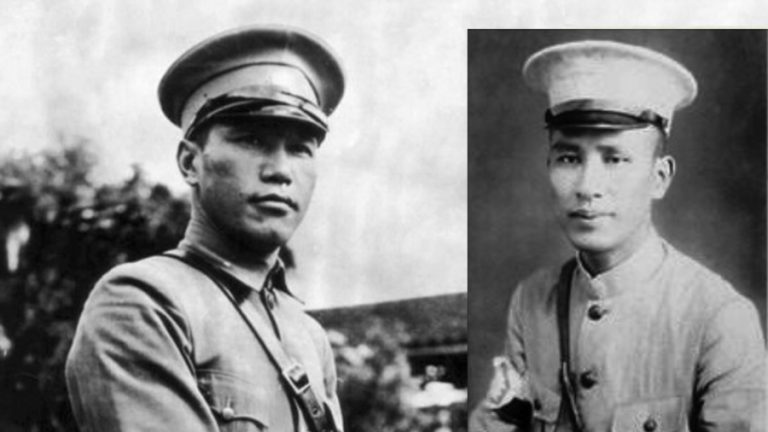
Commander-in-Chief of the Northern Expeditionary National Revolutionary Army Chiang Kai-shek ordered a party purge. Acting Chief of Staff and Shanghai-Garrison Martial Law Commander Bai Chongxi was tasked with carrying out operations against the Chinese Communist Party (CCP).
On April 12, 1927, Chiang Kai-shek, then commander-in-chief of the Northern Expeditionary National Revolutionary Army, ordered a party purge. Bai Chongxi, serving as acting chief of staff and Shanghai-Garrison martial law commander, was directed to conduct suppression operations against the CCP in the Shanghai area.
In March 1927, Bai had led Northern Expedition forces in defeating the main army of Beiyang warlord Sun Chuanfang, capturing Hangzhou and Shanghai. According to contemporary accounts cited by Kuomintang (KMT) sources, Zhou Enlai and other CCP leaders, with Soviet backing, sought to challenge Chiang’s leadership of the National Revolution, divide the National Revolutionary Army, and prepare for armed action. On April 12, Chiang issued the purge order, with Bai commanding operations in Shanghai. Six days later, Chiang established the National Government of the Republic of China in Nanjing.

Communist influence within the First Army
In early 1927, prior to the April 12 purge, workers’ picket corps organized by the CCP staged marches in Shanghai, publicly opposing Chiang’s Northern Expeditionary Army.
The Shanghai Workers’ Picket Corps operated under CCP leadership, with Zhou Enlai serving as deputy commander.
Success
You are now signed up for our newsletter
Success
Check your email to complete sign up
After Bai Chongxi entered Shanghai in March and established the Eastern Route Army’s Forward General Headquarters in Longhua, he ordered the Shanghai General Labor Union, which was aligned with the CCP, to halt strikes and demonstrations. He demanded that workers’ picket corps surrender unauthorized weapons and that CCP-affiliated plainclothes and special-action teams cease street activities.
Xue Yue, commander of the 1st Division of the First Army of Whampoa, who had longstanding ties with Ye Ting and Ye Jianying, defied Bai’s order. He publicly declared protection for the Shanghai General Labor Union and expressed support for the workers’ picket corps.
Kuomintang sources later accused the CCP of publicly backing the Northern Expedition while privately encouraging officers such as Xue Yue to resist Chiang and Bai. CCP records from March 1927 state that party leaders, including Chen Duxiu and Zhou Enlai, held special committee meetings in Shanghai. They assessed that Xue Yue was among the most left-leaning commanders and discussed mobilizing mass actions, including general strikes, to counter moves by Chiang and Bai.
CCP documents from that period record plans to recruit 1,500 workers to expand military ranks and to dispatch approximately 1,000 party members and sympathizers into the First Army. An internal intelligence assessment described Xue Yue as “half left and half right,” opportunistic in character, and potentially manageable through Zhou Enlai’s contacts.
Large-scale demonstrations followed. According to memoirs and party records, tens of thousands surrounded Bai Chongxi’s headquarters in Longhua, and confrontations intensified.
When reports circulated that Chiang intended to transfer the 1st Division out of Shanghai, Xue Yue contacted CCP officials in Shanghai and, according to later accounts, suggested detaining Chiang. Chiang subsequently inspected the First Army and concluded that communist influence had deeply penetrated its ranks. This reinforced his decision to proceed with a purge.
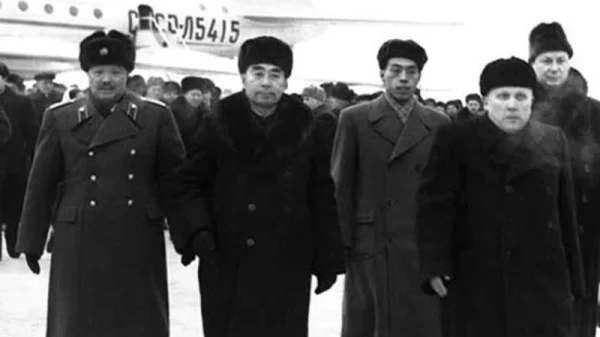
The United Front and internal struggle
The CCP had entered into a united front with the Kuomintang under the policy of “allying with Russia and accommodating the Communists.” Kuomintang accounts later charged that CCP members violated understandings reflected in the 1923 Sun–Joffe Manifesto, which stated that communist organizational structures and the Soviet system would not be transplanted wholesale into China.
Mao Zedong and Tan Pingshan joined the Kuomintang in their personal capacity. Others, including Ye Jianying, held posts within KMT institutions. By some KMT estimates, CCP members and pro-communist leftists accounted for roughly two-thirds of the combined membership of the Kuomintang’s Executive and Supervisory Committees at the time. CCP members also held significant positions within party headquarters and local KMT organizations.
As the Northern Expedition advanced, CCP representatives served within political departments of various armies. Of the seven armies that launched the campaign from Guangzhou, six reportedly had CCP members in political roles. Only the Guangxi-based Seventh Army under Li Zongren and Bai Chongxi restricted CCP participation and later expelled party members.
The Nanjing Incident and Soviet involvement
On March 24, 1927, violence broke out in Nanjing during the Northern Expedition. Foreign consulates, churches, schools, and residences were attacked in what became known as the “Nanjing Incident.” Kuomintang sources later attributed the unrest to CCP members acting under Comintern direction, citing figures such as Li Fuchun and Lin Boqu. Western governments lodged diplomatic protests and demanded compensation. Foreign warships gathered along the Yangtze River and in Shanghai.
On April 6, Zhang Zuolin’s forces raided the Soviet embassy in Beijing, arresting Li Dazhao and seizing documents said to include Comintern directives encouraging anti-foreign agitation, including the use of violent means.
Wuhan and opposition to Chiang
In March and April, tensions escalated between Chiang and the Wuhan-based Kuomintang leadership under Wang Jingwei. According to memoirs by Zhang Guotao and others, discussions took place within Wuhan circles about limiting Chiang’s authority and preventing him from establishing an alternative political center in Nanjing. Proposals to arrest Chiang were discussed but not implemented.
Tang Shengzhi and Zhang Fakui declared support for Wang. Other commanders, including Tan Yankai, Lu Diping, Zhu Peide, and Cheng Qian, shifted toward Wuhan. Anti-Chiang activity intensified in central China.
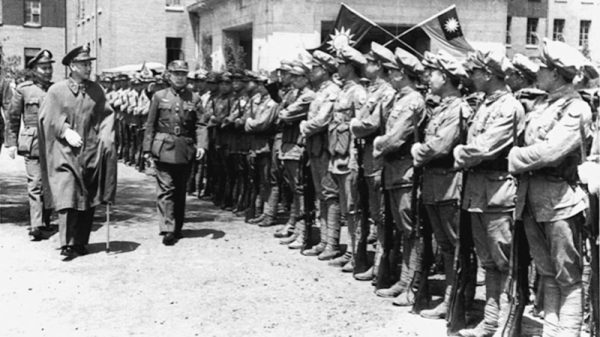
Guangxi leaders back Chiang
On March 19, following a Kuomintang plenary session in Wuhan, Wang’s faction attempted to appoint Li Zongren as Anhui provincial chairman, a move interpreted as an effort to draw him away from Chiang. Li declined. The following day, Chiang arrived in Anqing and personally appointed Li to the position; Li recommended another candidate.
As instability grew in Shanghai and Nanjing, Bai urged Li to move east. The Guangxi Seventh Army was ordered toward Nanjing. Facing stronger forces, Cheng Qian withdrew his troops from the region.
The Longhua meeting
Having visited the Soviet Union in 1923, Chiang had concluded that communism was unsuitable for China. In late March 1927, he summoned senior military and political figures to Shanghai. Wu Zhihui and other members of the Kuomintang Central Supervisory Committee proposed measures described as “protecting the party and saving the nation,” advocating the removal of CCP members from KMT ranks.
On April 2, Chiang convened a confidential meeting at Bai Chongxi’s headquarters in Longhua. Attendees included Bai Chongxi, Li Zongren, Huang Shaohong, Li Jishen, He Yingqin, and Supervisory Committee members such as Wu Zhihui and Li Shizeng.
Chiang stated that unless the party was purged and the central government relocated to Nanjing, the Kuomintang risked being overtaken by the CCP and the Northern Expedition would fail. Military leaders reported unrest and alleged CCP activities in their respective areas.
When Chiang asked for views on implementation, Bai Chongxi declared readiness to conduct suppression. Li Zongren proposed first securing Nanjing with the Guangxi Seventh Army and transferring unstable units away from key positions. Bai estimated that once major divisions were repositioned, operations in Shanghai could be completed within three days to one week.
Chiang appointed Bai as Songhu Garrison Commander and Songhu Martial Law Commander, authorizing him to oversee operations in Shanghai and surrounding areas.
Martial law and deployment
In early April, Bai redeployed forces to secure Nanjing and Shanghai, transferred or disarmed divisions considered pro-communist, and brought anti-communist units into Shanghai. Chiang removed division commanders Xue Yue and Yan Zhongliang from their posts.
On April 9, Chiang declared martial law in Shanghai and issued wartime regulations prohibiting strikes, assemblies, and demonstrations. Bai released a public notice warning that those inciting unrest would be punished under martial law.
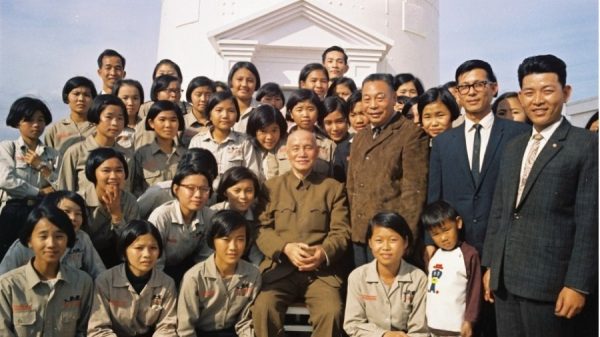
April 12 operations
On April 12, 1927, Bai ordered coordinated purge operations in Shanghai, Wuxi, Hangzhou, and Ningbo. Parallel actions were launched in Guangdong and Guangxi.
According to Bai’s later accounts and Kuomintang publications, National Revolutionary Army units searched Shanghai for CCP members and affiliated labor activists. With assistance from Green Gang figures including Du Yuesheng and Huang Jinrong, troops entered parts of the French Concession and raided CCP headquarters at the Commercial Press building. Bai later recalled negotiating with the French consul for passage.
CCP-affiliated offices and organizations were closed or taken over. More than 80 CCP-related institutions in Shanghai were dismantled. Within three days, Chen Yannian, Zhao Shiyan, Wang Shouhua, Xiao Chunu and others were executed. Hundreds were arrested, and thousands reportedly disappeared. Some leaders, including Zhou Enlai, escaped.
Following the Shanghai operation, similar actions occurred in other cities. The CCP shifted to underground activity.
Aftermath
Six days after the April 12 purge, Chiang established the National Government in Nanjing. The events marked the formal collapse of the First United Front between the Kuomintang and the Chinese Communist Party.
By Cang Hai