By Andrew Jensen, Vision Times
The diplomatic rift between Washington and Tehran is growing wider by the day.
The United States has demanded zero uranium enrichment in perpetuity, the dismantling of Iran’s remaining nuclear facilities, and the transfer of all enriched uranium out of Iranian custody. Iran, for its part, has declared its ballistic missile program non-negotiable and offered instead a temporary suspension of enrichment for three to five years before resuming at low levels — a proposal that effectively runs out the clock on the current U.S. administration.
Washington rejected that offer during the second round of negotiations on Feb. 17.
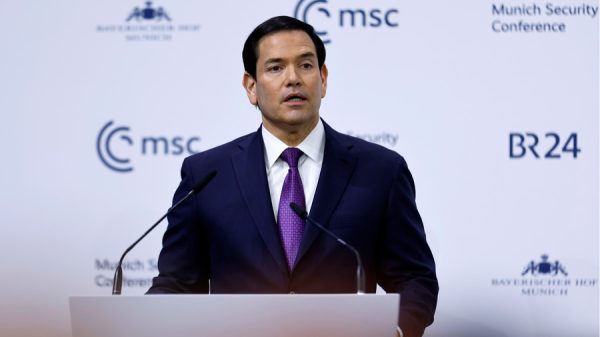
Over the past week, Secretary of State Marco Rubio has publicly laid the groundwork for the argument that diplomacy is nearing its limits. Speaking on Feb. 25, Rubio said that Iran “refuses to talk about ballistic missiles to us or to anyone, and that’s a big problem.” He described Iran’s conventional weapons as “solely designed to attack America and attack Americans,” noting that missile ranges “continue to grow every single year exponentially,” and warning that Tehran is “clearly headed in the pathway to one day being able to develop weapons that could reach the continental US.”
Success
You are now signed up for our newsletter
Success
Check your email to complete sign up
RELATED: Trump Considers Gradual Military Strikes on Iran, Could Escalate to Regime Change
Rubio further argued that if Iran genuinely sought peaceful nuclear energy, it could import enriched fuel like dozens of other countries. Enriching uranium deep underground while expanding missile capabilities, he said, “doesn’t sound to me like a country that’s not interested in building weapons.”
Three rounds of talks have produced little substantive movement. Though an Omani mediator described the latest session as showing “significant progress” and announced upcoming “technical discussions” in Vienna, the core issues remain unresolved. Iran has refused to permanently abandon enrichment, dismantle its facilities, or transfer its uranium stockpile abroad. U.S. negotiators reportedly left disappointed. Within the administration, this round is increasingly viewed as a final test of diplomacy.
The price of underestimating Trump
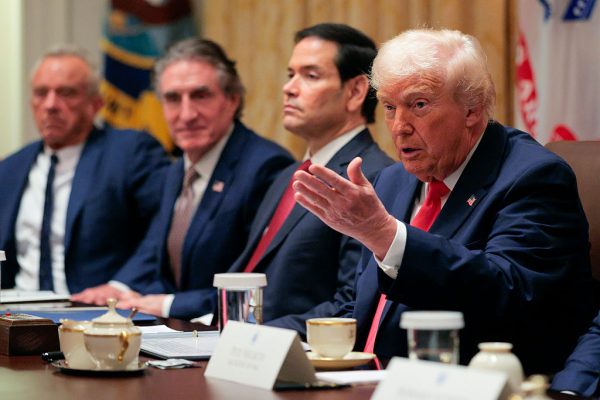
Recent precedent looms large. In the months preceding January 2026, the Trump administration assembled a substantial military presence in the Caribbean aimed at Venezuela. Many analysts dismissed the buildup as pressure tactics. Instead, Washington followed through. In early January, U.S. forces launched a swift operation in Caracas and detained long-term President Nicolás Maduro at his residence in Miraflores. President Trump later stated that the United States would oversee a “safe, proper and judicious transition” to new leadership.
At a press conference, Rubio framed the action as decisive: “Nicolás Maduro had multiple opportunities to avoid this… The 47th president of the United States is not a game-player. When he tells you that he’s going to do something, when he tells you he’s going to address a problem, he means it.” That statement now resonates beyond Latin America.
The current force posture surrounding Iran is markedly larger. Two carrier strike groups now operate in the region, supported by guided-missile destroyers armed with Tomahawk cruise missiles. More than 150 combat aircraft have reportedly been repositioned across Middle Eastern and European bases since mid-February. Satellite imagery confirmed the arrival of F-22 stealth fighters at Israel’s Ovda Airbase — the first wartime deployment of U.S. combat aircraft to Israeli soil.
Embassies have begun drawing down nonessential personnel. Several European governments have advised citizens to leave Israel. Israeli officials describe a potential U.S. strike as increasingly “unavoidable.”
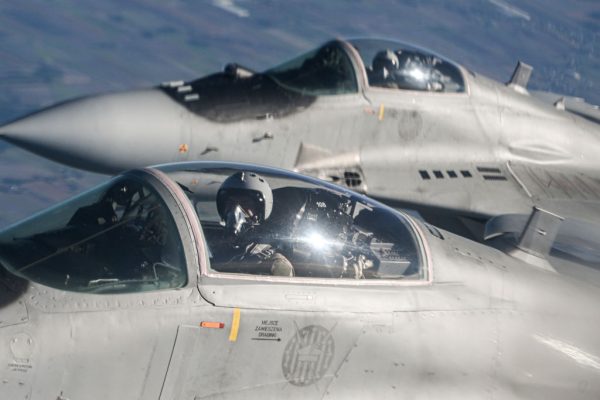
Defense analysts note that if the mission were limited solely to nuclear facilities, the scale of deployment would be disproportionate. B-2 bombers flying from the continental United States could execute precision strikes without such an extensive regional buildup. The force now assembled appears structured for something broader: sustained suppression of air defenses, missile infrastructure, military command centers, and potentially elements of the Revolutionary Guard Corps leadership.
As one analyst observed, such a massive deployment risks becoming “one of the costliest bluffs in U.S. history” if no action follows.
Iran’s diminished military position
Iran today is not the same Iran of early 2025. During the 12-Day War in June 2025, Israeli aircraft operated over Iranian territory with limited resistance. Much of Iran’s air defense network was degraded. Subsequent U.S. operations reportedly neutralized remaining systems through a combination of cyber and air power.
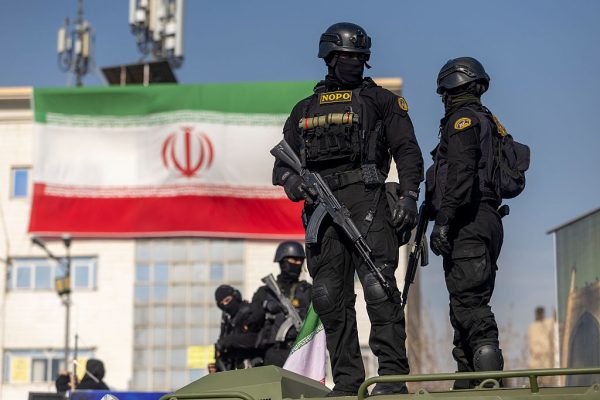
Iran is estimated to have lost a substantial portion of its ballistic missile launchers and stockpiles. Reconstruction has been partial at best. Meanwhile, Israeli intelligence penetration of Iranian security structures, demonstrated in previous high-profile operations, suggests detailed targeting capability.
Russia and China, during prior escalations, offered rhetorical support but little material assistance.
An imminent strike?
The USS Gerald R. Ford has taken position. Congress has received classified briefings. The Secretary of State has framed Iran’s missile program alone as grounds for action, separate from nuclear negotiations. The administration has demonstrated elsewhere that it is willing to act when it concludes diplomacy has failed. Following Maduro’s capture, Defense Secretary Pete Hegseth told adversaries they should “remain on notice” that America “can project our will anywhere, anytime.”
The force now assembled against Iran dwarfs what was used in Venezuela, exceeds Midnight Hammer, and is the largest American military deployment to the Middle East since 2003. Washington also appears to be preparing for something more permanent. Whether a strike occurs will ultimately depend on final calculations inside the White House. But the rhetoric, the force posture, and recent precedent suggest that the administration is preparing for more than symbolic pressure.
If Tehran believes this is another extended negotiating cycle, it may be misreading the moment.
Editorial note: Views expressed in this article are the opinions of the author and do not necessarily reflect the views of Vision Times.