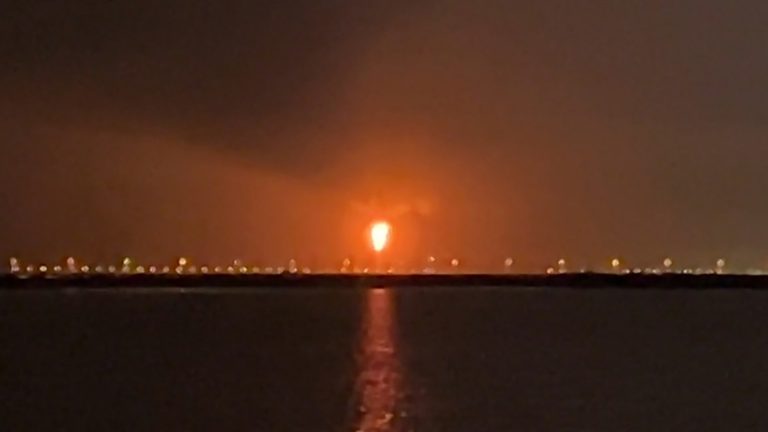
On Feb. 28, the U.S. military and Israel launched a joint military operation against Iran. According to CNN, a senior U.S. official revealed that the U.S. has developed a phased, gradually escalating strike plan for this operation.
The overall action is set to be carried out in multiple rounds, each lasting about one to two days, with pauses in between to redeploy forces and assess battlefield losses.
The official said that, in the overall strategic design, the U.S. also prepared so-called “off-ramps” to allow for adjustment of operational intensity based on battlefield developments, leaving room for de-escalation or negotiations.
After the joint U.S.-Israeli operation began, Iran responded rapidly with counterattacks. CNN military analysts noted that Iran’s swift response is serving as a real-world test of the U.S.-built defense systems in the Gulf region over the past several years.
Retired U.S. Air Force Colonel Cedric Leighton told CNN host Becky Anderson: “This is the defensive posture that has been built in the Gulf over the past months, even years, and it is now truly being tested, as Iran responds to the initial strikes.”
Success
You are now signed up for our newsletter
Success
Check your email to complete sign up
Leighton noted that intelligence assessments indicate Iran has a certain level of retaliatory capability, but its reaction speed exceeded expectations.
“They have roughly 2,000 to 3,000 launchable missiles,” Leighton said, “The problem is that, according to intelligence assessments, the number of launch platforms has decreased significantly.”
He added that Iran is believed to currently possess only about one-third of the launch platforms it had before last June’s attacks. “If this intelligence is accurate, one would expect their response to be delayed. But in fact, they were able to counterattack faster than expected.”
Leighton said he anticipated a response from Iran but did not expect it “at this particular moment and on this scale.” “It indicates that they were clearly well-prepared.”

IDF planned for months, deliberately chose daytime ‘tactical surprise’
Meanwhile, Israel disclosed more details about the operation.
According to The Times of Israel, the Israel Defense Forces (IDF) stated on the afternoon of the 28th that the morning attack on Iran had been planned for months. The operation was deliberately carried out during the day rather than at night, targeting the timing of high-level Iranian political and security meetings to achieve a “tactical surprise.”
The military said the strike targets included multiple locations in Tehran where “key members of Iran’s political-security core” gather. The Military Intelligence Directorate conducted a major preliminary intelligence operation, identifying the best window for action by tracking the assembly times of senior Iranian officials.
The IDF emphasized that, despite Iran being on alert, carrying out the attack in the morning successfully achieved a “second tactical surprise,” referring to a 12-day operation against Iran last June, when the initial strikes also caught the target off guard.
The military revealed that intelligence personnel spent thousands of hours preparing for this operation, creating an expanded target list, with the number of targets “increased by hundreds of percent,” ensuring rapid action if necessary. Target identification was synchronized with precise tracking of Iranian commanders and senior leaders.
The IDF also said that the U.S. decision to join the operation was an “important factor,” reflecting American confidence in Israeli intelligence and operational capabilities, as well as recognition of last year’s operation results.
Operation targets top Iranian leaders
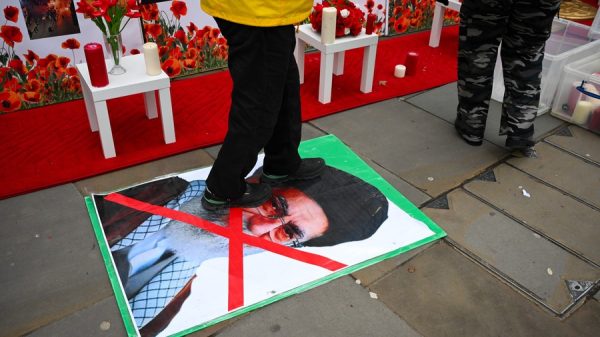
Earlier, The Times of Israel and CNN cited Israeli officials and informed sources saying that the Feb. 28 strikes targeted Iran’s Supreme Leader Ali Khamenei, President Masoud Pezeshkian, Armed Forces Chief of Staff Abdolrahim Mousavi, Defense Council Secretary Ali Shamkhani, and Supreme National Security Council Secretary Ali Larijani.
At present, the exact casualties from the attacks have not yet been fully confirmed by Iranian authorities.
By Gao Yun