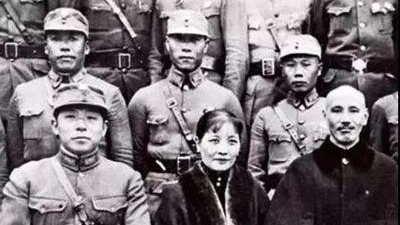
Zhang Xueliang was once remembered as the general who forced a halt to China’s civil war in 1936. In his final decades, he chose a harsher description for himself.
At his 90th birthday banquet in Hawaii, more than half a century after the Xi’an Incident, Zhang reportedly said: “I myself am a sinner, a sinner among sinners.” Those present recalled the remark not as polite humility, but as judgment — delivered late, and without qualification.
The decision that altered China’s course
In December 1936, Zhang detained Chiang Kai-shek in Xi’an. The act, described at the time as a “military remonstration,” compelled Chiang to suspend campaigns against the Chinese Communist forces and move toward a united front against Japan.
In later recollections, Zhang said the Communist Red Army had reached northern Shaanxi after the Long March in a state of severe exhaustion. Supplies were scarce. Numbers were reduced. Survival itself was uncertain. Given the military strength then available to the Northeast Army and the Central Army, he believed the Communist forces could have been eliminated.
Instead, persuaded by appeals to end internal conflict and resist Japan, Zhang acted. The detention of Chiang reversed the immediate trajectory of the civil war. The Communist Party, under extreme military pressure, gained time, legitimacy, and room to consolidate.
Success
You are now signed up for our newsletter
Success
Check your email to complete sign up
Zhang would later conclude that this was the turning point.
A personal reckoning
The reassessment was not abstract. It was shaped by what followed.
Zhang’s younger brother, Zhang Xuesi, went to Yan’an and later served as chief of staff of the CCP Navy. During the Cultural Revolution, he was persecuted and died. In his later years, Zhang spoke of the episode with grief and bitterness. Past allegiance did not shield his family. The political order he had once preserved did not protect his brother.
The contrast with his own fate was stark. After the Xi’an Incident, Chiang Kai-shek placed Zhang under long-term house arrest. His freedom was restricted for decades. Yet he survived successive political upheavals that claimed the lives of many who remained on the mainland. Zhang later acknowledged that the confinement imposed by Chiang had, in effect, preserved his life. He was quoted as saying that had he stayed under Communist rule, he might not have survived.
A verdict delivered in old age
In his final years, Zhang expressed his conclusion in stark terms. Had the Communist forces been eradicated in 1936, he believed China’s trajectory might have unfolded differently. By intervening as he did, he believed he had opened the way to decades of upheaval.
The civil war resumed. Land reform campaigns followed. Political movements swept across the country. Famine and persecution scarred entire generations. These were developments Zhang associated, in his own retrospective judgment, with the decision he made in Xi’an.
It stands as a warning. At decisive moments in history, when deception clouds judgment and the nature of totalitarian violence is misread, the consequences extend far beyond the individual who acts. They are borne by a nation.
Zhang Xueliang’s tragedy, in his own reckoning, was not merely personal. It marked what he saw as the beginning of a far broader calamity. To hear the sigh he uttered in old age is to confront a chapter of modern Chinese history written in blood.
By Chen Jing