By Li Deyan, Vision Times
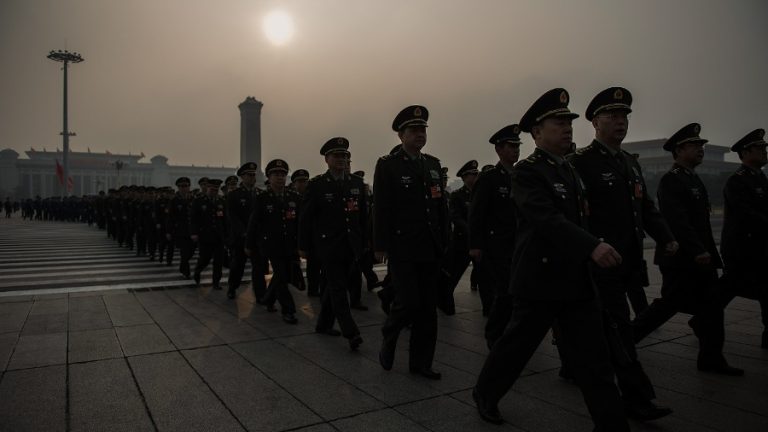
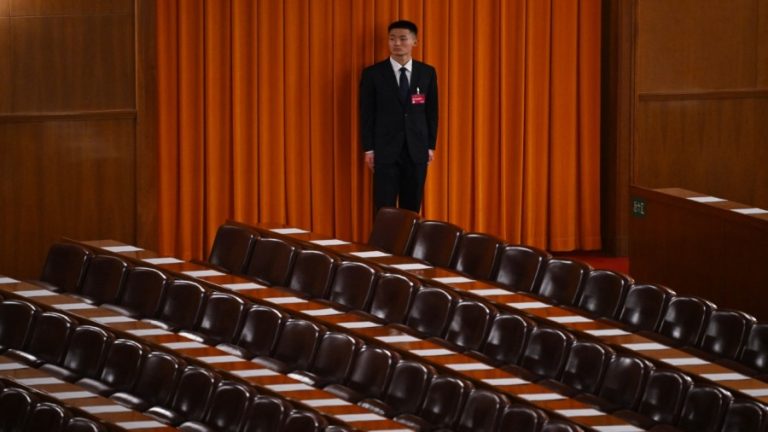
China’s annual “Two Sessions,” seen as the country’s most important political gatherings, officially opened in Beijing on March 4. However, the dwindling number of delegates attending this year’s meetings has drawn attention, with several lawmakers absent amid an ongoing purge of senior officials.
According to official data, the 14th National People’s Congress (NPC), China’s top legislative body, currently has 2,878 delegates. As of March 3, 2,773 representatives had registered with the conference secretariat, and 2,761 delegates attended the preparatory meeting held on the morning of March 4.
Chinese state media acknowledged that 117 delegates were absent, while emphasizing that the number of attendees still met the legal quorum required to proceed. The figures have sparked ongoing concerns among observers over whether political pressure and recent anti-corruption campaigns are influencing attendance.
RELATED: Xi Jinping’s Expanding Military Purge Now Reaches His Own Inner Circle
Schedule and agenda
Success
You are now signed up for our newsletter
Success
Check your email to complete sign up
According to China’s state-run Xinhua News Agency, the fourth session of the 14th Chinese People’s Political Consultative Conference (CPPCC) opened on March 4 and will conclude on March 11. The fourth session of the 14th National People’s Congress is scheduled to begin on March 5 and close on March 12.
Ahead of the official opening, the NPC held a preparatory meeting at the Great Hall of the People in Beijing. Zhao Leji, chairman of the NPC Standing Committee, presided over the session. Other senior officials attending included NPC vice chairpersons Li Hongzhong, Wang Dongming, Xiao Jie, Zheng Jianbang, Ding Zhongli, Cai Dafeng, He Wei, Wu Weihua, Tie Ning, Peng Qinghua, Zhang Qingwei, Losang Jamcan, and Shohrat Zakir. Liu Qi served as secretary-general.
During the meeting, delegates approved the agenda for the upcoming legislative session and elected the presidium and secretary-general responsible for organizing the conference. The presidium consists of 167 members, with Li Hongzhong serving as secretary-general.
The conference is expected to review several major policy documents, including the government work report and the proposed outline for China’s 15th Five-Year Plan (2026–2030). Delegates will also examine reports on China’s economic and social development plans, as well as central and local government budget proposals for 2026.
Sweeping purges slashing numbers
Observers note that the number of representatives participating in this year’s Two Sessions has already declined significantly due to recent removals. On Feb. 26, China’s NPC Standing Committee announced the termination of 19 delegates, including nine military representatives, five of whom held the rank of general.
Unofficial estimates suggest that around 36 military delegates have been removed from the National People’s Congress over the past two years. As a result, the number of military representatives in the legislature has reportedly fallen to 243. Similar changes have also occurred within the Chinese People’s Political Consultative Conference (CPPCC), another key advisory body.
On March 2, the CPPCC Standing Committee announced the removal of three generals, including Han Weiguo, and former State Administration for Science, Technology and Industry for National Defense director Zhang Kejian from their positions.
The committee also confirmed the expulsion of 10 officials previously investigated for corruption, including Wang Xinghuan, Zhang Dongchen, Cao Jianguo, Liu Guoyue, Ma Zhengwu, Fan Youshan, Zeng Yi, Yu Peigen, Tian Xuebin, and He Song.
A rare decline in representation
When the current NPC was first formed, it included 2,977 delegates. The current total of 2,878 members represents a reduction of 99 seats, which analysts say may be the largest decline in representation since the Cultural Revolution. Even with the reduced membership, attendance at the preparatory meeting did not reach full participation.
As of March 3, only 2,773 delegates had registered, leaving dozens absent before the meeting officially opened. The CPPCC has also seen a reduction in membership. The body originally included 2,169 members, but current estimates suggest the number has fallen to roughly 2,100, though Chinese authorities have not released an official updated figure.
Political observers say that the Chinese government’s opaque disciplinary system often results in officials disappearing from public view without explanation. Ahead of this year’s Two Sessions, former Shanghai entrepreneur Hu Liren, now based in the United States, claimed on social media that many Chinese officials were reluctant to travel to Beijing.
According to Hu, some delegates were reportedly concerned about the risk of investigation or political missteps during the meetings. He suggested that some officials were deliberately avoiding attendance by citing illness or hospitalization in order to request leave from the conference.