By Yuanshan, Vision Times
Recent reporting by U.K. publisher “The Times” has revived concerns about so-called “honey trap” espionage operations targeting Silicon Valley executives in the U.S. and Europe. According to the report, intelligence services linked to China and Russia may be deploying attractive female operatives, sometimes referred to as “swallows,” to cultivate relationships with influential figures in the technology sector in order to obtain sensitive information or build channels to bypass Western sanctions.
Analysts warn that such operations could form part of a broader effort by Beijing to gain access to cutting-edge technology and strategic industries.
RELATED: How Chinese and Russian Agents Use ‘Honey Traps’ to Steal US Tech Secrets
The AI Boom and Nvidia’s role
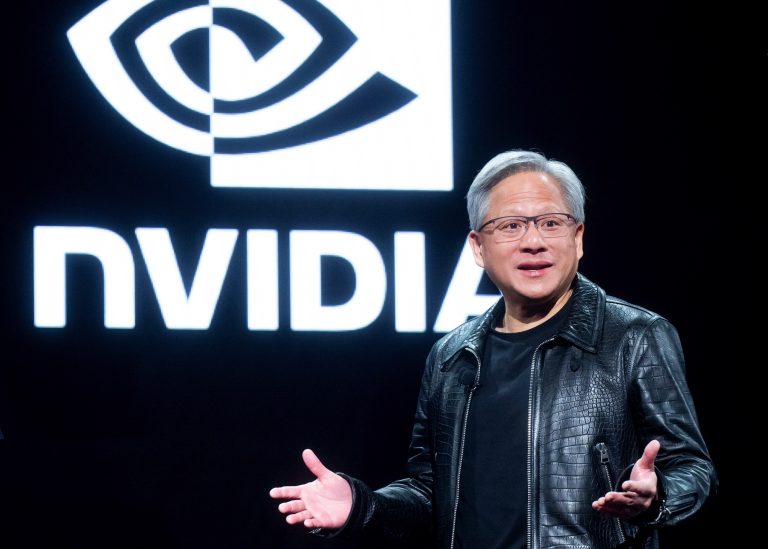
At the center of the global artificial intelligence boom is Jensen Huang, co-founder and CEO of chip giant Nvidia. Huang has become one of the world’s wealthiest individuals as Nvidia’s graphics processors power much of today’s AI revolution.
Success
You are now signed up for our newsletter
Success
Check your email to complete sign up
Founded in 1993, Nvidia began as a startup sketched on a restaurant napkin at a Denny’s in San Jose, California. Huang and his partners chose the name partly inspired by the Roman concept of “Invidia,” symbolizing the idea that competitors would one day envy their technological advantage.
Three decades later, Nvidia has become one of the most valuable companies in the world, with profits surging dramatically as demand for AI chips exploded. The company’s processors are widely used in artificial intelligence research, cloud computing, and advanced data centers.
Huang himself has become a central figure in global technology diplomacy. Over the past year, his travel schedule has taken him around the world meeting government officials and business leaders as AI competition intensifies.
Shrouded in mystery
Against this backdrop, an unusual episode has drawn attention in some investigative reporting. At a high-profile technology gathering in Taipei in June 2024, witnesses described a woman in a pink dress entering the event and mingling easily among investors, technology executives, and industry leaders. According to those present, she eventually sat beside Huang and shared a toast with him.
RELATED: AI ‘Intelligence Explosion’ Already Reshaping 50% of White-Collar Jobs
The woman was identified as Alice Huang, whose Chinese name is Huang Le. Public records listed her as managing director of Megaspeed, a little-known company registered in Singapore. Soon after, the company reportedly began receiving shipments of high-end Nvidia AI processors worth billions of dollars.
According to anonymous sources cited in media investigations, some of those chips may have ultimately been transferred to mainland Chinese technology firms or routed through third-party facilities. One alleged method involved shipping chips to large Malaysian data centers, where Chinese companies could access them remotely through cloud services.
Megaspeed was reportedly established in 2023 as a subsidiary of the Chinese gaming and cloud-computing firm 7Road, whose parent ownership structure includes entities tied to Chinese government interests. However, when investigative journalist Paul Mozur visited Megaspeed’s Singapore office, the premises were reportedly almost empty. By that time, Alice Huang had resigned and could not be located.
Public information about her background, including corporate records and social media activity, appears extremely limited, raising further questions about the company’s role in the global AI supply chain. Observers say the case illustrates the complex networks that can emerge at the intersection of business, geopolitics, and technology competition.
Elon Musk’s warning of ‘assets’
The issue gained additional attention after a cryptic message posted by Tesla and SpaceX CEO Elon Musk on social media platform X. “If she’s a 10, you’re an asset,” Musk wrote on Oct. 23, 2025.
The comment appeared alongside a reference to The Times report describing a “sex war” allegedly targeting technology workers, in which operatives cultivate personal relationships with industry insiders to access trade secrets and intellectual property. One technology insider quoted in the report described the environment as unruly. “It’s like the Wild West out there.”
Musk’s message was widely interpreted as a caution to Silicon Valley executives, who often operate in highly competitive global industries where technology secrets carry enormous strategic value.
A covert strategy?
The use of attractive operatives to cultivate relationships with intelligence targets is not new. During the Cold War, Soviet intelligence agencies famously employed women known as “swallows” to gather information or compromise influential figures. In the modern era, analysts say similar tactics may appear in new forms as technology becomes the central arena of global strategic competition.
Some commentators have referred to alleged Chinese operatives involved in such efforts as “red swallows.” Their activities may include building personal relationships, gathering intelligence, or facilitating business channels that circumvent export controls and sanctions.
Whether individual cases reflect coordinated state activity or isolated incidents can be difficult to determine. However, as the global race for technological dominance intensifies, experts say technology leaders increasingly face risks beyond traditional corporate competition.
What might appear to be personal relationships or social encounters could, in some cases, intersect with broader geopolitical strategies.