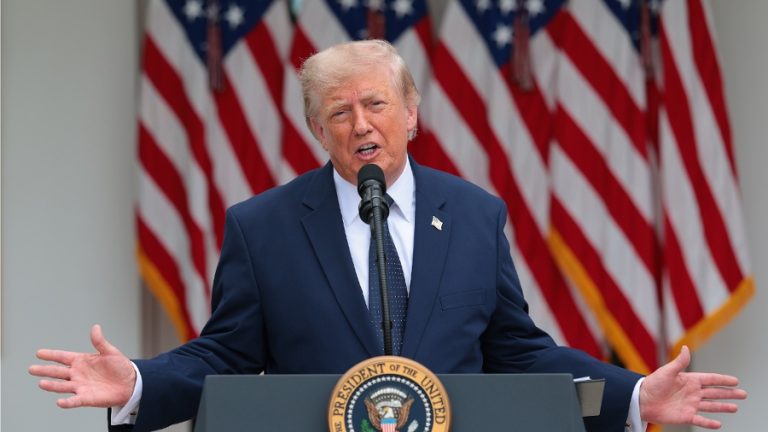
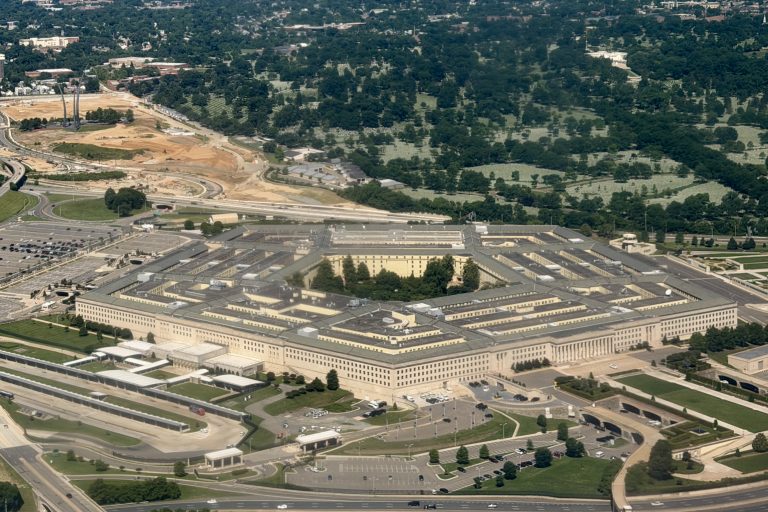
The U.S. Pentagon announced on Wednesday, March 4 that the joint U.S.-Israel military strikes on Iran, code named “Operation Epic Fury,” have entered their fourth day. Secretary of War Pete Hegseth confirmed at a press conference that the coalition has achieved an overwhelming victory, nearly “complete control of Iranian airspace,” and killed a senior Iranian official who had plotted to assassinate U.S. President Donald Trump.
At a Pentagon briefing on operational progress, Hegseth revealed that the air power deployed in the U.S.-Israeli joint bombing was twice the scale of the famous “Shock and Awe” operation at the start of the 2003 Iraq War.
“Since last night, in less than a week, the world’s two most powerful air forces have full control over Iranian airspace—undisputed air superiority,” Hegseth said. “This means we will fly day and night, searching, repairing, and ultimately destroying Iran’s military missile and defense industrial bases. Iran will be powerless against this.”
“They are finished, and they know it. Or at least, they will know it soon,” he added. “The Iranian navy now lies asleep at the bottom of the Persian Gulf—combat capability lost, heavy losses, completely destroyed.”
He noted that Iranian authorities have cut off the internet in an attempt to hide the devastating impact of this “incredible display of firepower.”
Success
You are now signed up for our newsletter
Success
Check your email to complete sign up
“We have lost airspace,” wrote an anonymous former Iranian Air Force officer on social media. “Their planes are circling above us, and we don’t even dare to turn on our radars.”

Casualty and damage report
Joint Chiefs of Staff Chairman General Dan Caine released staggering damage statistics, reporting that the coalition has struck over 2,000 targets inside Iran.
- Naval destruction: More than 20 Iranian naval vessels have been sunk, including a so-called “Soleimani-class” warship torpedoed by a U.S. submarine near Sri Lanka last night.
- Counterattack collapse: Iran’s ballistic missile launches dropped 86% and attack drone launches dropped 73 percent compared to Feb. 28, the start of the war. Caine noted that, as resources deplete, Iran’s counterattacks have become “increasingly indiscriminate and imprecise.”
- Comprehensive suppression: Unlike previous localized strikes, “Epic Fury” aims for “all-dimensional destruction.” From 20 Iranian warships sunk in the Persian Gulf to Tehran’s radar networks shredded by anti-radiation missiles, Iran’s naval and air defense systems have been stripped within days.
- Firepower density: In the first 72 hours, the U.S.-Israeli coalition deployed twice the amount of precision-guided munitions compared to the opening phase of the 2003 Iraq War. The B-21 “Raider” stealth bomber was deployed in large-scale combat for the first time, alongside B-52 and B-1B bombers, conducting carpet bombing over Iran’s interior.

Assassination of the president foiled
The Pentagon confirmed that a senior unnamed Iranian official was killed. While U.S. sources did not disclose his identity, Israeli media identified him as Rahman Moghadam, head of the Islamic Revolutionary Guard Corps special operations unit.
Reports indicate that his team was responsible for plotting to assassinate Trump during the 2024 U.S. election. Hegseth cited federal prosecutors’ allegations, noting that Iran had tasked Farhad Shakeri with the assassination, claiming “money is no object,” all in retaliation for the 2020 killing of Qassem Soleimani.
“Iran tried to assassinate Trump,” Hegseth said at the podium, “but President Trump laughed last.”
Next steps
Despite the significant gains, military leaders emphasized that the mission is far from complete.
“Operation Epic Fury has three phases: disarm, destroy command, and dismantle the regime,” Hegseth said. “We’ve only completed the first phase. Iran now has no navy, no air force, not even communications. They are like a team that doesn’t know tactics, running blindly on the field.”
“We are accelerating, not slowing down,” he added.
General Caine outlined the next tactical moves: with air superiority established, the U.S. plans to strike deeper inland targets over the next 24–48 hours, focusing on destroying Iran’s infrastructure and remaining missile launchers.
At this stage, the U.S. carrier strike groups aboard the USS Gerald R. Ford and USS Abraham Lincoln are pounding from the sea, while strategic bomber formations—including B-2, B-52, and B-1—coordinate with the Israeli Air Force to conduct carpet suppression over Iran’s interior.

In a historic moment, the U.S. deployed its long-range Precision Strike Missile (PrSM) in combat for the first time. Central Command highlighted its “unparalleled deep strike capability” and shared live launch footage on X (formerly Twitter). As the successor to ATACMS tactical missiles, the PrSM demonstrated high tactical value in this operation, with a range over 499 km and a smaller size allowing platforms like HIMARS to carry double the payload.
Addressing earlier concerns about U.S. ammunition shortages, Trump publicly denied them and took emergency measures to replenish firepower. General Caine reiterated the three main objectives of Operation Epic Fury: destroy ballistic missile systems, annihilate the Iranian navy, and prevent rapid reconstruction of combat capabilities.
“We are serious,” Hegseth said. “Our operators have the highest authority granted personally by the President and myself. We will take all necessary time to ensure success.”
By Tian Jingxin