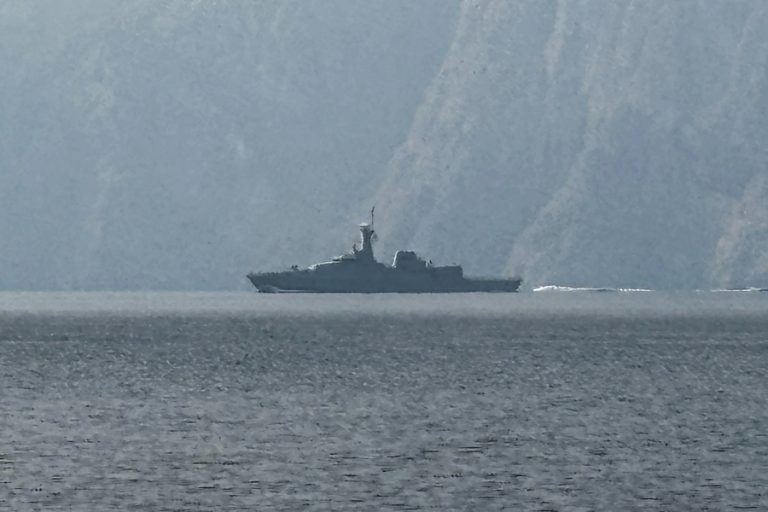
The Daily Mail reported on March 2 that after Trump ordered the launch of “Operation Epic Fury,” U.S. forces struck Iran’s largest naval warship. On the same day, Fox News cited satellite imagery and military sources revealing multiple fires at a key Iranian naval base in southern Iran, as tensions continue to escalate.
Strike on the ‘Shahid Bagheri’ — US refutes Iran’s claim of sinking an aircraft carrier
U.S. Central Command stated that Iran’s claim of sinking a U.S. aircraft carrier is “pure propaganda.” The statement said: “The Iranian regime’s disinformation machine continues to spread lies, claiming it has sunk a U.S. aircraft carrier. The only ‘carrier’ that has been hit is Iran’s drone carrier, the ‘Shahid Bagheri.’”
According to U.S. forces, the vessel was struck within hours of the launch of Operation Epic Fury. Tehran reportedly used the Shahid Bagheri as a drone launch platform to attack U.S. bases and Gulf allies following the death of Supreme Leader Ali Khamenei.
Reports say the warship was originally a commercial vessel converted into a drone carrier in 2022 and is operated by Iran’s Islamic Revolutionary Guard Corps Navy. A roughly 180-meter flight deck was added, capable of carrying drones, helicopters, and mid-range air defense systems.
Since the outbreak of the conflict, U.S. forces have sunk 11 Iranian vessels in the Gulf of Oman. The extent of the damage to the Shahid Bagheri remains unclear, but observers believe the strike further weakens Iran’s naval capabilities.

Success
You are now signed up for our newsletter
Success
Check your email to complete sign up
‘Waves’ of 100 warplanes — conflict could last four weeks
Pentagon officials said on the morning of March 2 that weekend operations against Iran involved an “unprecedented wave of 100 warplanes,” with coordinated strikes by land, sea, and air forces.
In an exclusive interview with the Daily Mail, Trump warned Americans to prepare for further bloodshed, stating the conflict was “always projected as about a four-week process.” He said: “This has always been a four-week process. Iran is a large country. It could take four weeks, or possibly less.”
Iran, for its part, claimed that hundreds of U.S. troops were killed in retaliatory strikes. In response, United States Central Command confirmed four U.S. service members killed and 18 wounded.
Fox News reported on March 2 that satellite images released by Planet Labs show multiple fires at Iran’s main naval headquarters in Bandar Abbas. Thick black smoke could be seen rising, and at least one docked vessel was reportedly ablaze.