Taiwan’s Ministry of Foreign Affairs (MOFA) announced on July 3 that, as cooperation between Taiwan and the United States continues to deepen in trade, technology, education, and supply chains, it has decided to establish the Taipei Economic and Cultural Office in Phoenix, Arizona.
The new office is intended to better serve Taiwanese businesses and expatriates in the United States while promoting two-way investment between Taiwan and the U.S. Preparatory work is currently underway, the Taipei Times reported.
The American Institute in Taiwan (AIT) said the move highlights Taiwan’s indispensable role in global supply chains and reflects the strong ties between the people of Taiwan and the United States.
Taiwan’s Foreign Ministry to open Phoenix representative office
In a press release issued on the evening of July 3, MOFA noted that Phoenix, the capital of Arizona, is one of the fastest-growing major cities in the southwestern United States.
As Taiwanese semiconductor companies and related supply-chain firms continue expanding their investments in the area, Phoenix has gradually developed into a large-scale, strategically important high-tech industrial cluster, becoming a key base for Taiwan and the United States to jointly build a trusted and resilient technology supply chain.
Success
You are now signed up for our newsletter
Success
Check your email to complete sign up
The ministry said that, in light of the new landscape of Taiwan–U.S. cooperation in high-tech industries, the growing number of Taiwanese businesses and expatriates in Arizona and neighboring regions, and increasingly close interactions between Taiwan and U.S. state and municipal governments, it has decided to establish a new representative office in Phoenix.
Once operational, the Taipei Economic and Cultural Office in Phoenix will strengthen Taiwan’s ties with the governments of Arizona and the City of Phoenix, respond more effectively to the investment and operational needs of Taiwanese businesses, and promote bilateral cooperation in areas including trade, technology, supply chains, education and culture, and people-to-people exchanges.
The Ministry of Foreign Affairs (MOFA) said that once the Taipei Economic and Cultural Office in Phoenix is established, it will also provide more convenient consular services to Taiwanese expatriates, businesspeople, and other Taiwanese nationals living in Arizona and New Mexico.
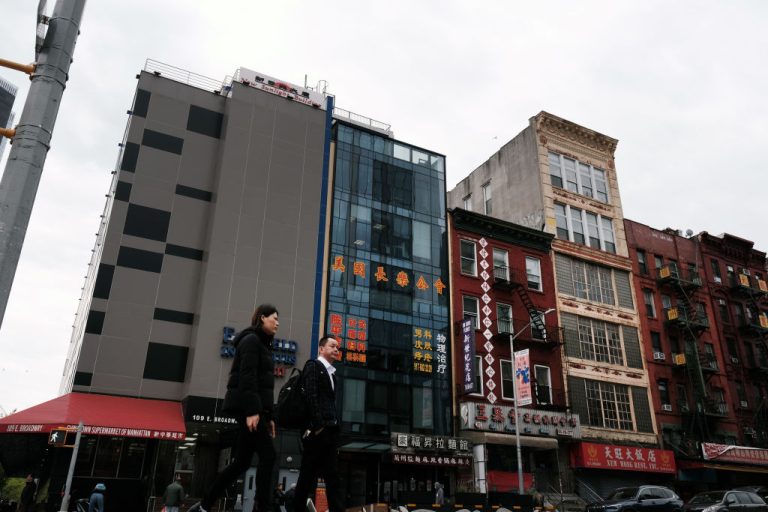
With the addition of the Phoenix office, Taiwan will have 14 representative offices across the United States, including locations in Washington, D.C., New York, Boston, San Francisco, Los Angeles, Atlanta, Seattle, Houston, Chicago, Honolulu, Denver, Miami, Guam, and Phoenix.
MOFA added that it will continue working closely with the Taiwan Representative Office in the United States and its other representative offices across the country to further deepen the mutually beneficial Taiwan–U.S. partnership on the strong foundation already in place. It also aims to expand subnational exchanges between Taiwan and U.S. state and local governments, while promoting greater industrial cooperation between the two sides.

AIT: Move reflects the strong ties between the US and Taiwan.
In response, the American Institute in Taiwan (AIT) said in a Facebook post on Friday, July 3 that the Taipei Economic and Cultural Office (TECO) will soon establish a new representative office in Phoenix, Arizona. With the addition of the Phoenix office, Taiwan will have 14 representative offices in the United States, including the Taipei Economic and Cultural Representative Office in the United States in Washington, D.C. According to AIT, this expansion demonstrates the strength, depth, and enduring vitality of the U.S.–Taiwan partnership.
AIT noted that Arizona has become a dynamic hub for Taiwan’s high-tech investment in the United States, attracting an increasing number of semiconductor supply chain companies and further strengthening the flourishing U.S.–Taiwan partnership in the semiconductor and advanced technology sectors. It added that the launch of direct flights between Taiwan and Phoenix has further reinforced these growing ties.
AIT emphasized that “the upcoming establishment of the Phoenix office not only highlights Taiwan’s indispensable role in the global supply chain, but also reflects the deep friendship between the people of the United States and Taiwan.” It said the United States is proud of what the two sides have achieved so far and looks forward to the unlimited possibilities ahead, expressing hope that both sides will deepen cooperation and build a future that is more prosperous, innovative, and mutually beneficial.
According to Taiwan’s Central News Agency (CNA), a spokesperson for the U.S. Department of State welcomed the establishment of the Taipei Economic and Cultural Office in Phoenix. The spokesperson said Taiwan is one of the United States’ most important trading and investment partners, while Arizona has received significant Taiwanese investment. The new office will further strengthen the long-standing, close, and steadily growing economic and people-to-people ties between the United States and Taiwan, relationships that also make a significant contribution to U.S. prosperity.
According to publicly available information, Taiwan Semiconductor Manufacturing Company (TSMC) announced in 2020 that it would build a semiconductor fabrication plant (Fab 21) in Phoenix, Arizona. The facility is among the company’s first manufacturing plants in the United States. With a total investment commitment of US$165 billion, it represents one of the largest foreign direct investments in U.S. manufacturing history. The plant began production in 2025.
In 2025, TSMC Chairman C. C. Wei announced that, once fully completed, the Arizona operation will become a “gigafab” cluster comprising six wafer fabrication plants, two advanced packaging facilities, and one research and development center. As of 2025, the first fabrication plant had been completed and had begun producing 4-nanometer (nm) chips. Mass production of 3-nanometer and 2-nanometer chips is targeted for 2027 and 2029, respectively.