On March 11, 2026, the joint military operations by the United States and Israel against Iran officially entered the 11th day of a full-scale escalation. Iran has threatened to completely block the world’s energy chokepoints, potentially driving international crude oil prices up to $200 per barrel. In response to Iran’s retaliatory threats, the U.S. government and military have declared an uncompromising stance, clearly defining nuclear red lines, and rapidly completed large-scale evacuations of overseas citizens to address this historic crisis with profound implications for global geopolitics and the economy.
According to reports from CNN and Reuters, the stability of the global energy market is facing unprecedented challenges amid the chain reactions triggered by the military conflict. Iranian officials and several hardline military commanders have repeatedly signaled in recent days that they may fully block the Strait of Hormuz, which carries nearly one-fifth of the world’s oil transport.
Meanwhile, Iran’s Islamic Revolutionary Guard Corps (IRGC) has launched multiple heavy ballistic missiles, including the “Khorramshahr,” targeting Israeli territory and U.S. military facilities in the Middle East. IRGC Brigadier General Mousavi threatened on social media: “From now on, there will be no missiles with a warhead weighing less than one ton.”
In response to Iran’s attempt to use global energy chokepoints and escalated missile strikes as leverage, U.S. President Donald Trump issued a statement drawing an absolute red line regarding any potential blockade.
Trump warned that if Iran dared to block the Strait of Hormuz, it would face a “twentyfold severe strike” and “Death, Fire, and Fury.” This declaration not only communicated the U.S. military’s overwhelming retaliatory resolve to Tehran but also aimed to reassure global financial and oil markets gripped by panic.

Success
You are now signed up for our newsletter
Success
Check your email to complete sign up
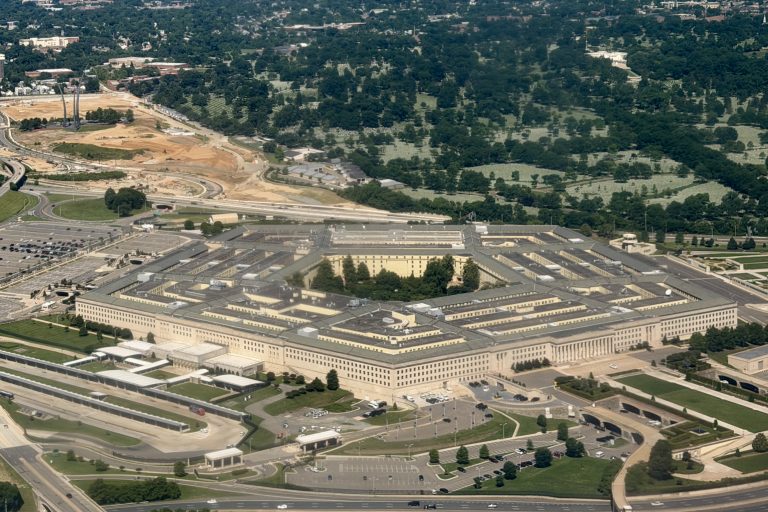
At a subsequent security briefing at the Pentagon, U.S. Secretary of War Pete Hegseth further clarified the strategic bottom line of the U.S.-Israeli coalition. He stated that the U.S. military’s primary objective is to completely destroy Iran’s ability to acquire weapons of mass destruction illegally and urged Iran’s new leadership to recognize reality.
Hegseth directly addressed Tehran: “The wise course for Iran’s new leadership is to heed our president’s warning, not pursue nuclear weapons, and make a public declaration to that effect.” Defense officials also confirmed to CNN that the multi-layered air defense and missile interception systems of both the U.S. and Israel are currently operating at full capacity around the clock to minimize the threat posed by Iran’s heavy missiles to civilians and military bases.
According to Reuters’ aggregated statistics, as the intensity of the conflict continues to rise, over 1,300 Iranians have been killed and nearly 10,000 injured; Lebanon has reported 486 deaths; Israel has lost 14 civilians and 2 soldiers.
The U.S. military also confirmed that eight American soldiers have died in the regional conflict to date.
Facing a rapidly deteriorating security environment, the U.S. State Department and Pentagon have coordinated efficiently to prioritize the safety of their citizens. Official data shows that since the outbreak of the conflict, the U.S. has evacuated more than 28,000 American citizens from multiple Middle Eastern countries, effectively preventing a larger-scale impact on civilians.
By Tian Jingxin