By Yin Hua, Vision Times
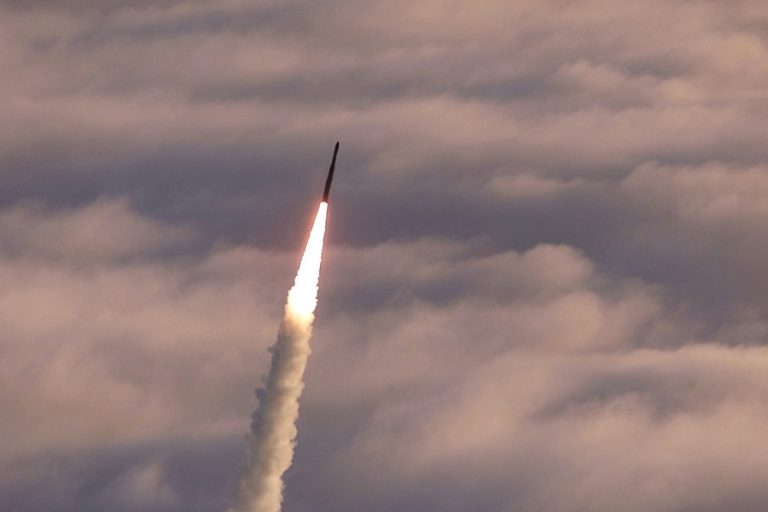
Major military operations conducted by the U.S. and Israel against Iran, dubbed “Operation Midnight Hammer” and “Operation Epic Fury,” are firmly reshaping the strategic landscape of the Middle East, while triggering ripple effects across global geopolitics, analysts say. With the conflict showing no signs of easing, the consequences could pose serious challenges for the Chinese Communist Party (CCP) by exposing vulnerabilities across Beijing’s economic, diplomatic, and military strategies.
Miles Yu, director of the China Center at the Hudson Institute, believes that Beijing’s massive investments in Iran may now be in jeopardy, undermining one of China’s key strategic pillars in the Middle East. Meanwhile, Chinese democracy activist Wang Dan likewise argued that the shifting regional order is narrowing Beijing’s international space while failing to curb Chinese leader Xi Jinping’s global ambitions, potentially redirecting pressure toward the Taiwan Strait.
RELATED: Trump Hints at Ground Troops, Promises ‘Large-Scale’ Attacks on Iran
Political commentator Jiang Feng, who runs a popular Chinese-language YouTube channel, said the crisis highlights what he describes as “systemic failures” in the CCP’s economic, diplomatic, and military approaches.
Economic strains, declining productivity
Success
You are now signed up for our newsletter
Success
Check your email to complete sign up
Jiang pointed to China’s economic slowdown as a key vulnerability. During the opening of the National People’s Congress in Beijing, Premier Li Qiang announced a GDP growth target of 4.5 to 5 percent for 2026, emphasizing themes such as “new productive forces” and “high-quality development.”
However, Jiang argued that the figures obscure deeper structural problems. China’s official manufacturing Purchasing Managers’ Index (PMI) for February stood at 49.0, below the 50-point threshold that separates expansion from contraction, an indicator that manufacturing activity is shrinking.
Citing remarks by Xu Bin, a professor at the China International Finance Institute, Jiang noted research suggesting that China’s total factor productivity (TFP) has experienced negative annual growth of about 1 percent since Xi took power in 2012.
In practical terms, this suggests that heavy political intervention and centralized control have eroded the gains previously produced by technological progress and labor expansion. Over the past decade, job opportunities have become harder to find, businesses have struggled, housing markets have weakened, and debt disputes have risen, trends many Chinese citizens say align with their lived experience.
International institutions have also raised concerns. A recent International Monetary Fund (IMF) Article IV consultation report characterized China’s extensive industrial subsidies as a form of “macroeconomic imbalance.” Slowing productivity and declining investment returns also pose structural risks, accounting for roughly one-third of China’s growth now depends on exports.
Energy and trade vulnerabilities
The escalation of tensions in the Middle East could also threaten China’s energy security. China imports more than 70 percent of its oil, with a significant portion coming from the Middle East. The Strait of Hormuz, a critical chokepoint for global oil shipments, remains central to these supply chains.
Even if the strait remains open, analysts say insurance risks alone could disrupt shipping. Jiang noted that modern oil tankers carry enormous financial and environmental risks. Even relatively inexpensive weapons, such as Iran’s Shahed-136 drones, reportedly costing only €20,000 to €50,000, could destroy vessels worth hundreds of millions of dollars.
Such risks could dramatically increase shipping costs or disrupt transport altogether. For China, the implications extend beyond energy. The country’s export economy, particularly sectors such as electric vehicles, lithium batteries, and solar panels, relies heavily on global markets. A prolonged shipping disruption could raise energy prices, trigger imported inflation, and leave export goods stranded at ports.
Yu emphasized that China’s long-term strategy in Iran had centered on the Belt and Road Initiative, with Beijing reportedly pledging $400 billion in investment to develop infrastructure and energy networks linking the Middle East to Eurasian trade routes. If Iran’s strategic position weakens, those plans could face new uncertainty.
Diplomatic setbacks
Some observers also see signs of shifting diplomatic posture in Beijing. Jiang pointed to the recent appointment of Chinese diplomat Geng Shuang as vice president of the Chinese People’s Institute of Foreign Affairs, describing the move as symbolic of a broader recalibration in China’s diplomatic messaging.
Once known for his combative rhetoric as a Foreign Ministry spokesperson and later as China’s deputy permanent representative to the United Nations, Geng had become associated with the so-called “wolf warrior diplomacy” style.
Jiang characterized the new position as a relatively low-profile post often assigned to senior diplomats approaching retirement. Yu likewise noted that China had viewed Iran as a cornerstone of its Middle East strategy. Tehran’s role in supplying oil and connecting Central Asia with Middle Eastern trade routes made it strategically valuable.
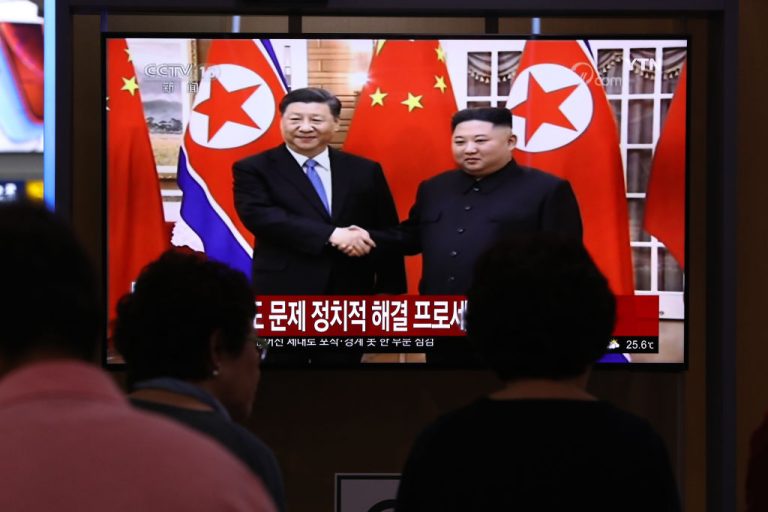
Yet Beijing’s muted response to recent developments, he said, has exposed the limits of the informal alignment sometimes described as the “CRINK axis,” meaning China, Russia, Iran, and North Korea.
The shifting regional balance may also influence Beijing’s military calculations. Some commentators have noted a temporary lull in Chinese military aircraft operations near Taiwan in recent weeks, though the reasons remain unclear. Though Taiwan operates as a sovereign nation, Beijing views it as a breakaway province and has vowed to reclaim the self-governing island by “any means necessary.”
Yu argued that Iran’s weakening could reduce Beijing’s ability to divert U.S. strategic attention away from the Indo-Pacific region, while Wang Dan warned that as China’s international space narrows, Beijing could face growing internal pressure to demonstrate geopolitical achievements. Under such circumstances, he said, Taiwan could become an increasingly sensitive issue.