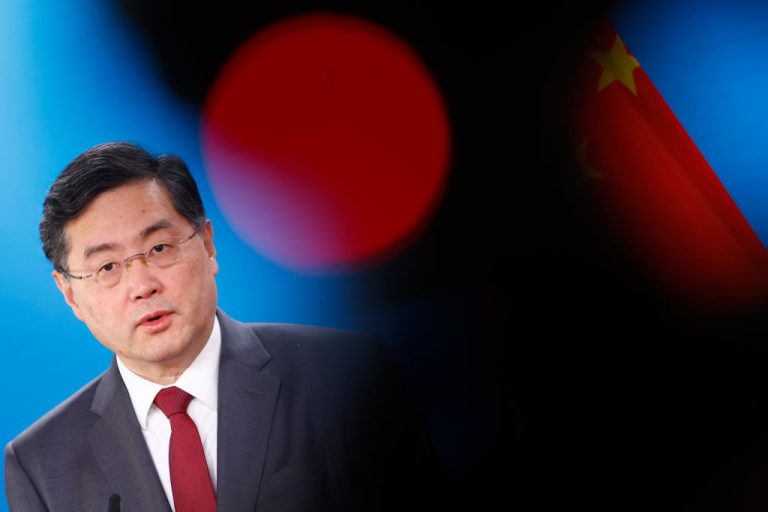
On March 8, 2026, while delegates to China’s annual Two Sessions, the concurrent sessions of the National People’s Congress, the Party’s rubber-stamp legislature, and the Chinese People’s Political Consultative Conference, the Party’s advisory body, were gathered in Beijing, Ming Pao, a Hong Kong Chinese-language daily with strong mainland reporting contacts, published a significant report. Qin Gang, who had not been seen publicly since his abrupt disappearance in June 2023, had apparently resurfaced.
According to Ming Pao, Qin was photographed at the 28th Beijing International Music Festival in October 2025. The photograph showed him posing openly with a group of attendees. The digital screen behind him displayed the date: Oct. 17, 2025.
A separate sighting followed. A Hong Kong acquaintance reported encountering Qin weeks later at a bookstore on Wangfujing, Beijing’s main commercial shopping thoroughfare. “I’m certain it was Qin Gang,” the person said. “He was wearing a cap, and his temples had gone white.” When the acquaintance approached to greet him, Qin walked away quickly.
Ming Pao, citing an insider source, reported that Qin has been demoted from the rank of “state leader,” a designation carrying ceremonial weight and significant material privileges within the Party hierarchy, to vice-ministerial rank, and placed on early retirement. The source specified that his offenses were classified as personal misconduct rather than political disloyalty. That distinction matters enormously inside the CCP: officials deemed as ideologically disloyal face prosecution and often imprisonment, while those whose transgressions are coded as personal are sometimes allowed to retire quietly. The personal-misconduct coding made a soft landing possible.

Xi Jinping spent years fast-tracking the former foreign minister’s career
To understand what Qin Gang’s fall cost Xi Jinping personally, it helps to trace how fast and how high Xi pushed him.
Success
You are now signed up for our newsletter
Success
Check your email to complete sign up
Qin was appointed foreign minister in late 2022, replacing Wang Yi, the veteran diplomat who had held the post since 2013. The appointment signaled Xi’s determination to install a personally loyal figure at the top of China’s foreign policy apparatus. Wang Yi was not sidelined; he was elevated sideways to a senior Politburo role overseeing foreign affairs. At the Party’s Two Sessions in March 2023, Qin was promoted again to state councillor, a rank placing him just below the Politburo Standing Committee, the seven-member body that effectively governs China. In three months he had risen three bureaucratic levels, becoming, at 56, the youngest person to hold the combined foreign minister and state councillor roles in the Party’s history.
Then the edifice collapsed. On June 25, 2023, Qin held a full day of diplomatic meetings, receiving the foreign ministers of Sri Lanka and Vietnam and Russia’s deputy foreign minister. The following morning, he was gone. On July 25, the Party announced his removal as foreign minister, fewer than six months after his appointment, setting a record for the shortest tenure in that office since the CCP took power in 1949. His state councillor position was stripped in October 2023. At the Party’s Third Plenary Session in July 2024, a major policy meeting that convenes once every five years, he lost his seat on the Central Committee, the roughly 200-member body that formally elects the Politburo and serves as the Party’s nominal governing council. Official announcements continued to refer to him as “comrade,” a word that in CCP internal usage signals the person has not yet been formally designated an enemy of the Party, a category that triggers criminal prosecution and public denunciation.
A TV anchor, a surrogate baby, and a suicide attempt
Shortly after Qin Gang’s disappearance, reports circulating online identified Fu Xiaotian, a former anchor at Phoenix Television, a Hong Kong-based satellite channel with a reputation for pro-Beijing editorial leanings despite its nominally independent ownership, as his mistress. The Financial Times, after interviewing people who knew Fu, reported that the two met in London around 2010 and that in 2022 they had a son together through a surrogate in the United States. Fu had posted photographs of the child and an upscale home on Weibo, China’s heavily censored social media platform.
On April 10, 2023, Fu published her final Weibo post. She wrote that she was boarding a flight from Los Angeles with her son, bound for a destination she described only as “up ahead,” and attached a photograph of herself holding the child on the plane. Overseas media sources reported that the destination was Beijing, and that Fu was detained by state security agents the moment she landed. She and the child have not been seen publicly since.
U.S.-based political commentator Cai Shenkun, who maintains a network of sources inside China, reported in October 2024 that Liu Jinguo, then the deputy secretary of the Central Commission for Discipline Inspection, the CCP’s secretive internal body that investigates and detains officials accused of corruption or disloyalty, and the concurrent head of the National Supervisory Commission, the state organ that formally processes those investigations, had summoned Qin for questioning. Under the psychological pressure of that interrogation, Qin attempted suicide. He was resuscitated at the People’s Liberation Army General Hospital, known within the military as Hospital 301, in Beijing.
According to Cai, the suicide attempt enraged Xi Jinping and his wife, Peng Liyuan, a soprano who rose to national fame as a state-endorsed performer before becoming China’s first lady. Both had staked personal prestige on Qin’s advancement. Had Qin explained the situation directly, the affair might have been quietly buried. Instead, the suicide attempt transformed a personal embarrassment into a political crisis that the Party’s internal logic left Xi no face-saving way to contain. Cai’s sources also maintained that Fu had functioned as an informant for state security services, and that her role in leaking details of Qin’s private life to foreign media was classified as damaging to the Party’s image. Cai reported that Xi ultimately decided to spare Qin criminal prosecution while imposing a severe sentence on Fu, who is said to be serving a lengthy prison term.
When Qin Gang appeared in public
The October 17, 2025 sighting warrants particular scrutiny. That date was not arbitrary. On that same day, China’s Ministry of National Defense announced that He Weidong and Miao Hua, two of the most senior officers in the Chinese military and among Xi Jinping’s closest military allies, had been expelled from the Party and the armed forces for serious violations of discipline and law. He Weidong had served as one of the two vice chairmen of the Central Military Commission, the body that exercises supreme command over China’s armed forces and is chaired by Xi himself. Miao Hua had headed the commission’s Political Work Department, the organ responsible for ideological discipline within the military.
The simultaneous expulsion of two generals of that rank was an extraordinary event. It generated immediate speculation inside China and abroad about whether Xi had lost control of the military or was conducting another round of purges to consolidate his powerit. In that environment, a man who had himself been erased from official life more than two years earlier chose to appear openly at a public cultural event, pose for photographs, and allow those photographs to reach the internet.
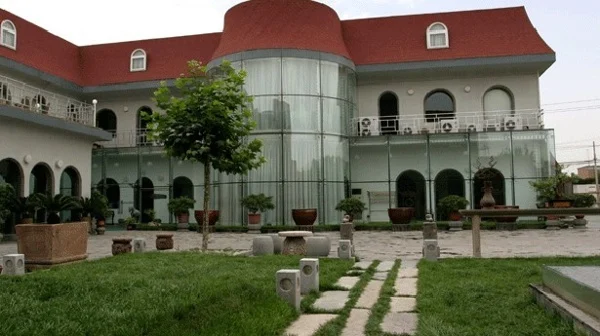
The venue sharpened the context further. The screen behind Qin in the photograph identified the location as the Qihao Center, a Beijing arts facility. Earlier reports circulating among overseas Chinese dissident communities had alleged, without verified corroboration, that the venue had connections to the disappearance of Yu Mengling, a Chinese actor whose fate became the subject of intense speculation in dissident media. Several observers noted the coincidence of Qin’s appearance at a location already associated with those allegations, raising questions about whether the facilities used during the two-plus years he was held had any connection to the same complex.
More generals investigated
The second significant development came during the Two Sessions in early March 2026. On Jan. 24 of this year, the Party announced that Zhang Youxia, one of the two vice chairmen of the Central Military Commission and one of the most powerful figures in the Chinese military short of Xi himself, and Liu Zhenli, a member of the commission, had been placed under investigation. The announcement was met with near-total silence from officials and military delegates attending the legislative session that followed; multiple military representatives were absent from scheduled appearances with no explanation offered.
In that environment, the controlled release of information about Qin Gang’s soft landing carries unmistakable political weight. Qin is being used as a signal. His reappearance in public, his demotion to a comfortable but marginalized retirement, and the timing of each disclosure relative to military purges collectively suggest that different factions inside the Party are using his case to communicate with each other, and with informed outside observers, about the internal power struggle over the Chinese military.
The pattern holds across both appearances. A man personally elevated by Xi Jinping, then personally disgraced, resurfaces at moments of maximum political tension: once when two of Xi’s top generals were officially destroyed, and once during the Two Sessions convened after two more senior commanders fell under investigation. Each time, the visible message is that Qin Gang remains alive, is being treated with a degree of consideration, and has not been made into an enemy of the state. Whether that message is intended to reassure Xi’s loyalists, to signal restraint from Xi’s opponents, or both remains unclear to outside observers. What is beyond dispute is that nothing about Qin Gang’s reappearances is accidental.
By Li Deyan