By Cai Siyun, Vision Times
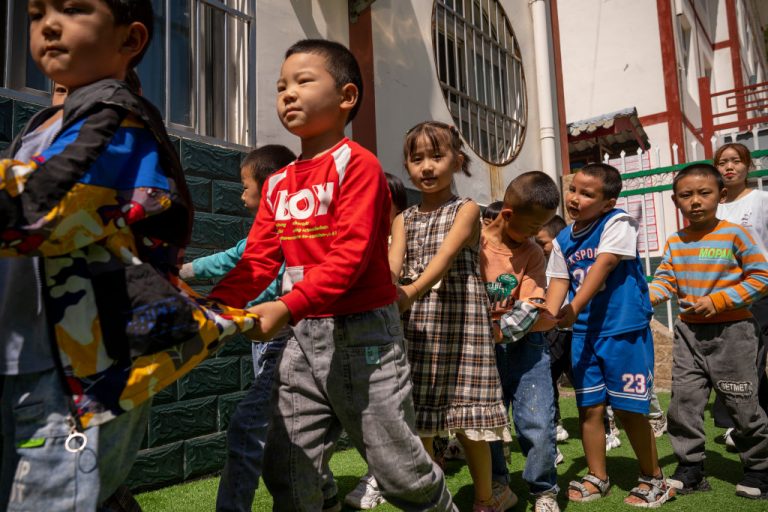
In recent years, an increasing number of kindergartens across mainland China have begun offering parents access to “real-time surveillance footage” of classrooms and playgrounds. For a fee, parents or guardians can watch their children through mobile apps throughout the school day. While some families see the system as a safeguard against abuse or neglect, critics warn that constant monitoring may disrupt teaching and hinder children’s development.
The trend has also sparked a slew of online comments from netizens who claim this type of surveillance could be problematic. According to China News Weekly, many kindergartens now allow parents to pay membership fees, typically several hundred yuan per semester, to access live video feeds through third-party platforms. Some schools have even begun marketing real-time monitoring as a competitive advantage when recruiting new students.
RELATED: Sudden Death of Henan Student Sparks Outrage as Authorities Rule Out Foul Play
A surveillance state
Under current Chinese regulations, kindergartens are required to install surveillance cameras in public activity areas. However, authorities have not clearly defined whether the footage should be accessible to parents or what limitations should apply.
Success
You are now signed up for our newsletter
Success
Check your email to complete sign up
Public kindergartens generally restrict access to surveillance recordings. Parents typically must apply through formal channels and may view footage only when disputes or safety incidents occur. Private kindergartens, however, often adopt a different approach. Some institutions advertise 24-hour access to cameras in classrooms, play areas, and other public spaces.

At the same time, some schools limit monitoring in areas such as rest zones to protect children’s privacy. Others impose additional restrictions, including limited viewing hours, bans on screenshots or playback, and mandatory mute settings. Monitoring services are often provided through third-party platforms rather than directly by the schools. Parents usually pay 200–300 yuan per semester for access.
A parent in Zhengzhou, Henan Province, described how the system works at her child’s kindergarten. “My child’s kindergarten cooperates with an early education platform,” she said. “The account cannot be shared, so each viewer must pay separately. The father’s account costs 300 yuan per semester. If the mother or grandmother wants to watch, they must each pay another 150 yuan.”
Several years ago, some kindergartens in provinces such as Jiangsu and Shandong were criticized by regulators for charging monitoring fees directly. Education authorities have since clarified that schools themselves are not allowed to collect surveillance fees from parents. However, if a third-party company charges for the service and the kindergarten does not profit from it, officials consider it a normal market transaction.
Cases of abuse
Despite ongoing privacy concerns raised by some education officials, many parents continue to support surveillance access. In interviews with China News Weekly, several parents said the option helps ease anxieties fueled by media reports of child abuse and corporal punishment in kindergartens. One mother, identified by the pseudonym Wu Qi, said she frequently checks the camera feed to observe her daughter eating, washing her hands, and participating in outdoor activities.
But constant access can also create dilemmas. When Wu noticed her daughter occasionally struggling with tasks, she considered asking the teacher for help. However, she worried about creating unnecessary tension and eventually decided to simply watch quietly. “Just don’t cross the line,” she told herself. “And don’t stare at the monitor all the time.”
Her concerns escalated when her daughter was scratched on the face by another child. Reviewing the surveillance footage later, Wu saw that her daughter had signaled for help, but the teacher did not intervene in time and never informed the parents. After seeing the injury during pickup, Wu confronted the school and requested to review the footage. Following negotiations, the teacher apologized.
A slippery slope
While surveillance can offer transparency, it may also place significant pressure on educators. A parent in Nanjing, identified as Xiao Wu, told reporters that some parents constantly monitor the cameras and immediately message teachers with instructions. “When the weather gets hot, they tell the teacher to take off the child’s jacket or remind them to drink water,” she said. “If the teacher doesn’t respond quickly, they call directly.”
Parents may also complain if a child’s shoes are on the wrong feet or if the teacher appears to interact with other children more frequently during class. “These requests happen every few days,” Xiao Wu said. As conflicts between parents and teachers increase, staff turnover can become a problem. Xiao Wu said her child’s class changed six teachers in less than a year.
Concerned about the instability, she eventually transferred her child to another kindergarten that does not offer video monitoring. She recalled a farewell message from one departing teacher: “Children getting bumps and bruises is part of growing up. Kindergarten teachers guide and accompany them through that process. Don’t examine everything with a magnifying glass; only trust allows children to grow better.”
Netizens react
Online discussions reflect sharply divided opinions. Some parents argue that monitoring provides reassurance. Others believe excessive surveillance harms both teachers and children. “Parents worrying about their children’s safety is understandable,” one commenter wrote. “But over-monitoring can actually hinder children’s development.” Another said: “Parents watch all day, how can teachers teach normally?”
Others remain skeptical about the system’s effectiveness. “I think the cameras are mostly a gimmick,” one user wrote. “When something really happens, the cameras suddenly ‘break.’” Another comment echoed widespread distrust: “What’s the point of surveillance? If a child disappears, the school just says the camera was broken.”
The debate comes amid growing public concern about child safety in China, where a number of missing children cases reported across several provinces in early 2026 have intensified parental anxiety. For many families, surveillance cameras may provide some reassurance, but critics say technology alone cannot replace trust between parents, teachers, and schools.