News analysis
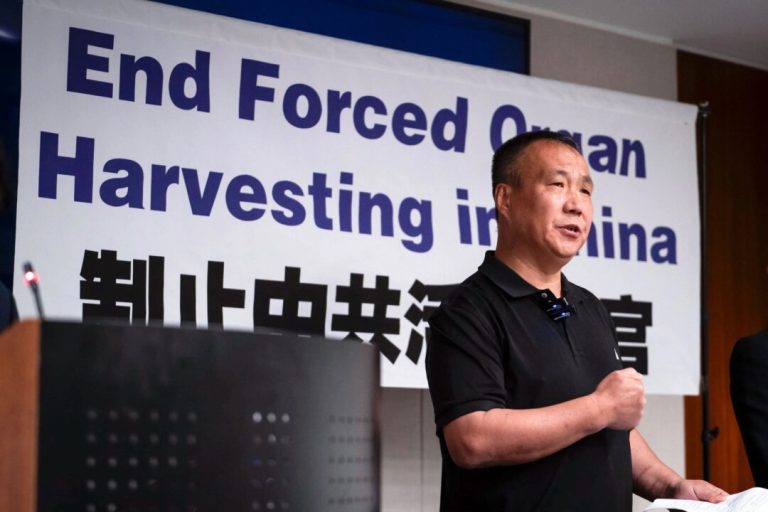
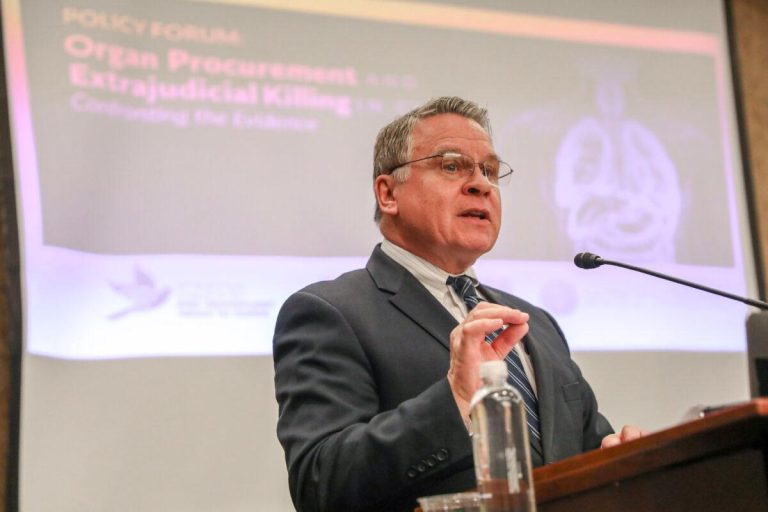
The Congressional-Executive Commission on China held a hearing in Washington D.C. in the morning of Thursday, May 14, to examine the systematic, state-enabled removal of organs from prisoners of conscience inside the People’s Republic of China (PRC).
The hearing, titled “A Market Built on Victims: Stopping Illegal Organ Trafficking in China and Beyond,” opened at 10 a.m. Eastern time in the Rayburn House Office Building, hours before President Donald Trump and Chinese leader Xi Jinping convened in Beijing for the first day of their two-day summit.
The Commission, chaired by Sen. Dan Sullivan (R-AK) and co-chaired by Rep. Chris Smith (R-NJ), is the bipartisan and bicameral congressional body that monitors human rights and rule-of-law conditions inside China. Its hearing announcement explicitly identified “Falun Gong practitioners, Uyghurs and other Turkic Muslims, and other political and religious prisoners” as targeted groups within what it described as a “state-enabled transplant system.”
Witnesses included Ethan Gutmann, senior research fellow at the Victims of Communism Memorial Foundation; former U.S. Ambassador-at-Large for International Religious Freedom Sam Brownback; Epoch Times senior editor Jan Jekielek; and Kalbinur Sidik, a survivor of the communist regime’s Xinjiang detention camps.
Stalled in the Senate
Success
You are now signed up for our newsletter
Success
Check your email to complete sign up
Smith’s Stop Forced Organ Harvesting Act of 2025 passed the House by a margin of 406-1 in May 2025. It authorizes sanctions, visa revocations, civil penalties up to $250,000, and criminal penalties of up to 20 years for those involved in forced organ harvesting or its facilitation. The bill has been with the Senate Foreign Relations Committee, chaired by Sen. Jim Risch (R-ID), for nearly a year and has not moved.
A second bill, the Falun Gong and Victims of Forced Organ Harvesting Protection Act, was introduced by Sen. Ted Cruz (R-TX) in March 2025. The Cruz bill is narrower in focus and zeroes in on PRC regime responsibility. It is also stalled in the same Senate committee.
Smith and Cruz are reportedly working on a compromise, according to the Washington Examiner. Senate Majority Leader John Thune (R-SD) is described in news reports as a supporter, and Trump is expected to sign whichever version reaches his desk. “Delay is denial if you’re a victim,” Smith told the Washington Examiner last week.
Witnesses Smith and Sullivan brought to the hearing have spent the past two decades constructing the documentary record on Chinese forced organ harvesting. Gutmann’s 2014 book The Slaughter and his 2026 update The Xinjiang Procedure trace the practice from its origins in early-1990s Xinjiang through its expansion to Falun Gong practitioners after the Chinese Communist Party (CCP) launched a nationwide persecution campaign against it in 1999, and then back to the Uyghurs after the Xinjiang detention system was built out in the 2010s.
Gutmann’s estimates, based on refugee interviews and on-the-ground investigation, place the annual number of Uyghurs killed for their organs at between 25,000 and 50,000.
‘Beyond reasonable doubt’
The 2019 China Tribunal, an independent body chaired by Sir Geoffrey Nice QC, the former lead prosecutor in the international case against Slobodan Milošević, concluded “beyond reasonable doubt” that forced organ harvesting had been committed against Falun Gong practitioners and Uyghurs and constituted crimes against humanity.
The Tribunal identified Falun Gong as the “main source” of the organ supply. A 2022 forensic study in the American Journal of Transplantation, co-authored by Australian National University doctoral candidate Matthew Robertson and Israeli heart-transplant pioneer Dr. Jacob Lavee, identified 71 Chinese-language medical papers in which surgeons appeared to violate the dead-donor rule while procuring hearts from prisoners.
The U.S. Commission on International Religious Freedom’s October 2025 testimony “Freedom Forsaken” describes the 26-year campaign against Falun Gong as the most sustained religious persecution in modern Chinese history. The U.K. Home Office’s November 2025 country policy note reproduces the same evidence, citing Minghui’s confirmation of 2,828 arrests of Falun Gong practitioners inside China in 2024 alone and 164 deaths in custody for that year.
PRC authorities claim to have reformed the Chinese organ procurement system and to source organs only from voluntary donors, but the 2019 China Tribunal concluded that the volunteer donor pool reported by Beijing could not mathematically account for the documented transplant volume.
Mounting evidence, growing moral imperative
The published previews of the Trump-Xi summit from Reuters, CNBC, Al Jazeera, the Council on Foreign Relations, and Chatham House describe the agenda as trade, Taiwan, the Iran war, artificial intelligence, rare earth minerals, and fentanyl. The Diplomat ran a piece on May 12 under the headline “Human Rights Are Off the Agenda at the Trump-Xi Summit in Beijing.”
Secretary of State Marco Rubio told reporters earlier that week that human rights concerns would be raised but added that “in some cases it’s most effective to raise them in the appropriate setting.”
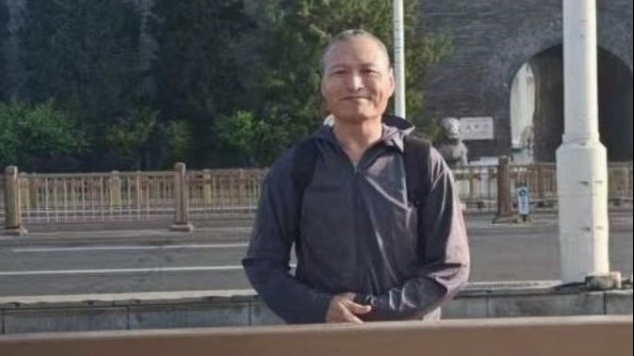
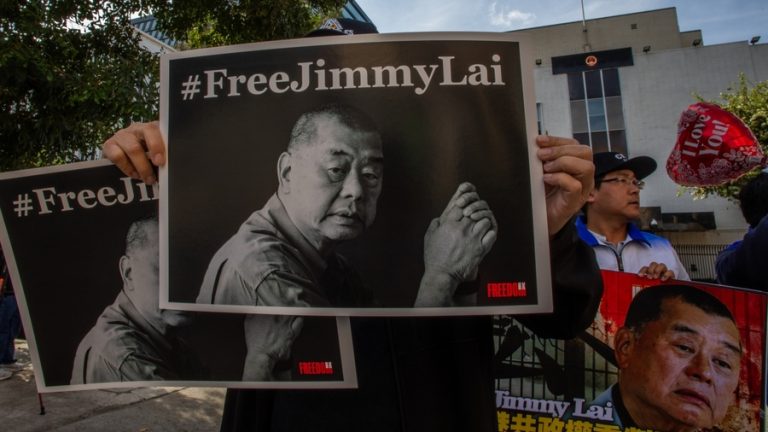
Trump said on Monday he intended to raise the cases of Hong Kong publisher Jimmy Lai and Pastor Jin Mingri, founder of Beijing’s Zion Church, both of whom are named in a separate House resolution that Smith’s office said this week is expected to pass. Forced organ harvesting is not named on any of the published summit agendas. The Trump administration has not publicly indicated whether the practice will be raised with Xi.
In a Washington Times op-ed published May 12, two days before the Commission hearing, Smith framed the legislation against the backdrop of a September 2024 incident in Beijing. Xi and Russian President Vladimir Putin were overheard on an open microphone discussing organ transplants and the prospect of living to 150 as they walked together to the reviewing stand for a Chinese military parade. Smith called the exchange “a glimpse into a politics that treats human beings as interchangeable parts and power as something to be medically engineered to last forever.”
The Chinese transplant industry, Smith wrote, generates as much as $1.7 billion a year. Wait times for organs in China are measured in days rather than the months or years standard in countries with voluntary donor systems.
The Commission’s hearing record, including written testimony from Gutmann, Brownback, Jekielek, and Sidik, will be added to a documentary base that has now accumulated over two decades. Whether that record translates into Senate action will depend on the Risch-led Foreign Relations Committee’s willingness to advance either the Smith bill or the Cruz bill, or a compromise between them.
Smith’s office has framed the hearing as deliberately timed to apply pressure on both fronts. Whether Trump raises the practice with Xi in Beijing on Friday will be the second test.