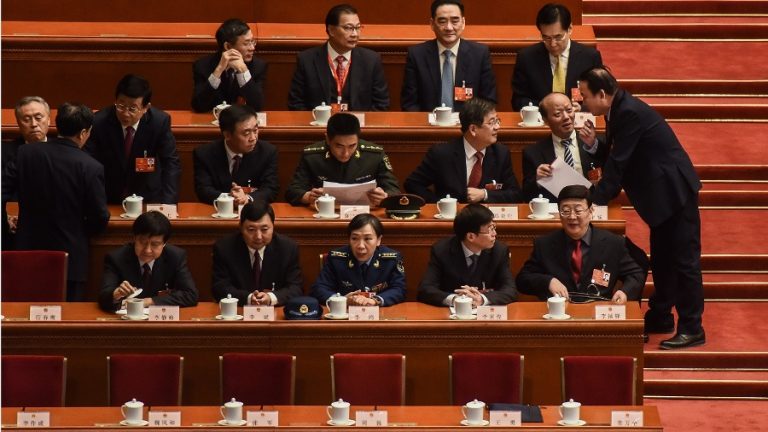
For decades, China’s annual “Two Sessions”, the National People’s Congress and the Chinese People’s Political Consultative Conference, have functioned as carefully staged political events. Press conferences involving both domestic and foreign journalists were part of that choreography, with most questions pre-arranged and tightly managed.
However, even within that system, there were moments when control slipped.
On rare occasions, an unscripted question or an unusually direct answer cut through the official narrative. Those moments did more than attract attention. They exposed tensions within the leadership and, at times, signaled shifts inside the Chinese Communist Party.
That limited space has now been closed.
Moments when the script broke
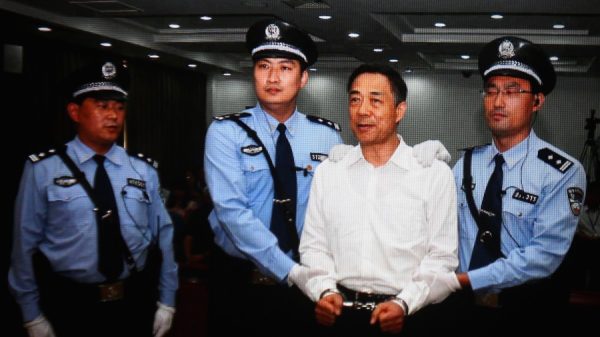
In March 2012, during the fallout from former Chongqing police chief Wang Lijun’s flight to a U.S. consulate, then-Chongqing Party chief Bo Xilai faced direct questioning from foreign journalists. He responded forcefully, rejecting allegations and defending his family, including his wife Gu Kailai and son Bo Guagua.
Success
You are now signed up for our newsletter
Success
Check your email to complete sign up
Days later, then-Prime Minister Wen Jiabao addressed the same issue at his annual press conference. His remarks were unusually sharp. Wen said the Chongqing leadership “must reflect” and “learn lessons” from the incident, and he invoked the lingering influence of the Cultural Revolution, a rare and pointed reference in official settings.
Accounts circulating at the time suggested Bo’s stance had backing from Zhou Yongkang, then head of China’s powerful Political and Legal Affairs Commission. Some reports said Zhou privately encouraged Bo during the meetings.
Other accounts indicated Wen’s comments were not spontaneous. According to these reports, then-CCP general secretary Hu Jintao, Wen, and Xi Jinping had already reached a consensus to remove Bo. Wen was said to have pushed for foreign journalists to raise the Chongqing issue, using the press conference to send a signal.
Bo Xilai was removed from his post the following day.
The 2018 ‘eye-roll incident’
In 2018, during a media session known as the “ministerial corridor,” a woman in red identifying herself as an executive from a U.S.-based television outlet delivered a long, highly flattering question. Standing beside her, journalist Liang Xiangyi from Yicai reacted with a visible eye roll.
The moment was broadcast live and quickly spread online.
Subsequent reporting by overseas Chinese media described the outlet as a shell organization. The reports linked it to Beijing’s external propaganda efforts, portraying it as part of a system designed to simulate foreign media participation while delivering pre-scripted, pro-government questions.
Accounts circulating afterward described internal fallout. Senior propaganda officials were said to be angered, viewing the episode as an embarrassment to a costly messaging strategy. Liang reportedly lost her press credentials, and lists of questionable “foreign media” organizations were reviewed.
2020: Li Keqiang’s blunt remark
In May 2020, at a delayed Two Sessions due to the pandemic, a question about poverty alleviation from a People’s Daily reporter appeared to offer a routine opportunity for official messaging.
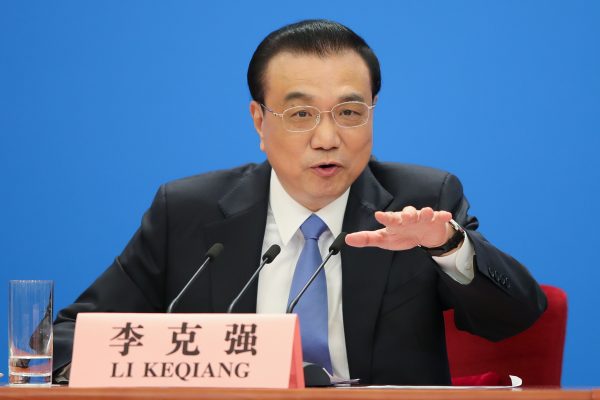
Instead, then-Prime Minister Li Keqiang delivered a strikingly direct response.
“China is a developing country with a large population,” Li said. “Our per capita annual income is 30,000 yuan (about $4,100), but there are 600 million people whose monthly income is only around 1,000 yuan (about $140). In a medium-sized city, that is not even enough to rent a room.”
At the time, China’s leadership had set the goal of achieving a “moderately prosperous society in all respects.” Li’s remarks were widely seen as cutting against that narrative.
Reports and commentary suggested the statement deepened tensions between the Party leadership and the State Council. According to these accounts, the remarks prompted dissatisfaction within Xi Jinping’s office, followed by efforts from propaganda authorities to downplay the discussion and provide official explanations.
Some analysts later described the comment as one of Li’s final candid statements while in office.
What lies behind the questions
Ming Chu-cheng, a political scientist and emeritus professor at National Taiwan University, has argued that such moments reflect internal political competition rather than genuine public accountability.
When disputes cannot be resolved internally, he has said, controlled public settings may be used to send signals beyond the leadership. The exchange between Wen Jiabao and Bo Xilai fits that pattern.
Cheng Xiaonong, a U.S.-based Chinese economist, has taken a similar view of Li’s remarks. In interviews with Radio Free Asia, he said China’s economic data often serves political purposes. Li, as a technocratic leader, understood the pressures facing the economy, and his comments reflected an effort to place a more accurate record on the public stage.
Yu Maochun, a former senior China policy adviser at the U.S. State Department, has described the Chinese Communist Party as deeply wary of uncontrolled information. In his view, the elaborate management of press questions points to a lack of confidence. When unexpected incidents occur, the response tends to be suppression and narrative control.
The end of a political ritual
In March 2024, during the second session of the 14th National People’s Congress, officials announced that the premier’s press conference would no longer be held annually. The decision brought to an end a practice that had continued for more than three decades.
Lou Qinjian, spokesperson for the National People’s Congress, said information released through ministerial briefings and the government work report was sufficient, making a separate press conference unnecessary.
Outside analysts interpreted the move differently. Questions from foreign journalists have become increasingly difficult to manage, and past incidents have demonstrated the risks of even limited openness.
The change reflects a broader shift in China’s political structure. The State Council, once seen as having a distinct institutional role alongside the Party leadership, is now widely viewed as subordinate.
Removing the premier’s most visible public platform further reinforces that shift. Power is increasingly concentrated at the top, with fewer channels for independent voices to emerge within the system.
By Fu Longshan
Editor’s Note: This article is based on media reports, publicly shared online videos, blogger statements, and personal testimony cited by overseas media. Some claims, including internal Party deliberations and personnel dynamics, have not been independently verified and are presented as allegations or analysis from cited sources.