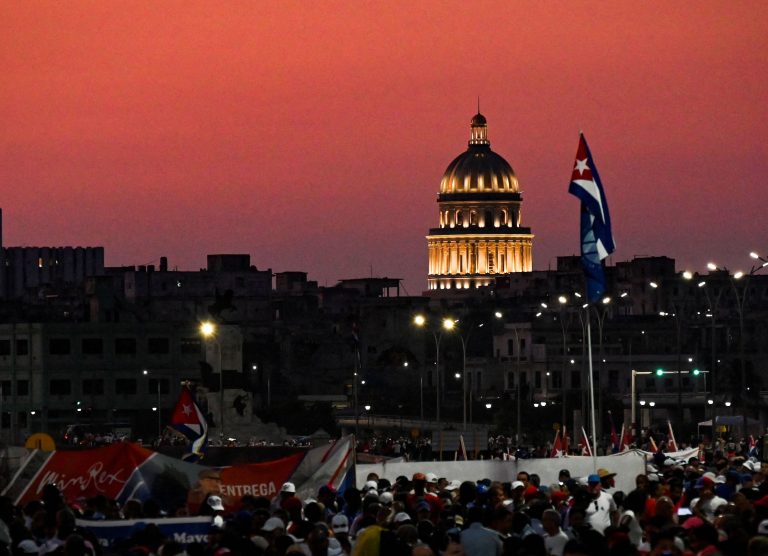
Cuba’s leadership faces potentially historic changes amidst continued pressure from — and engagement with — the U.S. government.
President Miguel Díaz-Canel, who took office in 2018 as the first non-Castro leader since the 1959 revolution brought Cuba’s communist regime to power, remains in office with two years left in his term.
However, analysts and some Cubans have increasingly questioned his political durability amid deepening economic difficulties and rising public dissatisfaction. In early March, Cuba suffered a nationwide blackout that left nearly all of its 11 million people without power.
The Trump administration has been pushing the idea of affecting regime change in the Caribbean island country, with the American president saying he would “have the honor” of taking Cuba.
Havana has begun rolling out limited economic reforms following renewed contact with Washington. On March 13, Díaz-Canel confirmed on state television that Cuban and U.S. officials had resumed discussions, emphasizing that talks would proceed with “respect for sovereignty and political systems.”
Success
You are now signed up for our newsletter
Success
Check your email to complete sign up
The setting of the announcement reflected the tension surrounding the move. Behind Díaz-Canel hung a portrait of Fidel Castro, alongside a quote from José Martí, the country’s national hero, emphasizing resistance to foreign domination.
Some reports indicate that Washington is working with the Cuban authorities to replace Díaz-Canel, while having the country work towards economic and political reforms.
According to observers, such a leadership shakeup would likely rely on the attitude of relatives of Fidel Castro, the communist revolutionary who led Cuba from 1959 until his death in 2016. His family remains deeply influential in Cuban politics.

Moving towards limited reforms
Oscar Pérez-Oliva Fraga, Cuba’s deputy prime minister and minister of foreign trade and foreign investment, has emerged as a central figure in both the economic opening and the country’s external negotiations. Analysts describe him as a technocratic figure with experience in trade and investment policy.
Shortly afterward, Cuba announced measures allowing citizens living abroad to invest more directly in the domestic economy. The changes include the ability to open foreign currency accounts, acquire stakes in businesses, and access agricultural land.
Pérez-Oliva has risen quickly within the government, taking on senior roles since 2024 and securing a seat in the National Assembly, a requirement for the presidency. His growing prominence has led some observers to view him as a potential future leader, according to AP.
Another figure drawing attention is Raúl Guillermo Rodríguez Castro, grandson of former leader Raúl Castro. Though he has not held a formal government post, he has appeared at official events and was reportedly involved in contacts with U.S. officials earlier this year.
The shift comes against the backdrop of intensifying pressure. Since 2025, the United States has maintained Cuba on its list of state sponsors of terrorism and continued tightening financial and economic restrictions, adding strain to an already fragile system.
At the same time, the country is confronting a severe energy crisis. Prolonged power outages have disrupted daily life and weakened the tourism sector, one of Cuba’s primary sources of foreign exchange.
Regional changes have compounded the problem. Following a shift in Venezuela’s relationship with Washington, oil supplies to Cuba have been significantly reduced, further exposing the island’s dependence on imported fuel.
With most of its electricity generation reliant on oil-based fuels, the impact has been immediate. Repeated blackouts and declining economic activity have become defining features of daily life.

Who could take over?
Sebastián Arcos of Florida International University told the AP that Rodríguez Castro “enjoys the absolute trust of Raúl Castro,” though he questioned whether a figure so closely tied to the Castro family could represent political change.
Despite speculation over possible leadership changes, analysts note that real authority in Cuba remains concentrated within the military and senior leadership networks tied to Raúl Castro, who, at 94, continues to wield significant influence behind the scenes.
Arcos told AP that Díaz-Canel could “very well be replaced” by Pérez-Oliva, while a Castro officially taking the leadership would be a no-go for the Trump administration, since Washington would want to project an image of having brought about major change in the country.
Economic pressures have intensified the current moment. Cuba faces persistent shortages, declining tourism revenue, and an ongoing energy crisis marked by frequent blackouts. Reduced oil shipments from Venezuela and continued U.S. sanctions have added to the strain.
“The living conditions of the population are on the verge of a humanitarian crisis,” Carlos Rodríguez Arechavaleta, a Cuba expert at the Iberoamerican University, told the AP.
Public frustration has grown alongside these challenges, with protests emerging in response to shortages and deteriorating living conditions. The government’s response to earlier demonstrations, including a crackdown following protests in July 2021, has also shaped public perceptions of the current leadership.
Cuban officials have rejected suggestions that political change is under discussion with Washington. Deputy Foreign Minister Carlos Fernández de Cossío said recently that “the Cuban political system is not up for negotiation,” according to remarks cited by the AP.