In 2021, a top humanities student from Anqing, Anhui Province was admitted to Peking University, widely seen as China’s most prestigious university. His success was held up as proof that academic achievement could still shape one’s future.
A few years later, he is delivering food on city streets.
The story has circulated widely online. Some dismiss it as a personal failure. Others point to the limited prospects of humanities degrees. But the case points to a deeper problem in China’s education system under Communist Party rule. Even the country’s most elite universities, the author argues, operate less as engines of opportunity than as systems that produce a highly educated yet ultimately expendable workforce.
The illusion of sociology
Online, some have described his job as “the most immersive sociology fieldwork.” After more than a decade preparing for exams and four years studying Chinese society at Peking University, he entered the real world only to find that he was not analyzing the system, but living inside it.
Instead of observing society, he became subject to its constraints.
Success
You are now signed up for our newsletter
Success
Check your email to complete sign up
His experience reflects broader structural patterns. China’s secondary education system is built around exams, training students to solve problems rather than question them. Universities, meanwhile, often function as insulated environments, delivering politically filtered knowledge while offering little preparation for life beyond campus. At the societal level, success is measured through a narrow, utilitarian framework that prioritizes serving state needs over individual aptitude.
By the time students graduate, even top scorers are shaped into efficient test performers. Once they leave the exam system and face a slowing economy, their options can narrow quickly. In this context, the issue is not individual failure, but the limits of the system itself.
From intellectual tradition to political conformity
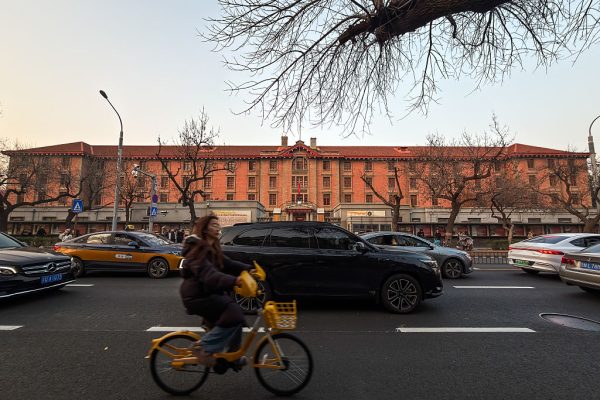
Peking University still carries a reputation as a center of intellectual life. Yet under Communist Party rule, the institution has long been shaped by political priorities.
In 1992, when China moved toward what it called a “socialist market economy,” one might expect leading universities to adapt quickly. Instead, for more than two years, Peking University continued to teach planned economy doctrines. According to the author, this reflected not academic delay but political control. Curriculum changes followed Party directives, not scholarly debate.
The shift became more pronounced after the 1989 Tiananmen Square crackdown, when universities, including Peking University, came under increasingly tighter supervision. Once associated with the May Fourth Movement and its calls for science and democracy, the institution gradually moved toward ideological conformity.
Today, the author contends, the system does not prioritize independent thinkers. It favors those who are compliant, pragmatic, and aligned with prevailing expectations. Students spend years absorbing political education, yet receive limited guidance on how to navigate professional life.
An inescapable system
A widely shared comment captures the sentiment: “You don’t need a Peking University degree to deliver food.”
The remark reflects a broader sense of disillusionment. In an economy marked by slowing growth and fewer opportunities, educational background offers less protection than it once did. Whether vocational graduates or alumni of elite universities, many face similar constraints within the same system.
The story of this graduate challenges a long-promoted belief that education guarantees upward mobility. It suggests instead that in a system where resources are tightly controlled and intellectual boundaries remain defined, even elite credentials may not translate into meaningful opportunity.
For the author, the conclusion is clear. As long as the structure remains unchanged, academic success alone cannot determine one’s future. What appears as an individual outcome reflects a broader condition affecting a generation navigating the limits of a controlled system.
The views expressed are solely those of the author.
By Chen Jing