By Li Deyan, Vision Times
Chinese authorities have formally arrested Jin Xiangjun, the former governor of Shanxi Province, on charges of bribery, marking the latest development in a corruption case that has drawn attention to rippling political tensions within the Chinese Communist Party (CCP).
According to a statement released on March 23, by China’s state broadcaster CCTV, the investigation into Jin has concluded, and prosecutors have decided to “formally charge him with bribery.” The case has been transferred to the People’s Procuratorate of Xinyang in Henan Province, which has already filed charges with the local intermediate court.
RELATED: China’s Political Advisory Body Under Scrutiny as Top Level Officials Go Missing
Prosecutors outline corruption charges
The indictment alleges that Jin abused his authority while serving in several senior positions, including mayor and party secretary of Yulin in Guangxi, party secretary of Fangchenggang, vice mayor and deputy party secretary of Tianjin, and later deputy party secretary and governor of Shanxi Province.
Success
You are now signed up for our newsletter
Success
Check your email to complete sign up
Prosecutors claim that Jin used the influence associated with these roles to secure benefits for businesses and individuals in areas such as project contracting and corporate operations. In return, he allegedly accepted “particularly large amounts of illegal payments,” which authorities say constitute bribery under Chinese law.
Jin first came under investigation in April 2025, when China’s Central Commission for Discipline Inspection announced that he was suspected of “serious violations of discipline and law.” At the time, he became the first sitting provincial governor to be investigated since the CCP’s 19th Party Congress.
According to Chinese media outlet Caixin, Jin was still presiding over official meetings on April 10, 2025, before being taken away for questioning the following day. Shortly afterward, he resigned from his position as governor.
In October 2025, authorities expelled Jin from the CCP and removed him from public office, transferring the case to prosecutors for criminal proceedings. The official disciplinary notice accused him of multiple violations, including failing to properly implement central government policies, accepting bribes during the promotion of officials, engaging in “power-for-money and power-for-sex transactions,” and using his position to benefit companies involved in construction and business projects.
Jin was also stripped of his status as a delegate to the 20th CCP National Congress.
Allegations involving political connections
Beyond the official charges, various claims circulating among political commentators have suggested possible political implications behind the case.
Some reports allege that Jin’s wife may have been involved in influence-peddling activities alongside the wife of Li Ganjie, China’s current head of the United Front Work Department and former minister of the powerful Organization Department, which oversees CCP personnel appointments. According to these allegations, the two were involved in selling official positions, though the claims have not been independently verified.
Another claim circulated by overseas commentators suggested that after being detained, Jin reported Zhang Chunlin, chairman of the Shanxi Provincial Political Consultative Conference, accusing him of secretly monitoring his family.
These accounts remain unconfirmed but have contributed to speculation about deeper factional struggles within China’s political system.
Leadership reshuffle raises questions
Shortly before Jin’s investigation became public, Li Ganjie underwent an unexpected leadership reshuffle. In April 2025, Li was transferred from the influential position of minister of the CCP Organization Department, one of the most powerful posts responsible for managing party personnel decisions, to become head of the United Front Work Department, a role focused on expanding the party’s influence over religious groups, ethnic minorities, and overseas communities.
The change came after a Politburo meeting in which Li effectively swapped positions with Shi Taifeng, who moved from the United Front department to lead the Organization Department.
Political observers noted that such high-level exchanges between senior officials are relatively rare within the CCP leadership structure.
Factional rivalries, political fallout
Some analysts believe Jin’s rise within the political system was closely tied to former Tianjin party chief Li Hongzhong, a senior official now serving on the CCP Politburo.
Independent political commentator Cai Shenkun previously noted that Jin gained Li Hongzhong’s trust while serving in Tianjin, eventually becoming the city’s party committee secretary-general, a key administrative position often described as the leader’s chief aide.
Cai suggested that Jin’s later appointment as governor of Shanxi may have been influenced by Li Hongzhong’s recommendation. However, Cai and other observers argue that Jin’s downfall could also reflect continuing factional struggles among senior party figures.
Impact on Li Ganjie’s political standing
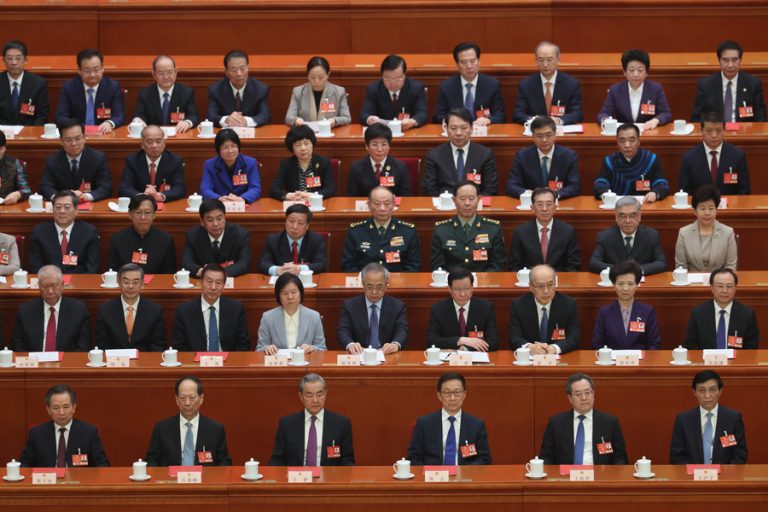
Developments surrounding the Jin case may also have implications for Li Ganjie’s political trajectory. During the 2026 session of the Chinese People’s Political Consultative Conference, Li was notably absent from the list of conference members.
Under typical arrangements, the head of the United Front Work Department often serves as a vice chairman of the CPPCC, a role that usually requires membership in the body. However, Li was not added as a new member during the conference’s standing committee meeting, suggesting that he may not receive the position.
Some observers view this as a potential sign that Li’s influence has weakened amid ongoing internal political dynamics and upheaval within the CCP’s top echelons.
Editorial note: Views expressed in this article are the opinions of the author and do not necessarily reflect the views of Vision Times.