The Hong Kong Special Administrative Region (HKSAR) government on March 23 announced revisions to the implementation rules of Article 43 of the Hong Kong National Security Law, which came into effect the same day. The new rules further strengthen law enforcement powers in national security cases, including the authority to request electronic device passwords, enhanced oversight of “agents of foreign forces,” and expanded measures for asset freezing and information control, raising concerns internationally over human rights and freedoms.
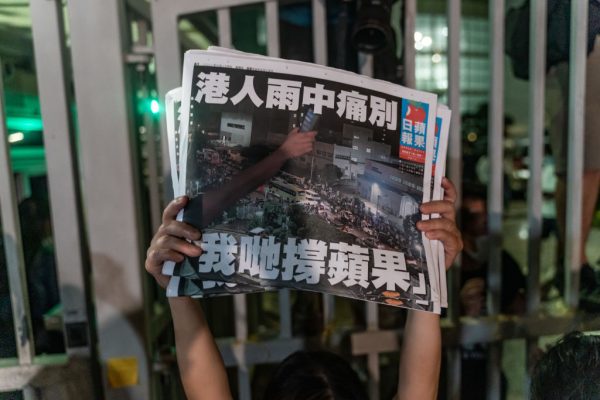
Hong Kong saw the “anti-extradition” protests in 2019, followed by the enactment of the National Security Law in 2020, under which participants in the protests were arrested, prompting a wave of emigration from the city. Jimmy Lai, founder of Hong Kong’s Next Digital media group, was sentenced in February this year to 20 years in prison for violating the National Security Law, drawing criticism of China and the Hong Kong government for suppressing freedom of speech and press.
Authorities can request device passwords; refusal may carry criminal penalties
Under the revisions, police investigating cases involving threats to national security may require individuals to provide unlock passwords for phones, computers, or assist in decryption. Refusal can result in a maximum fine of HK$100,000 and one year imprisonment; providing false or misleading information carries a maximum penalty of three years.
In addition, law enforcement is granted broader powers to access, retrieve, and even transfer electronic data deemed related to national security cases, strengthening evidence-gathering capabilities.
Another key point of the revisions is the establishment of a regulatory system for “agents of foreign forces.” Authorities can require individuals or organizations identified as such to declare their activities, funding sources, assets, and expenditures in Hong Kong within a specified period.
Success
You are now signed up for our newsletter
Success
Check your email to complete sign up
The term “foreign forces” covers foreign governments, political organizations, and related entities. Failure to report or providing false information can result in stricter criminal penalties.

Expanded law enforcement powers include asset freezing and information removal
The new rules also grant customs and other departments the authority to freeze, restrict, confiscate, or seize property involved in national security cases, and to seize items considered to have a seditious intent.
For information control, the government strengthens mechanisms to remove online content deemed a threat to national security, responding to the rapid spread of information across platforms.
The Hong Kong government stated the revisions are “technical adjustments” to improve law enforcement mechanisms, include judicial oversight, comply with the Basic Law and the National Security Law’s human rights protections, and will not affect daily life or normal business operations.
However, scholars and some observers argue that the new measures significantly expand enforcement powers—particularly the authority to request personal device passwords and regulate foreign contacts—potentially further curtailing freedom of speech and privacy. They view this as a continuation of strengthening Hong Kong’s national security apparatus.
Ann Lau, chair of the Los Angeles-based Visual Artists Guild, told the media that under the Hong Kong National Security Law, any criticism of the government is already suppressed.