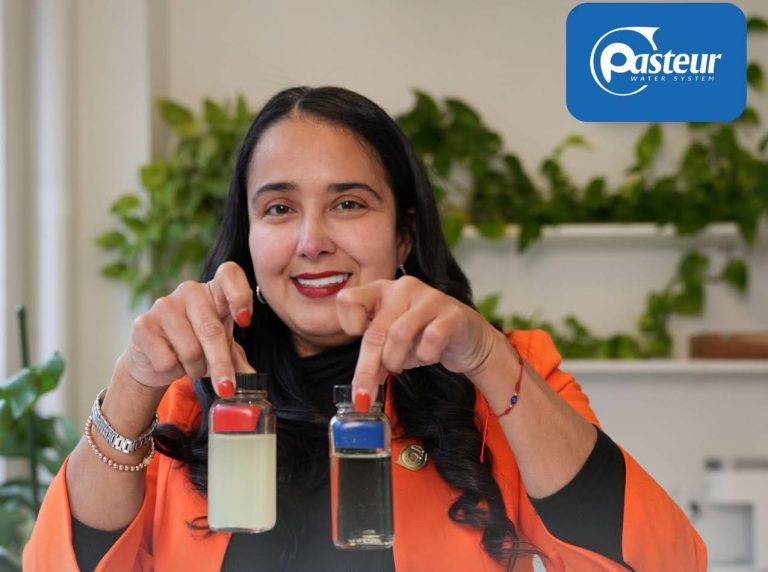
As more families across the Tri-State area become increasingly aware of environmental factors that may impact health, water quality is gaining renewed attention. In a recent interview, Lucia Molina, a water analyst, shared her experience testing residential water and educating homeowners about what may be present in their daily supply.
Real results from local families
Before diving into the science of water quality, Molina points to real-life experiences that highlight why it matters.
One case involved a child with severe eczema: “Her skin was red… three days after having a purification system, her skin changed… it got better.”
Another homeowner, Wendy, experienced unexpected issues despite already having a system installed: “Her hair was falling off… we checked her water softener—it was not working… after the new system, she saw a difference in two days.”
Molina added that the improvement was noticeable very quickly: “Two days, two days, she saw the difference in her skin… it was not ashy, it was nice.”
Success
You are now signed up for our newsletter
Success
Check your email to complete sign up
The changes also extended to Wendy’s family: “Her son’s skin was ashy and had eczema… and now it’s beautiful,” she said.
What’s really in the water?
With growing concern around environmental health, many homeowners are beginning to take a closer look at their water. According to Molina, most are unaware of what is actually in their water until it is tested.
“I see many heavy metals, a lot of chlorine, a lot of sediments in the water… you find heavy metals, higher minerals, other type of contaminants that people are not aware of,” she said.
Common substances she identifies include lead, mercury, arsenic, and chromium, along with elevated levels of minerals such as calcium, magnesium, and iron. She also notes the presence of bacteria, nitrates, nitrites, and PFAs in some homes.
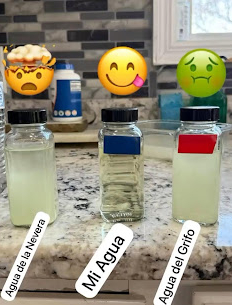
“Many people think just because you have tap water and it’s clear, it’s good water. Clear water doesn’t mean it is good water.”
Bottled water and filters: not always enough
Many households turn to bottled water or small filtration systems, assuming they provide safer alternatives. However, Molina cautions that these solutions may not fully address the problem.
“Bottled water has microplastic… How do you know they really purify that water?” she said.
She also explained that common household filters have limitations: “A filter is just carbon that eliminates chlorine and big particles… at least you take out the chlorine, but not the heavy metals.”
Why clean water is essential
Molina emphasizes that clean water is fundamental to overall health, especially for children. “Clean safe water is one of the most important foundations… especially in youth, especially in children.”
In her experience, poor water quality is often linked to everyday health concerns. “You get dry skin, you get eczema… all these problems are occurring because of the water.”
Her mission, she says, is simple: “My job is… how can I help you have better drinking water… to protect your family.”
Bringing the lab to your home
A key part of Molina’s work is offering free in-home water testing, allowing families to better understand their water before making decisions.
“I will bring the laboratory to your home… I check for chlorine, nitrates, nitrites, iron, sediments, bacteria… pH, fluoride, copper, mercury—I check for everything.”
She also reviews publicly available data to understand regional water conditions. “I go into the government’s website… it tells you what contaminants are in that area, and then I double check.”
Her approach is centered on education rather than sales. “It’s not just trying to sell you a system… I love to educate people on what’s really there.”
Customized solutions for every home
Molina stresses that water treatment should be tailored to each household. “Our system is not a standard treatment… it’s based on the condition of the water.”
She highlights reverse osmosis as one of the most effective options: “Reverse osmosis would purify the most… you could actually drink and cook with that instead of buying bottled water.”
City water vs. well water
The interview also explored differences between municipal and well water.
“City water is treated… well water is not treated—you have to treat it yourself,” Molina explained.
However, she notes that treatment alone does not guarantee purity. “They put chemicals to clean it… but the contamination is so big that a small filter won’t do the job.”
Because well water can vary even between neighboring homes, individual testing remains essential.
First step: test your water
For families looking to take action, Molina offers simple advice: “The first step—test.”
Understanding water quality is key to making informed decisions. “They need to know what’s in the water—how we’re going to treat it.”
A balanced perspective
Water quality plays an important role in a healthy home. While clean water helps reduce exposure to harmful substances, many health conditions are influenced by a combination of factors.
For Molina, awareness is the starting point: “You have to educate… people need to understand what’s in their water.”
This is a paid promotion