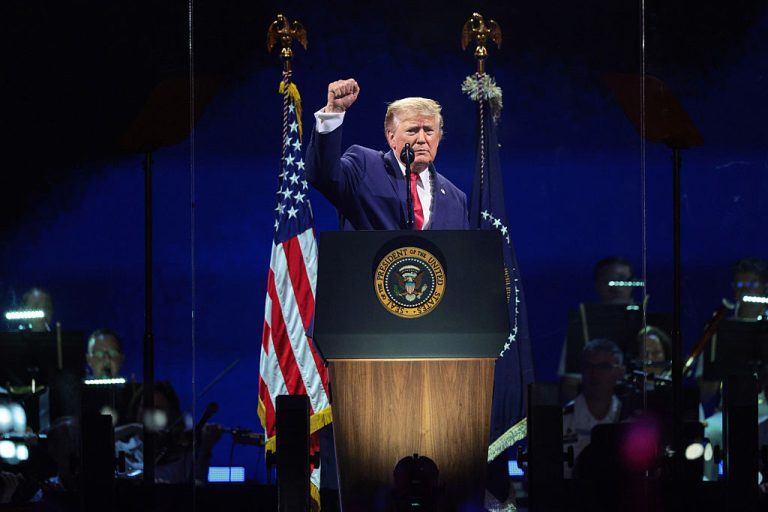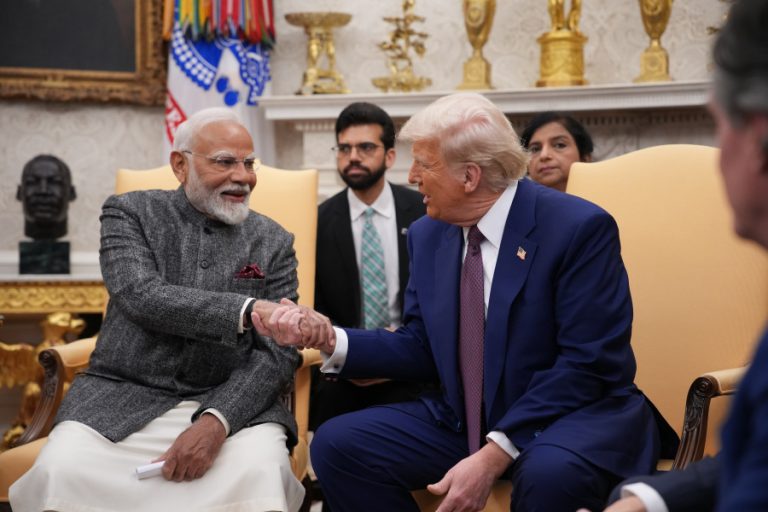
U.S. and Indian leaders on Tuesday, March 24 discussed the situation in the Middle East and energy security. U.S. Ambassador to India Sergio Gor stated on X that U.S. President Donald Trump spoke by phone with Indian Prime Minister Narendra Modi that day. The two focused on the current Middle East situation and jointly emphasized the importance of keeping the Strait of Hormuz open.
Modi later confirmed the call on X, saying that the two sides had a “beneficial exchange of views” on the West Asian situation and emphasized India’s support for de-escalating tensions and restoring peace as soon as possible.
He noted that ensuring the Strait of Hormuz remains open, safe, and navigable is crucial for the world, and both sides agreed to continue communication to promote peace and stability.
Regarding U.S.-Iran relations, Trump had earlier stated on social media on Monday that the U.S. had held “very good and productive” talks with Iran and had ordered a five-day pause on previously planned military action against Iran’s energy infrastructure. However, Iranian officials and state media denied any “direct or indirect” negotiations with the U.S.
Although Iran officially denied talks, multiple sources indicate that senior Iranian officials are indeed considering engagement with the U.S. Trump also revealed that the U.S. is currently communicating with a “key figure” within the Iranian regime to try to push toward ending the conflict. He emphasized, however, that these high-level contacts do not involve the newly appointed Supreme Leader Mojtaba Khamenei.
Success
You are now signed up for our newsletter
Success
Check your email to complete sign up
Other reports indicate that the U.S. is seeking appropriate Iranian interlocutors, with Iranian Parliament Speaker Mohammad Bagher Ghalibaf considered a potential channel.
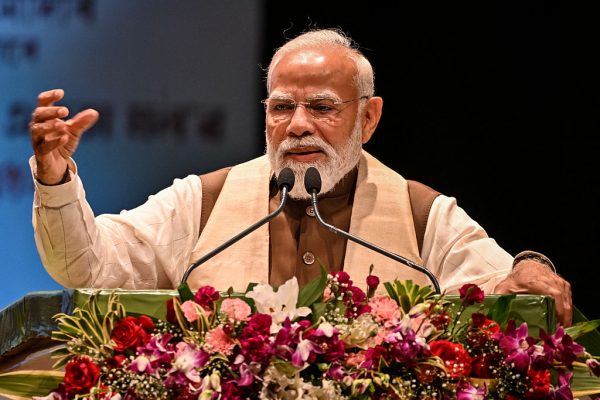
Modi says India has sufficient oil reserves
Meanwhile, Modi said in a speech at India’s Rajya Sabha that despite the West Asian conflict disrupting the key Strait of Hormuz, India has sufficient crude oil reserves and a stable energy supply mechanism. Since much of India’s energy imports—including crude oil, liquefied natural gas (LNG), compressed natural gas (CNG), and liquefied petroleum gas (LPG)—depend on transport through the strait, changes in the situation have a pronounced impact.
India is currently facing tight LPG supplies. This energy source is widely used in households, restaurants, and several industrial sectors.
Modi said: “The Strait of Hormuz is one of the world’s most important trade routes, with large volumes of crude oil, natural gas, and fertilizer transported through it. Our goal is to ensure energy can reach India smoothly from anywhere. These efforts are already bearing fruit. In the past few days, ships carrying crude oil and LPG from multiple countries have arrived in India, and these operations will continue.”
On regional diplomacy, Modi also spoke with Sri Lankan President Anura Kumara Dissanayake. They focused on the impact of the West Asian situation on global energy security and reviewed measures to strengthen India-Sri Lanka energy cooperation and enhance regional security. Modi said both sides reaffirmed their commitment to close cooperation as trusted partners to jointly address related challenges.
Additionally, Indian Foreign Minister S. Jaishankar met on the same day with Iranian Ambassador to India Mohammad Fathali to exchange views on the West Asian conflict. Jaishankar expressed gratitude to Iran for providing support to Indian citizens in the current situation.
As the U.S. and India strengthen communication on the Middle East and energy security, the U.S. is also advancing multilateral diplomatic coordination.
U.S. State Department Principal Deputy Spokesperson Tommy Pigott issued a statement on Tuesday saying that Secretary of State Marco Rubio will travel to France this Friday to attend the Group of Seven (G7) Foreign Ministers’ Meeting.
Pigott said that key topics at the meeting will include the Russia-Ukraine war, the Middle East situation, and multiple global threats to peace and stability.
By Gao Yun