U.S. President Donald Trump has announced the new date for the “Trump–Xi meeting” on his Truth Social platform, referring to Xi Jinping as “highly respected.” However, an article published in Israel’s largest English-language newspaper noted that Trump “believes it is necessary to first dismantle the Chinese Communist Party’s global support structure in order to defeat it.”
It is clear that Trump waited until a “major package” was ready before confirming the date of his meeting with Xi Jinping.
Trump announces new meeting date
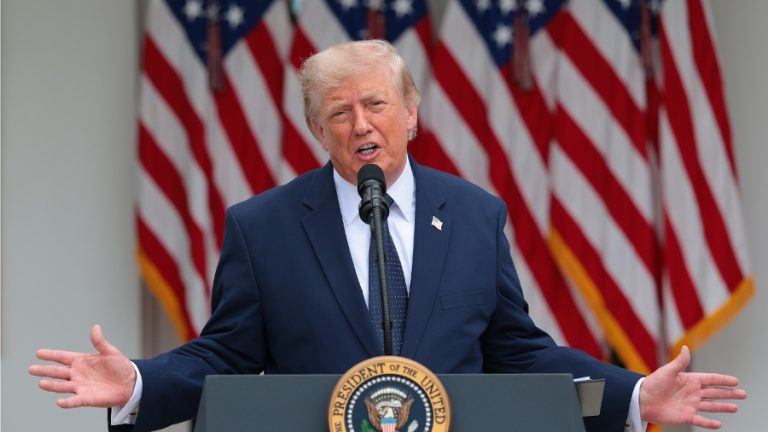
On March 25, President Trump posted on his Truth Social platform announcing the official date of the “Trump–Xi meeting.”
Trump said: “My previously scheduled meeting with the highly respected President Xi of China, which was postponed due to our military actions in Iran, has now been rescheduled. It will take place on May 14 and 15 in Beijing.
First Lady Melania and I will also host President Xi and Madame Peng in Washington, D.C., later this year for a reciprocal visit.
Success
You are now signed up for our newsletter
Success
Check your email to complete sign up
Our representatives are making final preparations for these historic visits. I very much look forward to spending time with President Xi, and I believe it will be a highly significant event.
Thank you for your attention to this matter!
President Donald J. Trump”
At this point, people are no longer paying much attention to Trump’s phrasing about Xi—such as “highly respected” or “I have a very good relationship with Chairman Xi”—because they have observed that while saying these things, Trump has exerted what could be described as “unprecedented” pressure on the Chinese Communist Party (CCP) and Xi Jinping.

The ‘big package’ Trump brings to Xi
Recently, Hudson Institute researcher and contributor Zineb Riboua said in an interview that the era of China acting as a major buyer of Iranian oil at “steep discounts” is coming to an end.
In an interview with Sky News host James Morrow, she said: “It is the United States that is deciding which tankers—and when—can go to China. This means that the long-standing period during which China profited from buying Iranian oil at large discounts and became its primary buyer is, in my view, coming to an end.”
This, in fact, is one of the “generous gifts” Trump is bringing to Xi and the CCP at the meeting.
On March 24, Hudson Institute researcher John Lee wrote in an article that “regardless of how the situation in the Middle East develops, Xi Jinping will feel more uneasy about the global situation—and that is a good thing for deterrence.”
In the article, titled “How Trump’s War on Iran Will Affect China’s Strategic Calculations on Taiwan,” Lee wrote: “War largely depends on weapons stockpiles, supply chains, and logistics. In the short term, if the U.S. needs to deploy military force in Asia, its capabilities will indeed be stretched.
“Operation Epic Fury” is described as the most intense airstrike campaign at the early stage of a war in history. It is estimated that the U.S. used over 5,000 munitions in the first four days and more than 11,000 in the first 16 days, including over 300 Tomahawk cruise missiles launched at the outset—despite the Pentagon having originally planned to procure only 57 new Tomahawks this fiscal year.
The situation is even more severe regarding expensive Patriot and THAAD interceptors. The U.S. reportedly used around 140 and 150 of these interceptors in the first few days of the war, while only 39 are expected to be delivered by 2027. Although stockpile levels are highly classified, the Trump administration plans to increase annual production of Tomahawk missiles from 60 to 1,000, and Patriot interceptors from 600 to 2,000. However, these are still plans and have not yet received congressional funding.
These factors do not mean Xi is eager for a quick and successful military action against Taiwan. First, recent large-scale purges within the military leadership—including the removal of senior generals and Central Military Commission Vice Chairman Zhang Youxia—have created significant short-term command gaps. Many of these purges occurred within the Rocket Force, which is specifically tasked with Taiwan operations.
When considering whether to take Taiwan by force, the CCP must first assess whether it can land troops without suffering unacceptable losses, and whether it can force Taiwan to surrender within weeks. Beijing does not know the answer, which leads to the next key question: Does the United States have the resolve to fight such a war?
If it does, then any use of force against Taiwan could bring disaster to all parties—especially China. A foreign policy catastrophe could even pose an existential threat to the ruling Communist Party and Xi himself, which is a key reason for Beijing’s hesitation.
Most importantly, this is not just a calculation of military balance in Northeast Asia, but an assessment of the “balance of resolve” between two major powers. In reality, it resembles a guessing game about Trump’s willingness to escalate conflict. The author believes Xi is unlikely to trust the notion that “Trump will always back down”—a view that Iranians clearly do not share either.
Overall, regardless of how the Iran situation evolves, Xi will feel more uneasy and dissatisfied with the global situation than before—and this is beneficial for deterrence.

Cutting the ‘arteries’ of Beijing’s global influence
A recent opinion piece in The Jerusalem Post, Israel’s largest English-language newspaper, stated that Trump “believes it is necessary to dismantle the CCP’s global support structure before defeating it.”
The article argued that the U.S. and Israel did not start a war on Feb. 28, but rather ended a 47-year period of dangerous complacency. Iran’s “jihadist regime” declared war on the civilized world in 1979, yet for nearly half a century, the West responded with a failed policy of appeasement. That era, it says, has now ended.
The world has finally seen a leader who understands the deadly cost of waiting. Trump believes that preventing a catastrophic global war requires confronting dangers now, rather than leaving a stronger and more entrenched enemy to the next generation.
One section of the article, titled “Dismantling the ‘Red-Green Alliance,’” states:
“This strategic vision extends far beyond the Middle East. ‘Operation Epic Fury’ is a key step in a broader campaign—containing the CCP. Trump views Iran, Russia, and Venezuela not as isolated actors, but as functional components of a CCP-led ‘Red-Green Alliance.’ Rather than choosing the comfort of ‘managed decline,’ he believes the CCP’s global support structure must be dismantled first.”
Through strategic and precise use of power, the United States is systematically cutting the “arteries” of Beijing’s global influence:
- Western Hemisphere: Arresting Nicolás Maduro in Venezuela, blockading the Cuban communist regime, and regaining control of the Panama Canal—cutting off the CCP’s energy and intelligence lifelines.
- Arctic Front: Securing strategic interests in Greenland to counter rising threats from China and Russia in the Arctic, strengthening key future security routes for the West.
- Economic Defense: Reducing reliance on Chinese manufacturing through reciprocal tariffs and rebuilding military strength, shifting toward more resilient domestic supply chains.
- Revitalizing NATO Defense: Pressuring European countries to increase defense spending to 5 percent of GDP, ending long-term dependence on U.S. taxpayers.
Trump’s decision to set a date for his meeting with Xi suggests that he believes the “major package” of pressure and leverage he intends to present to Xi and the CCP is now fully prepared.