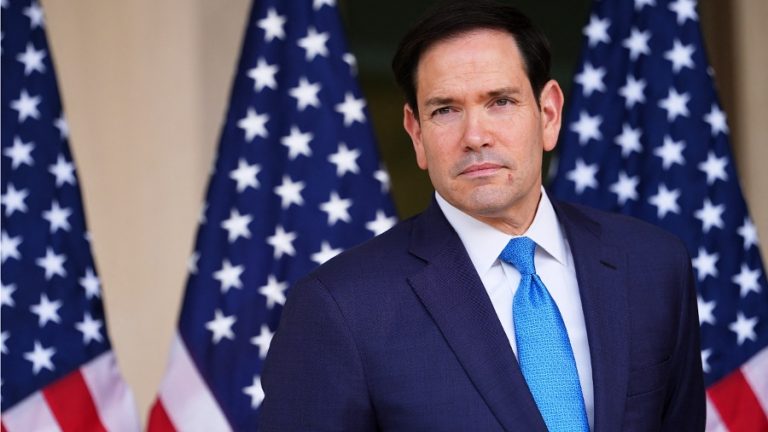
U.S. Secretary of State Marco Rubio is visiting Manila, Philippines, from July 19 to 23 to attend a series of diplomatic meetings in the Asia-Pacific region.
The U.S. Department of State said that during the visit, Rubio will meet with officials from the Indo-Pacific, and that the United States and China are expected to communicate and prepare for a possible September summit between U.S. President Donald Trump and Chinese Communist Party leader Xi Jinping.
Rubio is expected to attend the ASEAN Foreign Ministers’ Meeting on Tuesday, July 21; the East Asia Summit Foreign Ministers’ Meeting on Thursday, July 23, and the ASEAN Regional Forum Foreign Ministers’ Meeting in Manila on Thursday, according to a Reuters report published on July 17.
Russian Foreign Minister Sergey Lavrov is also expected to be present in Manila to participate in the meetings alongside Chinese Foreign Minister Wang Yi and the foreign ministers of Japan, Australia, Canada, and the United Kingdom.
The U.S. Department of State said Rubio’s visit will continue through next Thursday, with a focus on strengthening U.S. alliances and partnerships across the Indo-Pacific.
Success
You are now signed up for our newsletter
Success
Check your email to complete sign up
The State Department said in a statement: “The Secretary’s visit advances a clear U.S. priority: a free and open Indo-Pacific that delivers safety, security, and prosperity for the region and for the American people.”
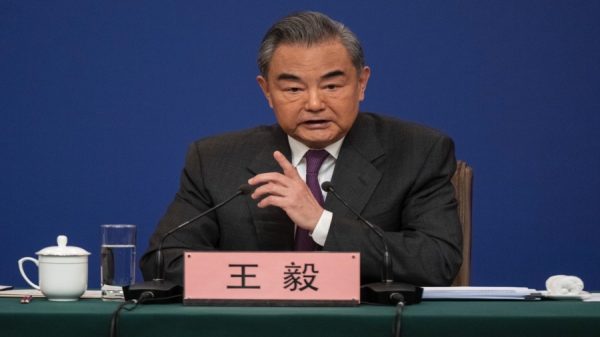
Rubio and Wang Yi may hold talks, focusing on a Trump–Xi summit
At present, neither the United States nor China has officially confirmed whether Marco Rubio and Chinese Foreign Minister Wang Yi will hold a face-to-face meeting on the sidelines of the Manila meetings. However, senior diplomats from both countries have maintained multiple contacts in recent months.
If Rubio and Wang meet, their discussions are expected to include preparations for a future summit between President Donald Trump and Xi Jinping, according to Reuters.
Trump has previously said that Xi may visit the United States in late September, where the two leaders are expected to meet.
U.S.-China relations have long been marked by disagreements over trade, technology, and security. Although the two sides have held trade negotiations and reached interim arrangements in some areas, significant differences remain.
Tensions between Washington and Beijing have eased somewhat following their earlier trade truce, but the two countries continue to differ on a range of strategic issues.
South China Sea and Myanmar to be key topics at ASEAN meetings
In addition to U.S.-China relations, the situation in the South China Sea is expected to be one of the major topics on the ASEAN meeting agenda.
Several areas of the South China Sea are subject to overlapping territorial and maritime claims. The Philippines, China, and other claimant states have long disagreed over maritime activities and sovereignty claims.
The meetings come as the 10th anniversary of the 2016 South China Sea arbitration ruling approaches. The ruling rejected the legal basis for several of China’s claims in the South China Sea, but the Chinese government has refused to recognize or accept the decision.
According to GMA News Online, Dominic Xavier Imperia, spokesperson for the Philippine Department of Foreign Affairs, said that ASEAN member states and China remain committed to advancing negotiations on a Code of Conduct for the South China Sea, and hope to make progress this year.
In addition, Myanmar is expected to be another major focus of the meetings.
Earlier, ASEAN foreign ministers held an informal meeting with Myanmar’s foreign minister. It marked the first face-to-face diplomatic engagement between ASEAN and Myanmar’s military-led government since the 2021 military coup.
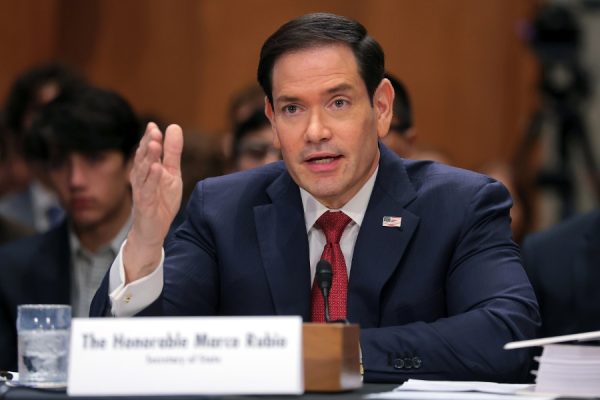
US focuses on regional security and transnational scam operations
The United States said Rubio’s visit will also deepen cooperation between the United States and the Philippines.
Regional security, economic cooperation, and transnational crime are also expected to feature prominently in the discussions.
A Southeast Asia expert at the Center for Strategic and International Studies (CSIS), Harrison Pretat told Reuters that the South China Sea issue is likely to remain one of the key agenda items.
The issue of Southeast Asian scam centers is also drawing increasing attention. Another CSIS Southeast Asia expert, Andreyka Natalegawa said that dismantling these scam operations could become a major priority for the U.S. government.
The U.S. government has previously stated that these transnational fraud networks cause substantial financial losses to Americans every year.