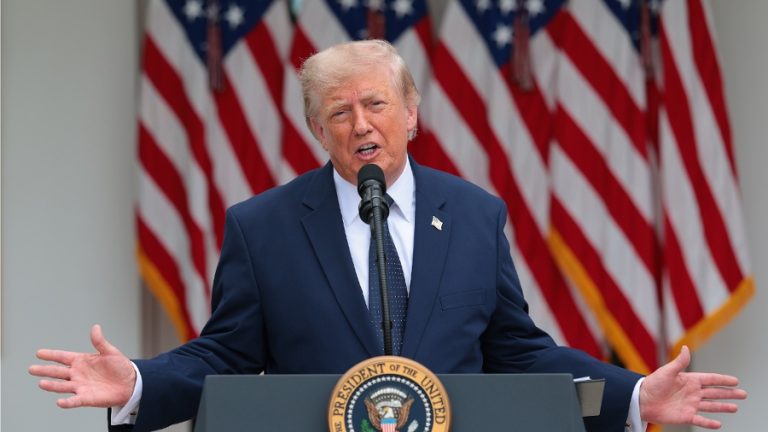
According to a March 31 report by Politico, the U.S. legal dispute over “birthright citizenship” is entering a critical stage. An executive order signed by President Trump is now under comprehensive judicial review, and the U.S. Supreme Court is set to hold a key hearing on the matter.
On his first day back in the White House, Trump signed an executive order attempting to redefine the scope of “citizenship at birth,” bringing a long-standing academic and policy debate into the public spotlight. According to the New York Post, the Supreme Court will hear oral arguments this week on the constitutionality of the policy, widely regarded as one of the most important cases of the current term.
At the heart of the debate is whether the president has the authority to adjust rules for determining citizenship—rules that have been in place for decades—through administrative action. Previously, this issue was largely considered within the legislative domain of Congress, rather than subject to direct executive intervention.
Behind the policy, conservative legal scholar John Eastman is seen as a major advocate for this legal approach. Politico notes that as early as 2005, Eastman began systematically challenging traditional interpretations of the 14th Amendment and has continued to promote his views through articles, debates, and hearings.
Linda Chavez, a former Reagan administration official, said the issue “has long been one of Eastman’s primary concerns.” Multiple legal experts also regard him as a central architect of this theoretical framework.
Success
You are now signed up for our newsletter
Success
Check your email to complete sign up
However, the legal filings submitted by the Trump administration to the courts do not directly cite Eastman’s research or explicitly mention his role. Eastman responded that he does not care about attribution, emphasizing that the policy itself is what matters.
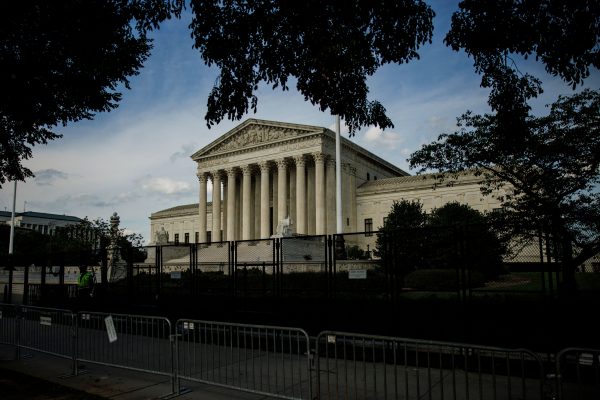
Birthright citizenship disagreements over the 14th Amendment
The controversy centers on the meaning of “subject to the jurisdiction thereof” in the 14th Amendment. For a long time, U.S. law has generally held that nearly everyone born in the United States automatically acquires citizenship, a principle confirmed in the 1898 case United States v. Wong Kim Ark.
Supporters of adjusting the policy argue that this precedent primarily applies to children of foreigners legally residing long-term in the U.S., and that there remains interpretive space regarding children of illegal immigrants or short-term visitors. They emphasize that the term “jurisdiction” should be interpreted more strictly in its historical context.
On the other hand, some legal scholars, such as Ming Hsu Chen, argue that this interpretation departs from long-established legal practice and case law, noting that the existing framework already provides a relatively clear determination on these issues.
Before reaching the Supreme Court, the executive order faced obstacles at multiple levels of the federal judiciary. Several judges issued stays on its enforcement, citing potential conflicts with the Constitution and existing case law, and appellate courts have upheld similar rulings.
Meanwhile, legal debate over the issue continues. Supporters argue that current policy presents new practical challenges regarding immigration and that judicial review is necessary to clarify the boundaries. Opponents counter that the existing legal framework already provides stable and clear standards and should not be easily altered.