A century ago, some of China’s most accomplished classical scholars warned that altering the written language would sever a civilizational link. One of them, Wang Guowei, chose not to live through what he believed was coming.
When the Chinese Communist Party introduced character simplification in the mid-twentieth century, it presented the campaign as a practical reform, intended to raise literacy and modernize education. The policy has been described that way ever since.
But to a number of scholars who understood the internal logic of the script, the stakes looked very different. What was being altered was not just form, but meaning. Some tried to argue the point. Their voices did not carry far. One of them walked into a lake.
The CCP has carried out many campaigns that reshaped Chinese society. Few reached as deeply into its cultural foundations as the simplification of Chinese characters.
Party cultural institutions continue to describe the reform as a necessary step toward mass literacy. That argument still circulates widely. However, it does not address what was lost in the process.
Success
You are now signed up for our newsletter
Success
Check your email to complete sign up
Within official discourse, and among younger nationalist voices that have grown up inside it, traditional characters are often dismissed as burdensome relics, something akin to cultural foot-binding, obsolete, inefficient, best abandoned. In that framing, continuing to teach the traditional script is sometimes portrayed as an imposition on children rather than a transmission of heritage.
What these arguments tend to overlook is how the writing system actually works.
What simplification removed
The issue is not visual complexity. It is one of structural meaning.
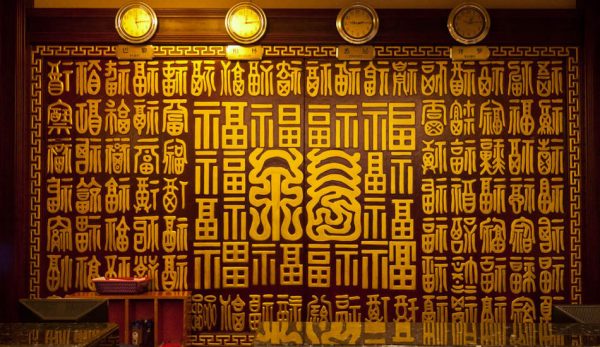
Traditional Chinese characters were not arbitrary shapes. Their components often carried semantic or conceptual weight, forming a kind of internal logic that linked form and meaning. Simplification frequently removed those elements.
Take the character for “love,” 愛 (ài). In its traditional form, the component for “heart” (心) sits at its center. The simplified form, 爱, removes it. The character for “listen,” 聽 (tīng), originally included elements associated with the ear, the eye, and the heart, suggesting that listening involves more than hearing alone. The simplified 听 retains none of these.
The same pattern appears elsewhere. “Righteousness,” 義 (yì), becomes 义, a much reduced form. “Closeness,” 親 (qīn), loses the element related to seeing or meeting. “Transport,” 運 (yùn), no longer contains the component for a wheel. “Sage,” 聖 (shèng), is stripped of both ear and mouth.
These changes were not isolated adjustments. Across many characters, structural elements that once conveyed layers of meaning were removed, leaving behind forms that are easier to write, but less expressive.
Why the loss is not widely recognized
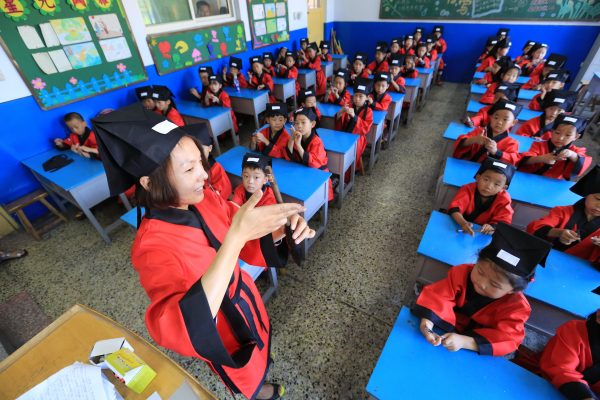
For most people educated in mainland China after the Cultural Revolution, simplified characters are simply the norm. The earlier system is often encountered, if at all, as something distant or decorative.
That experience is tied to a broader transformation in historical understanding.
In the decades before and after the Cultural Revolution, the Chinese Communist Party reshaped not only institutions but also the way history itself was presented. Official narratives emphasized ideological frameworks such as class struggle and historical materialism, while older intellectual traditions were recast as obstacles to progress.
In 1966, Mao Zedong launched the Cultural Revolution with the goal of eliminating the “Four Olds”: old ideas, old culture, old customs, and old habits. Schools were closed. Cultural and religious traditions were attacked. Intellectual life was disrupted across the country.
What followed was not only physical destruction, but a narrowing of historical memory. Later generations were educated within a system that no longer transmitted many of the assumptions and reference points that earlier scholars had taken for granted.
Within that context, the debate over the writing system largely disappeared.
Wang Guowei and the limits of resistance
Wang Guowei, born in 1877, was among the most respected scholars of his time. His work ranged across classical literature, history, and early Chinese inscriptions. He taught at Tsinghua University and also served as a tutor to Puyi, the last emperor of China.
He lived through a period of rapid intellectual and political upheaval. The collapse of the Qing dynasty, the rise of new ideological movements, and the spread of Marxist thought all unfolded within his lifetime.
By the mid-1920s, Wang had come to believe that the cultural framework he had devoted his life to studying was under sustained and irreversible pressure. The shift was not only political. It extended into language, philosophy, and the underlying moral order.
In 1927, at the age of 51, he walked into Kunming Lake at the Summer Palace in Beijing and drowned.
His death cannot be reduced to a single cause. But for later observers, it came to be understood as a response to a civilizational break that he felt unable to stop.
Echoes in a later generation
Decades later, during the Cultural Revolution, similar pressures would confront other figures in Chinese intellectual life.
The writer Lao She, one of the most prominent literary voices of twentieth-century China, was publicly denounced and beaten by Red Guards. Soon afterward, he drowned himself in a lake in Beijing.
The circumstances were different. The underlying sense of cultural dislocation was not.
In both cases, the deaths have often been read as responses to a moment in which the intellectual and moral world these individuals inhabited had been fundamentally overturned.
What traditional characters once held
To understand what was at stake in the writing system, it helps to look at how it functioned within classical culture.
During the Qing dynasty, the Qianlong Emperor, who ruled during one of the empire’s most stable periods, was known for composing literary couplets, a highly structured form requiring symmetry in both language and meaning.
On one occasion, he proposed an upper line:
One sun is 日; two suns is 昌; three suns is 晶.
The sequence builds by repetition, each step altering both form and meaning. His officials attempted matching lines. One offered:
One person is 人; two persons is 从; three persons is 众.
Another tried:
One fire is 火; two fires is 炎; three fires is 焱.
Neither satisfied the requirements of the form.
Ji Xiaolan, a senior scholar, responded with:
One tree is 木; two trees is 林; three trees is 森.
This answer met the structural and tonal constraints that the others did not.
The anecdote illustrates something beyond literary play. Traditional characters operated within a system where form, sound, and meaning interacted in layered ways. The script was not simply a tool for recording language. It reflected how the language itself organized experience.
When elements are removed from that system, what changes is not only how words look, but how they connect to one another.
By Yuan Ding