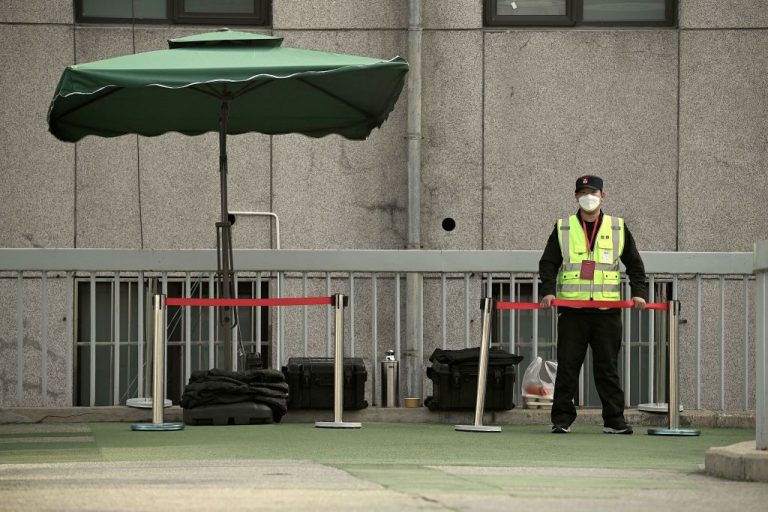
In recent years, the Chinese Communist Party’s (CCP) obsession with “stability maintenance” has reached extreme levels. From requiring “real-name registration” to purchase kitchen knives to imposing controls even on small fruit knives, authorities have framed such measures as “public safety protections.” Yet many observers view them as blunt tools of social control aimed at suppressing unrest.
However, when societal pressure reaches a breaking point, restricting tools does not prevent violence. In China, a growing number of so-called “Zhang Xianzhong-style incidents,” acts of indiscriminate revenge against society, have emerged. Increasingly, the weapons have escalated from knives to vehicles, and now even to heavy machinery.
For ordinary Chinese citizens, visiting a local market has long been a simple, everyday pleasure. But in today’s climate, even such routine activities can turn deadly.
A bloody weekend in Beijing
At around 11 a.m. on March 29, a tragedy unfolded at Dahancun Market in Beijing’s Fangshan District, a bustling traditional rural market crowded with weekend shoppers.
Vendors selling vegetables, fruit, and household goods lined narrow streets packed with people bargaining and browsing. Suddenly, a thunderous roar shattered the noise of the marketplace. A large yellow excavator broke through barriers and charged directly into the dense crowd.
Success
You are now signed up for our newsletter
Success
Check your email to complete sign up
Witnesses said the machine showed no sign of slowing down as it barreled through stalls, overturning stands and plowing into bystanders. Panic erupted instantly. People had no time to react. Some were thrown by the force of impact, others were crushed beneath collapsed stalls. The scene quickly descended into chaos, with screams, cries, and the roar of machinery blending into a horrifying cacophony.
Videos that briefly circulated online before being censored showed victims lying motionless in pools of blood, while scattered produce and debris covered the ground. One witness can be heard exclaiming, “It just passed right behind me, so terrifying!” A survivor later recalled: “I was picking out vegetables when I looked up and saw the excavator charging toward us… I ran as fast as I could but was still knocked down by the force. People next to me couldn’t move. It all happened too fast.”
Before authorities arrived, several bystanders rushed forward, climbed into the cab, and subdued the driver, preventing further casualties.
Personal dispute or deeper grievance?
According to witnesses, the driver was a man in his 50s, described as someone who had appeared “ordinary” and “mild-mannered.” What could have driven him to carry out such an attack remains unclear.
Two explanations have circulated. One suggests the incident stemmed from a minor dispute between vendors over stall space. Another, more alarming claim is that police later discovered a stack of petition documents “several tens of centimeters thick” inside the excavator.
If the former is true, it raises troubling questions about how minor conflicts can escalate into extreme violence. If the latter is accurate, it suggests a long history of grievances, possibly ignored or suppressed by authorities.
Former petitioner Yin Dengzhen pointed to the broader context in Fangshan: “This is the busiest market in the district. Many villagers here have been forced into demolition and relocation, and it’s also an area with a high concentration of petitioners.”
Whether driven by personal disputes or unresolved grievances, the incident reflects a deeper accumulation of anger and desperation among China’s lower social strata.
Censorship and public outcry
Despite the scale of the tragedy, authorities moved quickly to suppress information. Videos posted on platforms such as Douyin were deleted, and news reports describing the incident as an “excavator out of control” were swiftly removed. As of now, no official casualty figures have been released.
As a result, details of the incident have largely been pieced together from archived footage on overseas platforms and fragmented eyewitness accounts.
Online reactions from Chinese netizens reveal a mix of grief, anger, and resignation. Many expressed frustration over what they described as “bottom-level mutual harm,” where ordinary people turn against each other.
One comment read: “These kinds of incidents are happening more often and have now reached Beijing. But why target ordinary people? If there’s injustice, go after those responsible.” Another wrote: “If you’re seeking revenge, go after the system. The real root cause lies in the system. When those at the bottom turn on each other, it’s always ordinary people who suffer.”
A system under strain
While condemning violence against innocent civilians, observers argue that such tragedies cannot be understood in isolation. The deeper issue, they say, lies in a system that suppresses grievances and blocks avenues for redress.
High housing costs, forced demolitions, low wages, and rising healthcare burdens have placed immense strain on ordinary citizens. When legal protections are weak, petition channels ineffective, and opportunities increasingly limited, frustration can build to a breaking point.
Under such conditions, society resembles a pressure cooker with no release valve, where despair can erupt in extreme and violent ways. The CCP’s focus on controlling tools of violence, critics argue, does little to address the underlying causes. The Fangshan incident serves as a stark reminder that without systemic change, desperation will continue to find its own means of expression.
Editorial note: Views expressed in this article are the opinions of the author and do not necessarily reflect the views of Vision Times.