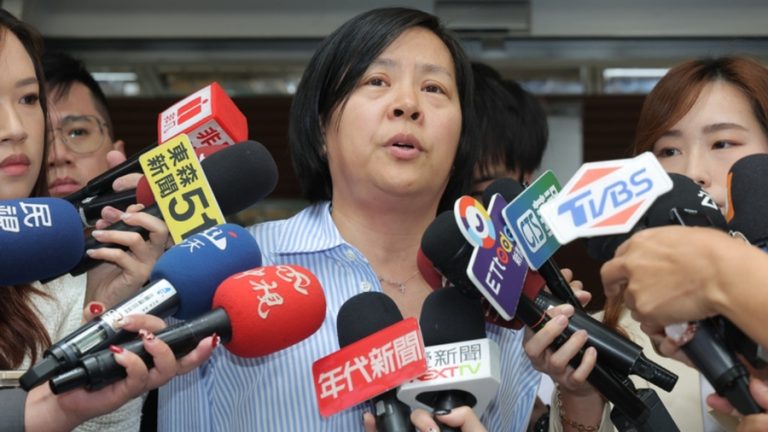
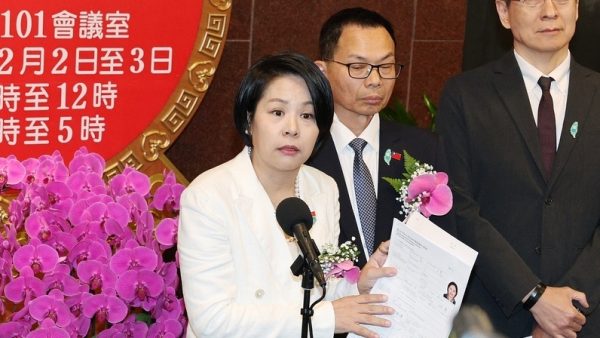
Since taking office, People First Party legislator Lee Chen-hsiu (Li Zhenxiu) has been mired in controversy. She has faced questions about her identity and also revealed that Hsinchu Mayor Gao Hongan allegedly received 7 million NT dollars from former party chairman Ko Wen-je. Although Li later apologized, her remarks sparked discontent within the party and led to her being referred to the Central Evaluation Committee. Despite pressure from the party leadership to step down, Lee has firmly refused to resign, claiming that only Ko Wen-je can decide her fate. Ko, however, stated that he will respect the party’s institutional procedures and decisions. Reports indicate that the People First Party may take disciplinary action against Lee at next week’s Central Evaluation Committee meeting.
People First Party faces internal dilemma over Lee Chen-hsiu
Regarding Lee Chen-hsiu’s legislative qualifications and controversies, Ko Wen-je told the media on April 3 that this is the first time he is making a clear statement: “We need to move from a one-person party to a genuine political party; this is the correct path.” He emphasized that the People First Party should shift from a “person-centered party” to institutionalized decision-making, with related matters handled through party mechanisms rather than individual will.
He stressed that even if certain issues may affect votes, a political party must balance values and institutional principles, and should not change principles lightly for short-term political gains.
According to reports, during a past assistant fee scandal involving Gao Hongan, it was rumored that Lee Chen-hsiu was also one of the witnesses reporting to prosecutors. Lee declined to comment, saying she is currently in meetings and working overtime with her team and will not respond to personal matters. Ko Wen-je cautiously stated that it depends on the evidence.

Qualification controversy escalates, party divided
Lee Chen-hsiu’s “mainland spouse” status, nationality, and residency period have continued to raise public doubts. The government believes that related documentation and qualification assessments remain uncertain, potentially affecting whether she meets candidacy requirements, and some question the completeness of procedural documents, prolonging the controversy.
Success
You are now signed up for our newsletter
Success
Check your email to complete sign up
Initially, the People First Party uniformly supported Lee, but her repeated missteps—including revealing that Gao allegedly received 7 million NT dollars from Ko before any verdict on Ko’s corruption case—sparked anger within the party, prompting leaders to publicly criticize her. Reports indicate that the party’s leadership once advised Lee to “know when to step back,” but she refused, insisting that only Ko can decide her status. According to party rules, the maximum action they could take would be to suspend her, and she also threatened legal action if expelled, creating awkwardness for senior party officials.
Meanwhile, polls show significant public division over “mainland spouses participating in politics,” providing a broader context for the controversy.
The case also highlights institutional issues. Lee Chen-hsiu became a legislator through the People First Party’s “two-year rule,” but her qualification controversy shows that current election and qualification review mechanisms may have loopholes, leaving elected officials subject to both legal and political scrutiny.
Some analysts note that if the matter proceeds to judicial or electoral procedures, it could affect not only Lee’s position but also the party’s image and public trust in its systems.
From individual case to institutional reform challenge
Overall, this controversy has expanded from a single legislator’s qualification issue to a test of party governance and institutionalization. Ko Wen-je advocates handling matters through institutional processes, symbolizing the People First Party’s attempt to establish a more stable decision-making mechanism. However, balancing values, public opinion, and electoral considerations under political and media pressure remains a key challenge.
Future developments—including the party’s final internal decision, potential involvement by electoral or judicial authorities, and public attitudes toward mainland spouses participating in politics—are expected to continue influencing Taiwan’s political landscape.
It is reported that next week, the People First Party’s Central Evaluation Committee will discuss Lee Chen-hsiu’s controversies again, and it is possible that a vote could directly remove her from the party.