In December 1949, Mao Zedong boarded a special train and traveled for nearly two weeks across Soviet territory to reach Moscow. He had come to celebrate Stalin’s seventieth birthday and, more urgently, to negotiate a new Sino-Soviet treaty that would replace the one the Soviet Union had signed with the Nationalist government. To mark the occasion, Mao brought gifts meant to signal sincerity: Shandong spring onions, Jiangxi mandarins, Longjing tea from West Lake, white cabbages, and radishes. Hearing that Stalin was fond of onions, Mao reportedly had an entire railway car loaded with them.
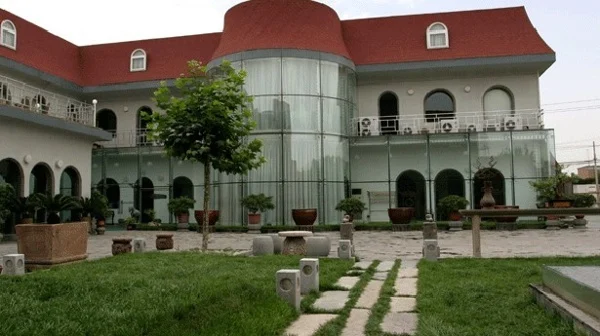
The reception was not what he had expected. Stalin received him briefly upon arrival, exchanged pleasantries, and then, citing a need for rest and poor health, dispatched the entire Chinese delegation to a compound on the outskirts of Moscow known as the Sisters’ Villa. There, in a dacha surrounded by snow and silence, Mao waited. Days passed, then weeks. No senior Soviet officials came to call. No substantive talks were scheduled. No state ceremonies were arranged. The man who had stood atop Tiananmen Gate weeks earlier to proclaim a new China had been quietly parked and forgotten.
The KGB bugged every room and secretly analyzed Mao’s excrement
The villa was not simply a holding pen. It was a surveillance operation. Mao’s translator, Shi Zhe, and several members of his security detail later recalled, in private conversations after leaving office, that the building was saturated with listening devices: inside the walls, beneath sofas, concealed in light fixtures. Every word Mao uttered, every complaint, every sigh, was transmitted in real time to Stalin’s desk.
The surveillance went further. Former Soviet intelligence officer Igor Atamanenko later disclosed that KGB operatives, driven by Stalin’s deep mistrust of Mao, secretly reconfigured the villa’s plumbing. The toilet was disconnected from the main sewage line and fitted with a concealed collection mechanism. Mao’s waste was intercepted daily, packaged, and sent to a classified Soviet laboratory. Soviet scientists analyzed the samples for potassium levels and tryptophan concentrations, using the biochemical data to assess his emotional state, screen for concealed illness, and draw inferences about his psychological disposition toward the Soviet Union.
The treatment of a foreign head of state as a laboratory subject was not incidental. That was the point.

Success
You are now signed up for our newsletter
Success
Check your email to complete sign up
Mao shouted into the surveillance microphones when he finally lost his temper
Mao eventually grasped what was happening. He understood he had been sidelined politically and that his most intimate physical functions were being monitored. For a man then at the peak of his self-regard, the realization ate at him. He understood, too, what it signified: in Stalin’s estimation, he was not the leader of a fraternal nation. He was a junior operative in need of surveillance and control.
According to notes that circulated among members of the traveling delegation, Mao eventually reached a breaking point. One afternoon in the villa, he erupted. He slammed the table and shouted at the empty room, directing his words deliberately at the hidden microphones, sending a message to Stalin across the distance between them: “I did not come here just to eat, sleep, and defecate every day!”
The outburst was coarse, furious, and revealing. It captured in a single sentence what no official account would ever record: the humiliation of the CCP’s supreme leader before the Soviet Union’s chief godfather of the communist world. It became, by multiple accounts, a wound Mao carried for the rest of his life.
The humiliation followed a classic gangster logic of submission testing
Ming Juzheng, a senior researcher at the think tank Transparency China who has written extensively on communist power structures, argues that the episode follows a recognizable internal logic. Within the Comintern’s organizational hierarchy, the Soviet Communist Party was the central command; the Chinese Communist Party was a regional affiliate. Stalin’s behavior, Ming contends, was a calculated submission test. Bugging the rooms, collecting the waste samples, imposing weeks of enforced idleness: each move was calculated to unsettle Mao and remind him where he stood. “The method is the same as the CCP’s own internal purges,” Ming has written, “forcing cadres to inform on each other, wearing people down through humiliation until fear does the work that loyalty never could.”
Cheng Xiaonong, an economist who formerly served as an aide to the reformist Party general secretary Zhao Ziyang before leaving China, reads the episode through a political economy lens. The CCP had just seized the mainland, he argues, but it had no industrial base, no credible military deterrent, and no independent economic foundations. Mao arrived in Moscow carrying spring onions because he needed Soviet tanks, aircraft, and industrial infrastructure in return. The price was severe. Mao ultimately accepted Mongolian independence, endorsed Soviet special privileges in China’s northeastern provinces, and later sent hundreds of thousands of Chinese soldiers to die in Korea as proxies in a war that served Soviet strategic interests far more than Chinese ones. The spring onions were a down payment on a much larger debt.
Miles Yu, a historian of China who served as the principal China policy adviser in the U.S. Secretary of State’s office, frames the episode in psychological and geopolitical terms. The Moscow experience, he argues, produced in Mao a lasting persecution complex. Mao left Moscow understanding that Stalin was capable of cultivating CCP factional rivals, such as Gao Gang, the powerful northeastern Party boss who maintained close ties with Moscow, as potential replacements. That knowledge never left him. The insecurity and shame embedded in the Moscow visit fed directly into Mao’s post-Stalin drive to seize leadership of the international communist movement, and ultimately into the Cultural Revolution, which Mao justified as a campaign to exterminate “China’s Khrushchev” from within the Party.
Mao eventually got his treaty, but the degradation remained
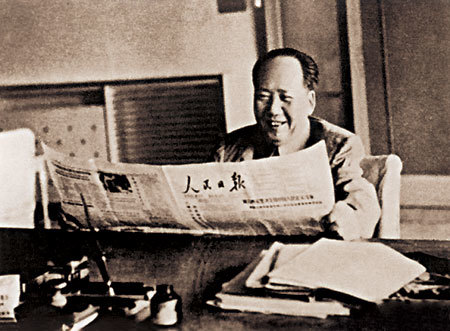
In February 1950, after more than two months in the Soviet Union, Mao signed the Sino-Soviet Treaty of Friendship, Alliance, and Mutual Assistance and returned to Beijing. The Party’s propaganda apparatus celebrated the occasion as a triumph: the two great socialist powers, united and equal, their friendship destined to last through the ages. Every official account of the visit conformed to this version.
What the Party’s official history preserves is a photograph: two leaders, smiling, hands clasped. What the KGB files preserve is something else. A dacha outside Moscow. A toilet disconnected from its drain. A man shouting into an empty room, hoping someone on the other end was listening.