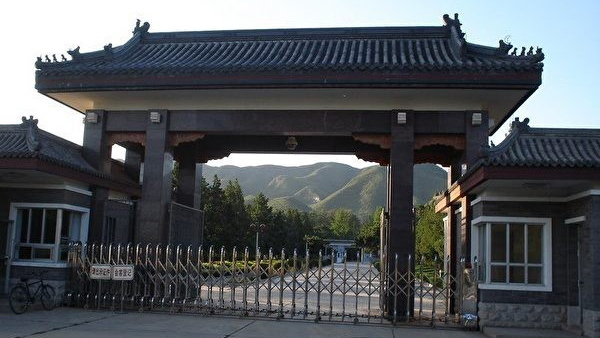
In the outskirts of Beijing, behind layers of secrecy and barbed wire, stands Qincheng Prison, a facility long reserved for the Chinese Communist Party’s most sensitive detainees. Built in the 1950s with Soviet assistance, it was designed not as an ordinary prison, but as a place to hold the Party’s own.
For years, it bore a reputation that bordered on the surreal. Cells came with private bathrooms. Floors were carpeted. Meals were prepared by chefs from Beijing’s top hotels. Even during the famine years, food remained abundant.
Those who worked there saw a version of Chinese political history that rarely surfaced in public.
Among them was He Diankui.
A prison unlike any other
He Diankui never forgot March 15, 1960, the day Qincheng opened. He would spend more than three decades there, from its first day of operation until his retirement in 1992.
Success
You are now signed up for our newsletter
Success
Check your email to complete sign up
The prison complex consisted of four three-story brick buildings, numbered 201 through 204. To outsiders, they appeared identical. Inside, they were not.
Building 201, the most modest of the four, already exceeded the living conditions of most Chinese households at the time. Wang Wenzheng, later a judge in the trial of the Gang of Four, once lived there while conducting pre-trial work. Each cell had its own bathroom, complete with a foot-flush toilet.
But what he saw was only the lowest tier.
Building 204 was something else entirely. Cells measured roughly 20 square meters. Carpets covered the floors. Sofa beds replaced wooden bunks. Meals were prepared to ministerial standards, with ingredients sourced from a special supply depot reserved for senior officials near Donghuamen.
Breakfast included milk. Lunch and dinner came with two dishes and a soup, followed by fruit, often apples stored in rice husks to preserve their freshness. Powdered drinks, lemon tea tablets, and sugar cubes were routinely supplied.
None of this changed, even in years when much of the country was struggling with hunger.
Cooking was handled by Liu Jiaxiong, a chef seconded from the Beijing Hotel. It was here that He Diankui first encountered shark fin, which he initially mistook for glass noodles. Only Liu knew how to prepare such dishes properly. Each day, He delivered fifteen sets of meals, packed in tiered containers and marked with color codes for individual inmates.
Guarding Pan Hannian
He Diankui’s role took a decisive turn in April 1955, when he was abruptly reassigned to guard Pan Hannian, a senior intelligence official who had fallen under suspicion.
Pan’s arrest was handled in strict secrecy. The unit assigned to guard him was drawn not from regular prison staff, but from a motorcycle battalion in Beijing. He was the only inmate in his block.
Two guard posts were set up: one outside his cell, another at the entrance to the block. No one was allowed inside except He Diankui.
For the first two weeks, He lived in the same room as Pan, watching him around the clock. Each day, Pan was escorted under heavy guard to “talks.”
These were not conducted in interrogation rooms, but in meeting spaces, with participants seated on sofas. At first, Pan refused to say anything. Days passed without progress.
The silence ended only when Xu Zirong, the executive deputy minister of public security, intervened personally. He presented Pan with a written guarantee: he would not be executed.
Only then did Pan begin to speak.
At the time of his arrest, Pan had been attending a central Party meeting addressing the Gao-Rao Affair, the first major internal power struggle after the founding of the People’s Republic. As a subordinate of Rao Shushi, he had little room to maneuver.
He had already submitted a written account that included an episode in which he had been forced to meet Wang Jingwei, the wartime collaborator with Japan. That document would later be used as key evidence in constructing the so-called “Rao-Pan-Yang counter-revolutionary clique.”
In He Diankui’s memory, Pan was a compact, heavyset man who spoke little and revealed almost nothing of what he was thinking.
Years later, after other inmates in Building 204 were released, Pan was moved to a residential section of the prison compound, still under He’s supervision. For a time, life took on an almost ordinary rhythm. He fished at a nearby reservoir, walked into the town of Xiaotangshan, and chatted easily with his guard.
The Cultural Revolution ended that period without warning.
A system turned upside down
When Pan and others were brought back into detention after the Cultural Revolution began, Qincheng itself had changed beyond recognition.
The prison’s previous management system was denounced by Red Guards as “revisionist” and dismantled. In November 1967, the facility was placed under military control. Staff were sent away for labor re-education in May 7 Cadre Schools.
He Diankui left and did not return until 1972.
By then, even the name had changed. Before the Cultural Revolution, the prison was formally known as the Ministry of Public Security Pre-Trial Bureau. During military control, documents referred to it simply as “Unit Seven.”
According to He, Zhou Enlai objected when he saw the designation.
“What is Unit Seven?” Zhou reportedly asked. “Isn’t it Qincheng Prison?”
The name endured, though it never appeared officially on any sign.
When He returned, he was assigned to Building 201, which held dozens of senior officials, many at the bureau or ministerial level. His authority was nominal. Military officers now controlled the facility.
Conditions had deteriorated sharply.
The shift drew attention at the highest level after Liu Shuqing, the wife of a former vice minister of railways, managed to send a letter directly to Mao Zedong describing the situation inside.
In December 1972, Mao responded in writing, questioning who had authorized what he called “fascist-style interrogation methods” and ordering their abolition.
An investigation followed. Conditions began to improve. Each detainee was interviewed individually.
Among them was Pan Hannian.
He Diankui found him almost unrecognizable, his hair nearly gone, his diet reduced to cornbread and cabbage.
Unruly prisoners
By then, Qincheng held a new group of inmates: former figures from the Cultural Revolution’s inner circle.
They were identified by numbers rather than names. Qi Benyu was 6821. Wang Li, 6822. Guan Feng, 6823. The numbering system reflected the year of entry and sequence, a practice that began during that period.
Each presented different challenges.
Wang Li was sharp, but generally reasonable. Guan Feng had suffered a psychological breakdown and frequently lapsed into incoherent outbursts.
Qi Benyu was different.
He shouted through the night, disrupting the entire building. He blocked the observation window in his cell door with toilet paper. His behavior made him a constant problem.
Eventually, He Diankui moved him to an empty room on the third floor. The inner iron door remained locked, but the outer wooden door was left open, exposing him to mosquitoes. When Qi asked for He, guards were instructed to say he was away.
After several days, Qi stopped resisting. When He returned, he was ready to talk.
The one who could not die
Even Qi Benyu, however, was not the most difficult inmate.
That distinction belonged to Chen Boda.
Once one of Mao Zedong’s closest aides and head of the Central Cultural Revolution Group, Chen occupied a unique position in the prison. Orders from above were explicit: his safety had to be guaranteed at all costs. His needs were to be met.
He was not just a prisoner.
He was a witness who had to be preserved.
Chen was held alone on the second floor of Building 204, under constant surveillance. Yet he repeatedly staged dramatic suicide attempts, hurling himself against the wall.
Each incident triggered alarm throughout the prison.
After observing him closely, He Diankui reached a conclusion. The behavior was calculated.
One day, when Chen again rushed toward the wall and guards moved to restrain him, He intervened.
“Let him go,” he said. “Today I want to see if he will really smash his head open.”
Chen stopped.
The pattern shifted the following year. Chen began claiming he could no longer walk, dragging himself across the floor to reach the toilet.
Again, He doubted the claim.
He instructed the prison doctor to tell Chen plainly: without movement, his legs would not recover. The warning had an immediate effect. Chen asked if he could use a cane.
He Diankui agreed.
There was no need to seek approval.
What Chen seemed to want was not medical care, but acknowledgment, a signal that he had not been forgotten.
In September 1976, when news of Mao Zedong’s death was announced, his hopes rose. He spoke openly of expecting contact from Jiang Qing once the funeral arrangements were complete.
He believed she would send for him.
Instead, news arrived that Jiang Qing herself had been brought to Qincheng.