On a spring morning in April 1938, Zhang Guotao stood at the Mausoleum of the Yellow Emperor in Huangling, taking part in a solemn national ceremony honoring the legendary ancestor of the Chinese people. He attended in his official capacity as chairman of the communist-controlled border region government in northwest China.
He did not go back.
By the time he reached Hankou, he was a private citizen. Within weeks he had issued a public statement condemning the organization he had spent seventeen years building, with a detailed account of why he believed it was destroying China.
Zhang Guotao (1897 to 1979) ranked third in the Chinese Communist Party at the moment he resigned, behind only Mao Zedong and general secretary Zhang Wentian. He had been present at the Party’s founding congress in Shanghai in 1921, helped organize the Nanchang Uprising of 1927, and commanded the Red Army’s largest and best-equipped force through the early 1930s. He served as deputy chairman of the CCP’s self-declared “Chinese Soviet Republic,” a provisional regime it established in territory seized from the Nationalist government. His memoir, My Recollections, remains banned on the Chinese mainland to this day. The Party has never explained why. It doesn’t need to.
What follows draws on that memoir and on the public record Zhang left behind. To understand why he walked out, you have to start at the beginning.
Success
You are now signed up for our newsletter
Success
Check your email to complete sign up
A generation that thought China had to be demolished before it could be saved
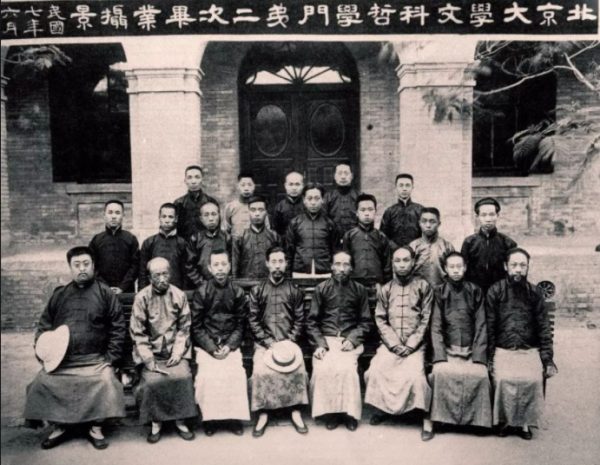
Zhang grew up in a scholar-gentry family in Jiangxi Province and enrolled at Peking University in 1916, walking into one of the most turbulent intellectual environments in modern Chinese history. The university’s president, Cai Yuanpei, had assembled a remarkable faculty: the New Culture advocates Chen Duxiu and Hu Shi, the writer Lu Xun, and the socialist theorist Li Dazhao. The library was perpetually jammed with students hunting for radical ideas. The thin supply of socialist pamphlets was always checked out.
What drove Zhang and many of his contemporaries was less ideology than desperation. China had been humiliated by foreign powers for decades. The Republic, founded in 1912, had lurched from one failure to the next. For a certain generation of educated young men, every conventional path seemed blocked. Their patriotism was genuine. Their rage at the existing order was genuine. What they lacked was patience, and a clear sense of where the shortcut they were choosing would lead.
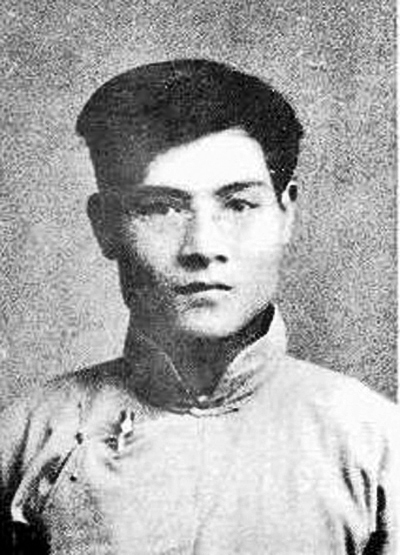
Zhang was elected head of the oratory division of the Beijing Student Union during the May Fourth Movement of 1919, the mass protests triggered by China’s betrayal at the Paris Peace Conference. He was twenty-one years old and one of the movement’s most visible leaders. It was the kind of beginning that makes a young man feel history is on his side.
Sun Yat-sen offered him a different road. He turned it down.
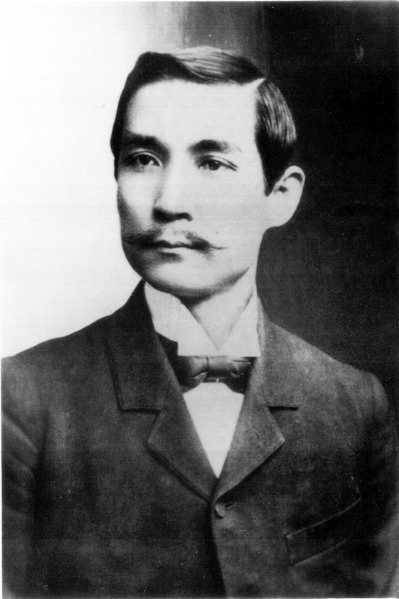
In early 1920, Zhang traveled to Shanghai for a national civic meeting and was twice received at the home of Sun Yat-sen, the founder of the Republic of China. The meetings were brief. In retrospect, they were among the most consequential of his life.
When Sun learned of Zhang’s growing interest in Marxism, he gestured to a shelf of English-language books on socialism and told him he was free to borrow any of them. He had studied every major socialist current during his years in Europe, met their leading figures, and drawn on all of them in developing his own Three Principles of the People, the political philosophy on which the Republic was built. He asked Zhang and other young activists to study those principles and join him.
Zhang did not follow up. At the time, Sun struck many young radicals as a man of repeated failure, someone the foreign powers refused to take seriously. The Nationalist road looked slow. The communist road looked fast.
It was not.
Years later, Zhang told Chiang Kai-shek that he had “been confused for many years.” By then the confusion had cost tens of millions of lives.
Three men made a decision that changed China forever
By late 1918, Zhang had grown close to Li Dazhao, the Peking University librarian and one of China’s first serious Marxist thinkers. Both men, by their own later admissions, had only a superficial knowledge of Marxism and no direct understanding of the Russian Revolution. Founding a communist party affiliated with Moscow was not yet something either of them had seriously considered.
The push came from Chen Duxiu. After May Fourth, Chen’s radicalism accelerated sharply. By mid-1920 he had made contact with the Communist International, the Moscow-directed body that coordinated communist movements worldwide. When Zhang visited Chen in Shanghai in July 1920, Chen brushed aside the idea of further theoretical study. What was needed immediately, he said, was a Chinese Communist Party. Li and Zhang, despite their surprise, agreed.
In the summer of 1921, Zhang helped organize the Party’s founding congress in Shanghai, presided over the sessions, and was elected to the three-man central committee alongside Chen Duxiu and Li Da. The CCP was born.
The fates of all three co-founders are worth noting. Li Dazhao was hanged in 1927, convicted of conspiring with the Soviet Union. Chen Duxiu broke with the Party and was denounced as a traitor. Zhang walked out in 1938 and was denounced as a traitor. The Party they created has spent a century insisting its founding was an act of pure patriotic heroism.
Russia, 1921: what he saw and could never bring himself to defend
In late 1921, Zhang traveled to Irkutsk as a CCP delegate to a Communist International gathering. The city was destitute. The Bolshevik seizure of power had been built on the violent confiscation of peasants’ grain stores, and the population had not forgotten it.
Zhang and other delegates asked overseas Chinese living there why Russians so distrusted their government. The answer was direct: “They already took our property and stripped our grain. What stops them from doing it again? The paper money they print loses value daily. Apart from killing, what else does this government know how to do?”
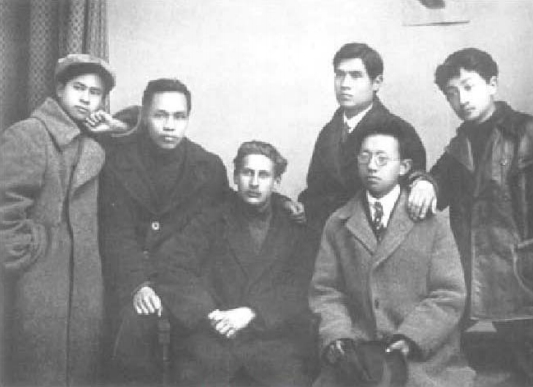
The delegation’s access was tightly managed. The Communist International had no staff with any command of Chinese. Zhang and his colleagues moved through Russia as supervised tourists, taken to approved destinations, and shown approved sights. He reflected later that the delegation served less as observers than as display items: a diverse group of Asian visitors photographed in Moscow could be used to demonstrate the Communist International’s reach in the Far East.
Over two months, the Chinese delegates found the Bolshevik model of governance deeply alien. China’s political tradition, at its best, had meant winning a revolution and then governing with restraint: reducing taxes, allowing people to recover, and building lasting peace. Marxist-Leninist rule, they observed, meant one campaign of denunciation followed immediately by another, without end.
Zhang returned to China and published nothing about what he had seen. He could not find arguments strong enough to defend it. The questions sat in him, unresolved, for years.
Moscow ordered the CCP into the Nationalist Party, most of the CCP said ‘no’
In August 1922, seven men gathered at West Lake in Hangzhou: the Communist International representative Maring, the Dutch communist whose real name was Henk Sneevliet, along with Chen Duxiu, Li Dazhao, Zhang Guotao, and three others. Maring announced that all CCP members must join the Nationalist Party as individuals and work within it.
The logic from Moscow’s perspective was simple. China was not ready for socialist revolution. The Nationalist Party under Sun Yat-sen commanded real mass support. CCP members operating inside it could pull that support away from its leadership over time. The Communist International expected compliance.
Most of the CCP’s early leadership resisted. The question seemed circular: if the Nationalist Party could carry out the democratic revolution, why did the CCP need to exist at all? Chen Duxiu opposed the infiltration policy throughout. Zhang raised objections repeatedly. After a labor strike Zhang had organized collapsed in early 1923, Maring pressed the argument harder and dismissed Zhang and his colleagues as “well-meaning student Marxists.”
In his memoir, Zhang described the Party’s deference to Moscow with painful honesty: “We always thought of ourselves as students, uncertain of our own views, and came to assume that whatever the Communist International instructed had been formulated with far greater foresight. We surrendered our own positions. We treated every directive from a Communist International representative as sacred.” That surrender, he later concluded, cost China the better part of a century.
The hidden clause that exposed the CCP’s betrayal
The cooperation between the Nationalist Party and the CCP from 1924 to 1927 was built on a foundation the CCP later buried. The Sun-Joffe Manifesto of January 1923, which made the entire arrangement possible, opened with an explicit declaration: “communism and the Soviet system cannot in fact be introduced into China,” and stated that the two parties’ cooperation aimed at national unification within the Republic.
The CCP, acting on Communist International instructions, spent those three years doing exactly what the manifesto prohibited. CCP members inside the Nationalist Party seized control of its organizational apparatus. Armed trade unions and peasant associations were established as parallel power structures. When the Northern Expedition of 1926 to 1927 began driving northward to unify China, Stalin ordered the CCP to exploit the Nationalist government’s momentum, establish communist control in newly captured areas, and divide the Nationalist leadership from within.
A rival Nationalist government stood up in Wuhan with Soviet backing. Supply lines to Nationalist forces in the field were deliberately cut. When Chiang Kai-shek moved to purge the CCP from Nationalist ranks on April 12, 1927, he was responding to five years of infiltration from Moscow. The Wuhan government expelled the CCP that July after a Communist International cable arrived ordering the Party to push China toward full communist transformation.
The CCP had shredded the agreement it sheltered behind, then blamed Chiang for the consequences.
The Nanchang uprising: former classmates fighting to the death
The CCP marks August 1, 1927, the date of the Nanchang Uprising, as the founding of the Red Army. The official version is heroic. The reality, as Zhang recorded it, was grimmer.
Three commanders led the mutiny. Zhu De had been planted inside the Nationalist Third Army as Nanchang’s public security chief. He Long, a Nationalist general, had been incited by the CCP to turn against his own army. Ye Ting commanded a division of the Nationalist Eleventh Corps, was himself a Party member, and had packed his officer corps with Party loyalists. Zhu coordinated all three to strike at night, when the garrison was thin and the larger Nationalist forces were dispersed elsewhere. The mutineers looted the city’s Central Bank, ransacked businesses, and arrested Nationalist Party members.
In the fighting that followed at Huichang, junior officers on both sides were Whampoa Military Academy graduates, many from the same class, the same platoon, some who had been childhood friends. They fought at close quarters and shouted each other’s nicknames as they killed each other. Nationalist soldiers demanded: “Why is the CCP rebelling?” Communist fighters shot back: “Why are you serving the counterrevolution?” Men wept while they fought.
The uprising failed. He Long’s force was entirely disarmed. Zhu De led roughly eight hundred survivors to the Jinggang Mountains and merged with Mao Zedong’s remnants. Zhang, Zhou Enlai, and others fled to Hong Kong and Shanghai. The Red Army’s founding myth rests on a military defeat and a fratricidal battle the Party has never honestly described.
By 1927, Zhang Guotao had seen enough to have serious doubts about the organization he had helped build. He had watched it take orders from Moscow against the judgment of its own leadership. He had seen it infiltrate and betray its Nationalist partners. He had witnessed Chinese soldiers kill former classmates in a failed uprising the Party would later repackage as triumph.
He had not yet walked away. The next decade would show him why he needed to.