Deng Xiaoping removed Zhao; Jiang Zemin made sure he stayed gone
The initial decision to remove Zhao Ziyang and place him under house arrest in 1989 was made by Deng Xiaoping, China’s then-dominant leader, after Zhao publicly sided with the student protesters in Tiananmen Square. But removing Zhao from power was one thing; keeping him imprisoned for the rest of his life was another. According to Li Rui’s diary and oral memoir, Deng made the decision to remove Zhao from office. The decision to ensure he would never again speak freely, never leave Beijing, and never receive proper medical care was Jiang Zemin’s.
Li Rui’s memoir traces the roots of Jiang’s antagonism toward Zhao to a specific humiliation. In 1989, during the student demonstrations spreading across the country, Jiang, then serving as Shanghai’s mayor, shut down the World Economic Herald, a reformist newspaper that had organized a symposium Li Rui attended. The closure triggered protests by Shanghai residents. Under pressure, Jiang telephoned Li Rui asking for help. Days later, Jiang traveled to Beijing and sought support from Zhao Ziyang directly. Zhao refused, and instead criticized him sharply. Li Rui wrote that Jiang never forgave him.
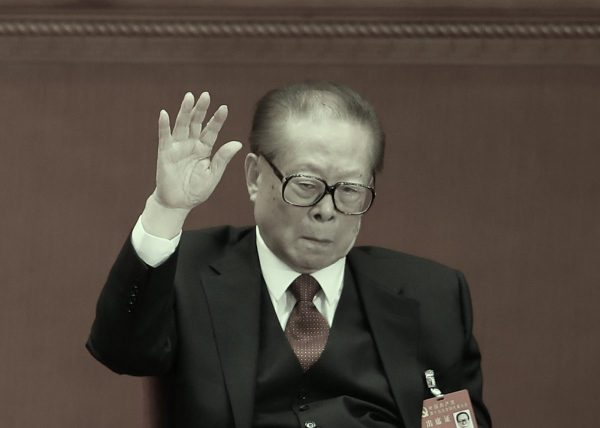
How Jiang kept the house arrest in place after leaving office
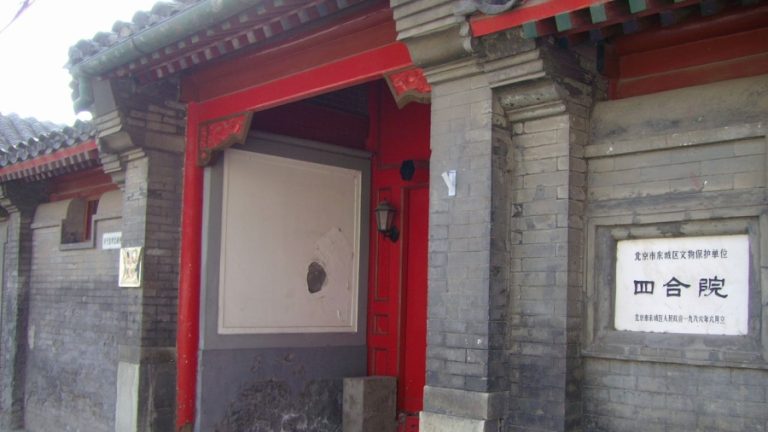
The antagonism survived Jiang’s own retirement from office and proved impervious to appeals from some of the Party’s most senior surviving figures. Li Rui recounts writing to Jiang on multiple occasions, urging him to lift the house arrest, or at minimum to allow Zhao access to adequate medical treatment as his health deteriorated. Jiang ignored every letter. When Zhao was in the final years of his life with serious lung disease, Tian Jiyun, a former vice-premier who had worked closely under Zhao and remained one of his most vocal defenders, raised the possibility in internal discussions of allowing Zhao to recuperate in Guangdong, where the climate would have been gentler on his condition. According to accounts that have circulated among Party insiders, Jiang rejected the proposal with fury, pounded the table, and invoked “stability above all else” to declare that Zhao would not be allowed to leave his Fuqiang Hutong compound (a traditional Beijing courtyard residence, a short walk from the Wangfujing shopping district) under any circumstances. He went further: for as long as he drew breath, Zhao would have no contact with the outside world.
When Hu Jintao formally succeeded Jiang as general secretary at the Party’s Sixteenth Congress in late 2002, Jiang retained the chairmanship of China’s top military command body until late 2004 and continued to exert influence over the Party’s security and legal apparatus through loyalists in key positions. Party insiders described the arrangement with a classical Chinese phrase meaning “nine dragons controlling the water,” a sardonic reference to so many power centers pulling in different directions that nothing moves. In practice, it left Hu unable to reverse the terms of Zhao’s confinement even had he wished to. Zhao died in January 2005, still under house arrest, still confined to the same compound where he had been placed sixteen years before.
When Yanhuang Chunqiu, a reformist Party history journal with close ties to veteran cadres, published remembrances of Zhao written by Tian Jiyun and others, Jiang’s office pressured the journal to change its editorial leadership. Li Rui responded by publicly denouncing Jiang as petty and vindictive.
Success
You are now signed up for our newsletter
Success
Check your email to complete sign up
Why keeping Zhao imprisoned mattered to Jiang’s political survival
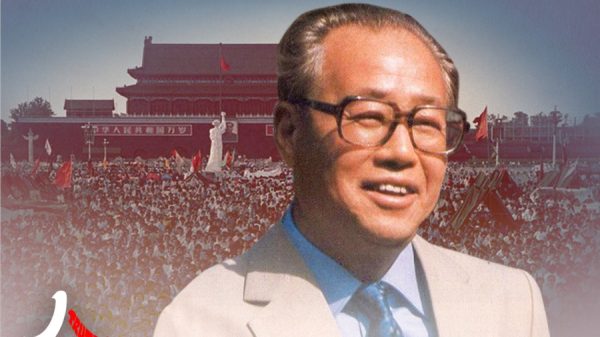
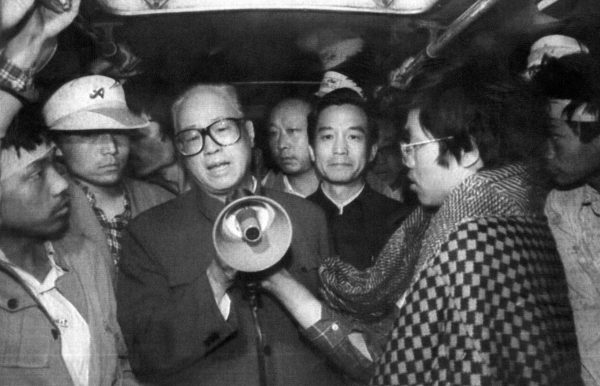
Jiang reached the top not through military distinction or sustained administrative achievement but because of his willingness, as Shanghai’s mayor, to suppress a reformist newspaper and signal support for crushing the student movement. That willingness earned Deng Xiaoping’s confidence at a moment when Deng needed someone who would hold the line. Jiang’s entire claim to legitimacy as general secretary rested on the political justification for June Fourth. Zhao Ziyang, alive and potentially capable of speaking, was a living challenge to that justification. Zhao had opposed the crackdown. He had told the students, in his visit to Tiananmen Square on the eve of the massacre, “We have come too late.” Any movement to rehabilitate Zhao, or to overturn the Party’s verdict on June Fourth, would have stripped away the political foundation on which Jiang had built everything.
Ming Juzheng, an emeritus professor of political science at National Taiwan University who has studied CCP elite politics for decades, has described this as a function of how power is legitimized inside the Party. A leader whose authority derives from a specific act, rather than from institutional standing or popular support, is permanently hostage to the continued justification of that act. Jiang could not afford a living Zhao Ziyang.
Cheng Xiaonong, who served as director of the comprehensive research office at China’s Economic System Reform Research Institute during the Zhao Ziyang era, has argued that the house arrest served a purpose beyond Jiang’s personal vendetta. Zhao represented a political line: the argument, advanced by reformers inside the Party in the 1980s, that the system could be made more lawful and more responsive without abandoning Communist Party rule. Keeping Zhao imprisoned until his death was a message to every official in the system. Anyone who had expressed sympathy for the students, anyone who had questioned the party line, could see in Zhao’s fate what awaited them.
The pattern fits a broader reading of how the Party treats senior officials who visibly place conscience above obedience. Zhao’s choice in 1989, to refuse to endorse the use of lethal force against the protesters, represented exactly that. For a system sustained by compelled loyalty and the suppression of dissent, such an act is treated as a foundational threat.
A record that survived the courtyard walls
Zhao Ziyang spent those sixteen years in the Fuqiang Hutong compound, the same courtyard that had previously served as the residence of Hu Yaobang, the reformist general secretary whose death in April 1989 had sparked the student protests in the first place. He went in with dark hair. He died there sixteen years later, white-haired, breathing with the help of supplemental oxygen.
Li Rui’s diary documents the repeated efforts of reformist Party veterans to win even minor concessions on Zhao’s behalf, and the repeated refusals. Zhao, for his part, had found another way out. He secretly recorded his memoirs on cassette tapes that were smuggled out of China and published posthumously in English as Prisoner of the State.
Zhao understood the Party’s internal logic as well as anyone who had ever reached its summit. He knew what his choice on the night before the massacre would cost him. He went to Tiananmen Square anyway, told the students “we have come too late,” and accepted what followed. Jiang spent sixteen years trying to erase that moment.
By Fu Longshan