By Vision Times TV
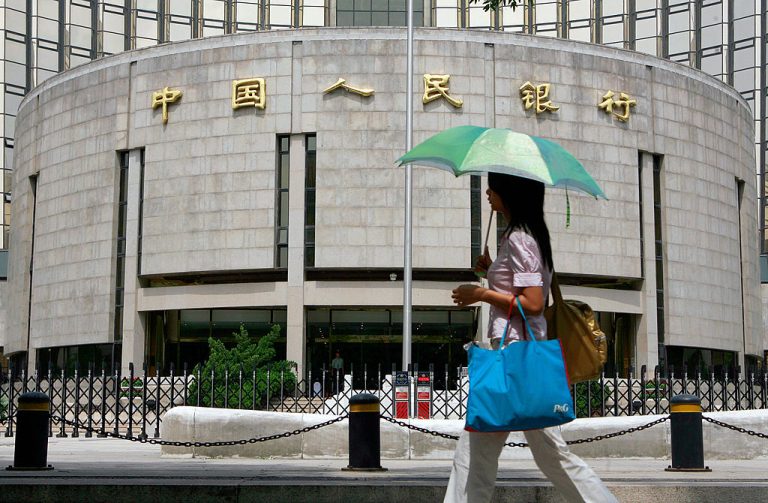
A wave of anger and frustration is spreading across China as bank customers report growing difficulty making withdrawals as thousands of branches quietly disappear across the country. As one citizen said in a widely-shared video, “I went to 10 Bank of China branches in one day, and none of them allowed withdrawals. This is the kind of heartless behavior state-owned institutions show toward ordinary people. I don’t even know how to deal with it.”
In another widely-circulated case on social media, a critically ill elderly man lay in a hospital awaiting life-saving treatment. His son, carrying the man’s ID, household registration booklet, and bank card, attempted to withdraw cash from a teller, only to be told the account holder must appear in person for withdrawals to be honored.
“Come take a look at this bank. My father is in critical condition, and withdrawing money is extremely difficult… We brought his ID and household registration, but they still demand more proof. The money needed to save his life can’t be withdrawn… Look at how this bank treats ordinary people in need.”
Official data underscores the growing strain. As of December 2025, 377 banks exited the market through mergers or closures, while over 9,000 bank branches shut down nationwide. Rural commercial banks were hit hardest, accounting for more than half of closures.
Success
You are now signed up for our newsletter
Success
Check your email to complete sign up
RELATED: The Great Wealth Transfer: Is China Quietly Becoming an Inherited Society?
Bureaucracy over humanity
Similar stories continue to emerge. In another case, a woman described how her critically ill relative was physically carried into a bank after repeated refusals to allow a proxy withdrawal: “They insisted the account holder had to come in person… After multiple complaints, it still didn’t work. We carried her here… After more than two hours, the money still wasn’t withdrawn. Now she’s gone. She’s gone.”
Even routine withdrawals have become fraught. One woman attempting to withdraw 300,000 yuan was repeatedly questioned: “I’m withdrawing my own money, why do you keep asking? This is way too intrusive.”
A bank employee responded with, “Banks have their procedures. Please follow them.” Customers, however, increasingly see these “procedures” as excessive, inconsistent, and intrusive.
Anti-fraud measures or overreach?
Banks frequently justify strict controls as necessary to combat fraud. Yet customers argue the burden has shifted unfairly onto depositors. In one exchange, a man challenged a bank’s logic: “When my cousin lost 1.9 million yuan to fraud, he called immediately to freeze the account… After verifying all his personal details, the scammers had already drained everything.”
When told tighter controls were for prevention, he replied: “Then strengthen your internal controls, don’t make things difficult for us.”
Another customer questioned the effectiveness of such safeguards, “If our money is really stolen, can you actually stop the fraud? Can you recover the funds?” The bank clerk reportedly had no answer.
Who controls the money?
Many customers say they no longer feel ownership over their deposits. One man vented his frustration after repeated restrictions: “At this point, I don’t even know whether this money belongs to me or to the bank.” Another customer echoed the sentiment: “The money is mine, why can’t I decide how to use it?”
Limits on withdrawals, mandatory appointment systems, and intrusive questioning about fund usage have become common complaints.
Even modest transactions can trigger scrutiny. As one customer shared: “I tried to withdraw 40,000 yuan, and the teller asked who I was lending it to, where the house was, whether there was a contract… In the end, I couldn’t withdraw a single cent.”
Closures and structural pressure
Behind these tensions lies a deeper structural shift. According to the 2024 China Financial Stability Report, 357 banks are classified as high-risk, most of them small and mid-sized institutions such as rural banks.
In recent years, such banks have been particularly vulnerable to slowing economic growth, a weakening property market, and local financial strain. As a result, closures, mergers, and restructurings have accelerated.
At the same time, digital banking has reduced reliance on physical branches. Industry insiders note that over 80 percent of financial services are now conducted online, while maintaining a single branch can cost nearly 10 million yuan annually, far more than digital operations.
Cost pressures, combined with risk controls, are pushing banks to consolidate rapidly.
A growing trust deficit
For many Chinese citizens, however, the issue goes beyond efficiency, it is about trust. One frustrated customer summed up the broader concern: “They say keeping money in the bank is safest. But every fraud case involves money being transferred through banks… The scammers know everything, your name, phone number, even your balance. And when the money is gone, the bank can’t even tell you who took it.”
He added, “If I kept cash, at least I’d know who robbed me. But in the bank, someone clicks a mouse, and it’s gone.”
As closures mount and controls tighten, a growing number of people are left asking a fundamental question: If you can’t freely access your own money, who really owns it?