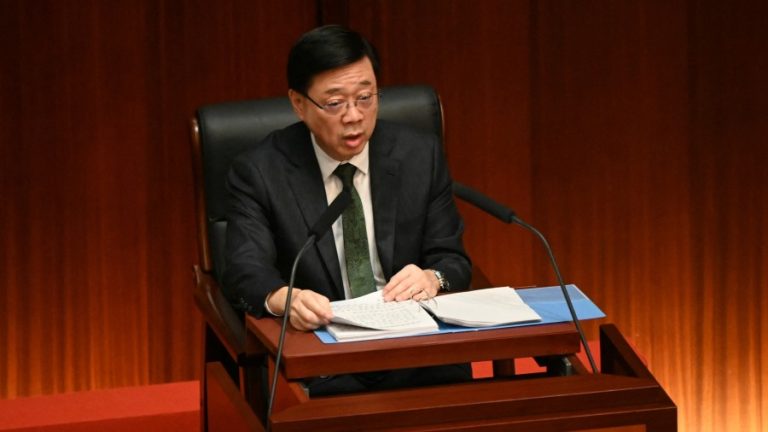
According to Reuters, from April 7 to 12, Kuomintang (KMT) Chairman Cheng Li-wen led a delegation to China and held a “Cheng–Xi meeting.” Around the same time, Taiwan received a letter from the Chinese side requesting a full restoration of cross-strait passenger air routes. Taiwan’s Mainland Affairs Council (MAC) stated that the CCP was attempting to pressure the Taiwanese government to have public authorities cooperate in implementing the outcomes of the “KMT–CCP dialogue.”
CCP pressures Taiwan to align with ‘KMT–CCP dialogue’
The CCP’s united front strategy toward Taiwan is becoming increasingly complex, combining “military pressure” and “exchange infiltration” in a dual-track approach. Against this backdrop, the KMT’s pro-China stance has drawn renewed controversy. KMT Chair Cheng Li-wen recently visited China for the “Cheng–Xi meeting,” while the CCP also announced “10 preferential Taiwan policies,” including the full restoration of cross-strait direct passenger flights and the resumption of individual travel from Shanghai and Fujian to Taiwan. Cheng Li-wen stated that expanding tourism exchanges would promote emotional and psychological closeness between the two sides.
In response, Taiwan’s MAC issued a strongly worded statement criticizing that shortly after the “KMT–CCP dialogue” was held in Beijing on April 10, the CCP immediately released “10 measures to promote cross-strait exchanges and cooperation” on April 12, including the full restoration of direct passenger flights. The MAC said this effectively bypassed Taiwan’s government on matters involving public authority, amounting to unilateral announcements that fully exposed the political nature of a backroom KMT–CCP arrangement.
According to FTV News, the MAC emphasized that the government supports healthy and orderly cross-strait exchanges, but any such measures should not include political preconditions, nor should they become bargaining chips for any political party.
The MAC further stated that China’s civil aviation communication channel sent a letter on April 7 calling for the full restoration of cross-strait air routes. The timing, it said, clearly coincided with the “KMT–CCP dialogue” and the CCP’s announcement of its 10 Taiwan-related measures, with the intent of pressuring Taiwan’s government to implement the outcomes of the meeting.
Success
You are now signed up for our newsletter
Success
Check your email to complete sign up
Cross-strait direct flights remain governed by consistent policy principles
The MAC noted that the Chinese side, driven by political and united front considerations, has repeatedly requested the “full restoration of cross-strait direct flights” in the past. Since the COVID-19 pandemic, Taiwan has gradually resumed direct cross-strait air routes based on evolving cross-strait conditions and actual civil aviation needs. At present, there are 15 regular routes and 13 charter flight destinations.
The MAC stressed that based on current utilization rates and airline applications for charter flights, existing routes and capacity are sufficient to meet demand, and there is no urgent need for immediate expansion.
The MAC added that future policy regarding the resumption of cross-strait passenger flights will continue to follow consistent principles and pragmatic approaches, with periodic reviews of operations. Adjustments will be made in accordance with changes in cross-strait relations and actual demand, and will not be influenced by CCP united front operations or political manipulation.

Airlines need guaranteed return passenger load factors
According to Central News Agency (CNA), MAC Deputy Minister and spokesperson Liang Wenjie confirmed at a press briefing on the 16th that Taiwan received the letter on April 7 and would conduct an evaluation. He added that communication channels between civil aviation authorities on both sides remain generally functional.
Liang noted that airlines face a key issue: after transporting passengers to China, there are often not enough return passengers. Since China has not reopened group tours to Taiwan, most travel flows only consist of Taiwanese passengers flying to China, resulting in empty return legs. This makes such routes unattractive for airlines.
He added that many destinations in China can be accessed more cheaply via transfer hubs such as Shanghai or Beijing. For example, a direct Taipei–Xi’an ticket costs around NT$15,000–20,000, while transfer flights cost only NT$8,000–12,000. As for Taiwanese business people, although convenience is important, their numbers are insufficient to sustain a dedicated route.
Liang stated that “route expansion should be considered only after tourism group travel issues are resolved and airlines are guaranteed return passengers and load factors,” adding that continued evaluation and communication on routes remains necessary.
In addition, Executive Yuan spokesperson Lee Hui-chih said the government welcomes healthy and orderly cross-strait exchanges, but current actual demand for direct flights is not as high as expected. The government will conduct pragmatic assessments after receiving related communications.
Civil Aeronautics Administration special committee member Zhang Cui-fen also said relevant information had been received. However, given current flight conditions, demand is not particularly strong, and existing operations should be sufficient to meet present needs. The situation will continue to be monitored, and flight arrangements adjusted when appropriate.
By Li Jingyao