On April 12, the Chinese Communist Party (CCP) announced “Ten Measures to Benefit Taiwan.” Kuomintang (KMT) legislator Ko Chih-en pointed out that three of them—opening up deep-sea fishing, agricultural products, and allowing individual travel for tourists from Shanghai and Fujian—would be most beneficial to Kaohsiung. In response, Kaohsiung Mayor Chen Chi-mai cited Honduras and Japan, emphasizing that international trade should be negotiated on a government-to-government basis under equal conditions, which would better protect Taiwan’s farmers, fishers, and tourism operators. Senior media figure Masaru Yamada stated that taking benefits from the CCP is like “asking the devil for pocket money,” because it is never free.
Chen Chi-mai: Trade should be government-negotiated to protect industry rights
The “Ten Measures for the People” include promoting the resumption of pilot programs for individual travel to Taiwan for residents of Shanghai and Fujian, gradually restoring cross-strait air passenger routes, supporting Taiwanese agricultural and fishery products in expanding into the Chinese market and participating in trade exhibitions, among others. They also encourage Taiwanese small and medium-sized enterprises to develop in mainland China and strengthen cross-strait industrial and economic cooperation.
According to Taiwan News, Ko Chih-en, a KMT Kaohsiung mayoral candidate and legislator, said that deep-sea fishing, agricultural product access, and individual travel from Shanghai and Fujian are the most beneficial to Kaohsiung. She noted Kaohsiung’s strong tourism and business resources and expressed hope for deeper cross-strait exchange, urging that “benefiting Taiwan” policies not be affected by political factors and continue to expand.
Kaohsiung Mayor Chen Chi-mai, however, cited Honduras establishing diplomatic ties with China. He noted that China had promised to purchase large quantities of white shrimp, but actual Honduran exports fell far short of expectations, causing significant losses for shrimp farmers. He said, “Any trade carries risk. If agreements are signed but not fulfilled, farmers can suffer direct harm.”
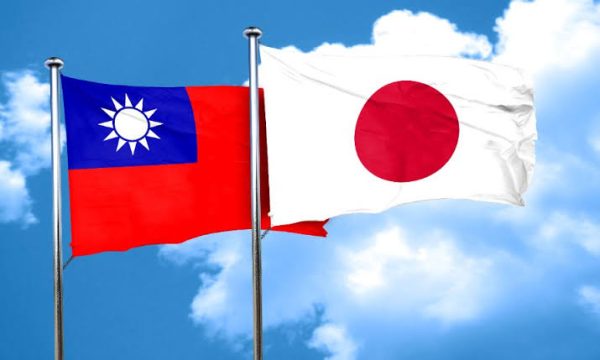
Chen added that Japanese Prime Minister Sanae Takaichi once said, “If something happens to Taiwan, it will also affect Japan,” after which Chinese tourists stopped going to Japan and concerts and performances by Japanese artists were canceled. This, he said, shows that even when arrangements exist, political factors can cause tourism flows to stop suddenly.
Success
You are now signed up for our newsletter
Success
Check your email to complete sign up
Chen emphasized that China should negotiate with Taiwan’s government on an equal basis. Taiwan is willing to do business with all countries and welcomes more foreign tourists to Kaohsiung. However, he warned that risk management is necessary; otherwise, investments made in anticipation of tourism or exports could suffer major losses if policies are suddenly reversed weeks or months later. Therefore, he hopes all arrangements are reached through careful government-to-government negotiation to protect the rights of tourism operators, farmers, and fishery workers.
‘United front’ division tactics and high risk
Regarding the CCP’s so-called “benefiting Taiwan measures,” Taiwan’s Mainland Affairs Council stated that historical experience shows Beijing’s so-called economic “concessions” are often unilaterally revoked or suspended for various unfounded reasons, causing major losses to Taiwanese farmers, fishers, and industries. These “unilateral benefits” are described as “poisoned gifts wrapped in sugar,” and what Taiwan has repeatedly experienced is economic coercion and a pattern of “nurture, entrap, and eliminate,” harming national and industrial interests.
The Council stated that the CCP weaponizes cross-strait exchanges for political purposes, resulting in uncertainty where policies can be interrupted at any time and selectively applied only to certain groups. The newly announced measures—including agricultural and fishery imports, food enterprise registration, partial flight resumption, and tourist travel to Taiwan—have been opened and closed repeatedly over the years. This pattern, it said, continues today, offering no institutional guarantees for Taiwan’s industries, farmers, fishers, or public interests, and carries high risks.
Taking CCP benefits is like ‘asking the devil for pocket money’
Senior media commentator Masaru Yamada bluntly stated that taking benefits from the CCP is like “asking the devil for pocket money,” because it is never free.
In a Facebook post on April 13, Yamada noted that after Cheng Li-wen’s visit to Beijing, China announced so-called “ten benefits,” including opening up some tourism. Many KMT figures supported them, calling them major advantages for Taiwan. However, he argued that taking CCP benefits is fundamentally like “asking the devil for pocket money”—not everyone is fortunate enough to bear such “favors,” because they are never free.
Yamada compared it to common fraud tactics used by scam criminals. First, small favors are given to lower the target’s guard. But the real goal is never generosity—it is control and possession, to get the target to agree, sign, and enter an irreversible relationship. Once the person refuses to comply, the other side reveals its harsher nature.

Today’s ‘benefits’ become tomorrow’s leverage
Yamada said Chinese military aircraft circling Taiwan act like a whip, reminding that “refusal has a price.” If there is no resistance, a small reward may be given—but when, how much, or whether it is withdrawn is entirely controlled by the other side. The sudden bans on Taiwanese pineapples and grouper fish in the past are real examples. Today’s “benefits” can become tomorrow’s tools of coercion. Historically, this pattern is not unfamiliar.
He also cited examples: Tibet was once promised a high degree of autonomy but later experienced long-term strict control, with hundreds of self-immolation protests. Hong Kong was once guaranteed “one country, two systems,” along with freedoms of speech and publishing, but ultimately Apple Daily was forced to shut down, and founder Jimmy Lai and other executives and journalists were sentenced. These examples, he said, show that such “promises” are merely transitional tools, not final goals.
Therefore, the CCP’s so-called “benefits” are never simple economic exchanges. “Once you accept them, it is treated as implicit consent to a certain relationship—almost like signing an invisible contract. The issue is not how much you receive, but whether you are thereby drawn into its rules.”
By Li Jingyao