By Tuo Xianrun, Vision Times
Chen Lihua, founder of the China Rosewood Museum and honorary chairwoman of Fuhua International Group, died on April 13, 2026, at the age of 85. Initial coverage of her death focused largely on her vast fortune and her high-profile marriage to actor Chi Zhongrui. But accounts from business circles and historical reporting point to a more layered story behind her rise — one shaped by access to resources, policy conditions, and opportunities not widely available to others.
Public versions of Chen’s biography provide limited detail about how her early capital was accumulated. They typically note that she had a high school education, worked in a furniture repair factory, and relocated to Hong Kong in the early 1980s, where she then entered the real estate market.
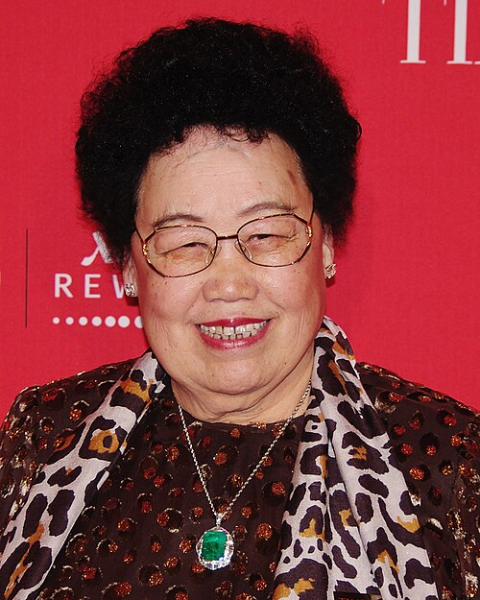
However, accounts circulating among Beijing business observers suggest a more complex picture. One widely circulated account (unconfirmed publicly) holds that Chen obtained authorization from a senior municipal official, allowing her access to a state-run warehouse containing furniture confiscated during the Cultural Revolution. These items, including pieces made from rare hardwoods such as rosewood and huanghuali, were reportedly transported to Hong Kong and sold, forming the basis of her initial capital.
Observers familiar with the period have noted that such transactions would have been difficult under normal circumstances. In the early 1980s, strict controls governed foreign exchange, cross-border trade, and access to state-held assets.
Success
You are now signed up for our newsletter
Success
Check your email to complete sign up
RELATED: Evergrande Founder Xu Jiayin Faces Trial on Multiple Charges of Fraud, Corruption
Migration and capital constraints
Chen’s move to Hong Kong also took place within a tightly regulated migration system. At the time, one-way travel permits from mainland China were subject to quotas and political review, with applicants typically required to demonstrate financial capacity upon arrival.
Contemporary accounts suggest that migrants often needed assets equivalent to roughly one million Hong Kong dollars, far beyond what could be expected from factory wages. No publicly documented family connections in Hong Kong have been identified to explain how Chen obtained such approval through conventional channels.
Reports of her acquisition of multiple hillside villas through court auctions, followed by profitable resales, align with broader real estate trends of the period. Still, participation in such transactions would have required substantial upfront capital.
Prime land and policy access
After returning to Beijing as a Hong Kong-based investor, Chen developed several high-profile projects under policies that favored overseas Chinese investment during the reform era.
Among them was the Chang’an Club, located along Beijing’s politically sensitive Chang’an Avenue near Tiananmen Square. Development in this area typically requires approval at levels beyond municipal authorities, though public records do not detail how such approvals were secured.
Another major project, Gold Street, involved redevelopment in an area containing traditional courtyard housing and properties linked to cultural and political institutions. The site’s proximity to offices associated with the Chinese Communist Party’s United Front Work Department and the Ministry of Foreign Affairs suggests that multiple layers of coordination would have been required.
Networks of influence
The Chang’an Club operated as an exclusive membership venue where business leaders and officials interacted outside formal government channels. Reports from the time describe strict entry requirements, with some prominent entrepreneurs reportedly excluded.
Chen acknowledged knowing Zhang Baifa, a former vice mayor of Beijing who oversaw major construction projects in the 1990s. Contemporary reporting indicates that Zhang attended at least one groundbreaking ceremony linked to her developments.
Other figures said to have had contact with Chen include Li Ruihuan, a former member of the Politburo Standing Committee, and Chen Xitong, a former Beijing Party secretary later investigated for corruption. While such connections have been noted in various accounts, the nature of these relationships has not been publicly detailed.
Some longstanding narratives among Beijing residents suggest that Chen may have had earlier personal connections that facilitated her relocation and business opportunities. These accounts remain unverified and were not addressed publicly by Chen, but their persistence reflects broader questions surrounding her early trajectory.
A life shaped by reform-era conditions
Chen’s career unfolded during a period of significant economic transformation in China, when policy shifts, regulatory gaps, and preferential treatment for certain investors created opportunities for rapid wealth accumulation.
Analysts have noted recurring patterns among individuals who rose to prominence during this period, including access to state-controlled resources, advantageous policy positioning, and the ability to navigate complex approval systems.
Public narratives have often portrayed Chen as a self-made entrepreneur. At the same time, discussions among observers highlight the structural conditions that shaped the possibilities available to business figures in the reform era.
Chen Lihua’s life has been interpreted through multiple lenses: Entrepreneurial success, strategic positioning, and institutional access among them. The full picture remains difficult to verify in detail, reflecting the opacity surrounding wealth formation during China’s early decades of market reform.
Her legacy ultimately sits at the intersection of personal ambition and systemic opportunity, where access, policy, and timing often proved as decisive as business acumen. In that sense, her story reflects not only the rise of one individual, but the conditions that shaped an entire generation of wealth in modern China.