Lin Jianyi, Vision Times
The “Regulations on Industrial and Supply Chain Security” (hereinafter referred to as “Regulations”), released on April 7, mark a significant shift in China’s logic for handling economic security.
In the past, China’s supply chain management was mainly dispersed among administrative departments such as the Ministry of Commerce and the Ministry of Industry and Information Technology, with its core objectives centered on industrial upgrading and efficiency improvement. However, the introduction of these new regulations formally declares that supply chain security has come to the forefront and become a core component of national strategy.
RELATED: US Blockade of the Strait of Hormuz Cuts Iran Oil Flow, Raises Pressure on China’s Energy Supply
Policy evolution
The key significance of this shift lies in its legalization and institutionalization. In the past, when facing global geopolitical turbulence, China mostly relied on policy guidance documents that lacked binding legal force.
Success
You are now signed up for our newsletter
Success
Check your email to complete sign up
However, the 2026 regulations place supply chain security within the framework of the National Security Law, granting the government institutional authority to fully regulate supply chain operations and manage risks under specific circumstances.
If the Export Control Law of the People’s Republic of China implemented in 2020 is seen as Version 1.0 in responding to foreign sanctions, then this new regulation can be regarded as a more systematic Version 2.0. Previous controls were mostly focused on individual points by restricting specific goods or technologies. In contrast, the current governance framework focuses on an all-encompassing approach, emphasizing the interconnectedness of entire industrial chains and national-level systemic security.
The new regulations grant the government the authority to conduct “security inspections” of key industries. Enterprises are required to disclose more detailed information about their supply systems and technological pathways, enabling the government to identify vulnerabilities within supply chains.
Second is the normalization of intervention mechanisms: the government can exert substantive influence and compliance requirements over corporate supply chain configuration and procurement decisions. On the grounds of “security,” companies may be required to diversify suppliers or adopt localized substitution.
Finally, there is the legalization of countermeasures: when foreign countries impose discriminatory measures against China, the regulations provide a clear legal basis for targeted counteractions. Export controls are no longer purely reactive; instead, they are integrated into a flexible policy toolkit that can be used to pursue broader geopolitical objectives.
Strategic implications
From the perspective of the international political economy, this policy reflects a fundamental transformation in global competition. In the past, global supply chain layouts followed comparative advantage and efficiency principles. However, these regulations demonstrate that global economic interactions are increasingly shifting toward a security-first logic.
China is attempting to leverage its advantages in key resources (such as rare earths and critical chemicals) and large-scale manufacturing capacity to establish institutional deterrence capabilities against other countries, gradually moving toward the “weaponization” of supply chains.
Through legal mechanisms, China seeks to convert its monopolistic position in certain advantageous sectors into policy leverage, thereby increasing its bargaining power in diplomatic competition.
Global impact
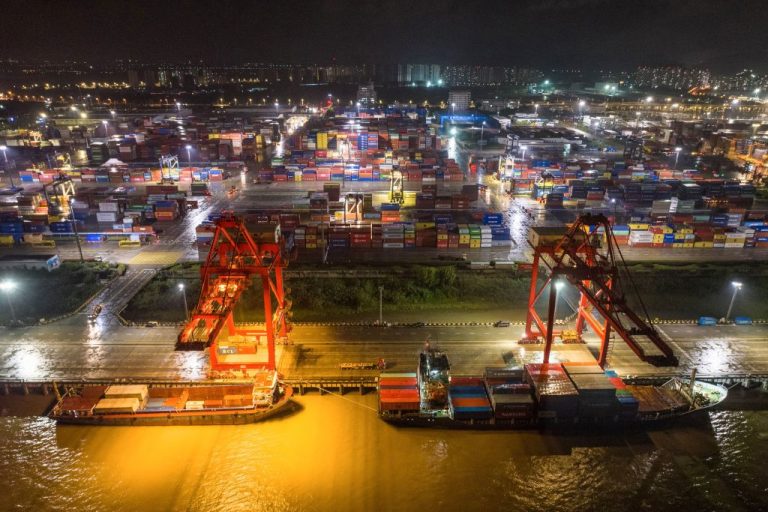
For Taiwan and global industrial supply chains, the ripple effects of this policy adjustment will force all parties to continuously rebalance between efficiency and security. On the risk side, the most direct impact is increased uncertainty for foreign companies operating in China. Enterprises must avoid violating two potentially conflicting regulatory systems, such as U.S. export controls and China’s security regulations.
For Taiwan, though it has technological advantages, parts of its industrial base still rely on critical raw materials from China. If China implements reciprocal countermeasures, Taiwanese firms may face supply disruptions or be forced into difficult choices of alignment.
On the opportunity side, these risks are also accelerating supply chain restructuring. As multinational companies pursue “de-risking,” Taiwan, thanks to its transparent legal system and high technological credibility, has become a preferred “Trusted Supply Chain” hub.
Taiwan can take this opportunity to upgrade from a contract manufacturing role to a strategic node or risk-management center within the global non-red supply chain. Western countries trust Taiwan’s rule of law and cybersecurity capabilities and are willing to entrust Taiwanese firms with managing sensitive global production networks. This is the core of a trusted supply chain.
China’s 2026 new supply chain regulations are not merely a trade barrier, but a sophisticated system of economic deterrence. In today’s era of fading globalization dividends, how enterprises and states precisely position their strategic value in this ongoing tug-of-war between “security and efficiency” will determine their survival and development in the future global order.
Editorial note: Views expressed in this article are the opinions of the author and do not necessarily reflect the views of Vision Times.