On April 21, New York State Attorney, Letitia James, issued a press release stating that her office has filed a suit against cryptocurrency giants Coinbase and Gemini for allegedly running illegal gambling platforms via their “prediction market” platforms.
The press release reads, “An investigation by the Office of the Attorney General (OAG) found that Coinbase and Gemini are running prediction markets that constitute illegal, unlicensed gambling operations. These illegal operations expose New Yorkers – including those under the legal gambling age of 21 – to serious financial and personal risk.”
James is seeking fines, a forfeiture of illegal profits and financial restitution to customers.
“Gambling by another name is still gambling, and it is not exempt from regulation under our state laws and Constitution,” said Attorney General James. “Gemini and Coinbase’s so-called prediction markets are just illegal gambling operations, exposing young people to addictive platforms that lack the necessary guardrails. My office is taking action to protect New Yorkers and stop these platforms from violating the law.”
Coinbase and Gemini operate prediction-style platforms that allow users to trade on the outcome of real-world events, rather than placing traditional bets.
Success
You are now signed up for our newsletter
Success
Check your email to complete sign up
Users buy and sell contracts tied to specific outcomes, such as the outcome of an election or sporting event. Each contract is typically priced between $0 and $1, reflecting the market’s estimated probability of that outcome.
For example, a contract trading at $0.60 suggests a 60 percent chance of something occurring.
If the predicted event happens, the contract settles at $1. If it does not, it settles at $0. Users can trade positions before the outcome is decided, with prices fluctuating based on supply and demand.
James is arguing that this is akin to gambling, and despite the injection of different technologies and formats their operations should fall under the state’s gambling regulations.
Coinbase and Gemini ‘sidestepping’ their obligation to pay taxes
James further argues that since both Coinbase and Gemini failed to obtain the appropriate license for their activities, they are “sidestepping their obligation to pay taxes like licensed casinos and mobile sports gambling platforms do.”
“This tax revenue funds public schools, sports programs for underserved youth, and problem gambling education and treatment. Coinbase and Gemini’s prediction markets are also available to users between the ages of 18-20, even though New York law states that a person must be at least 21 years old to participate in mobile sports betting,” reads the press release.
Among the allegations, the two companies are also being accused of allowing users to gamble on events in the state where gambling is prohibited, including on college sporting events.
In addition to fines and the forfeiture of all illegal profits, James is seeking “three times the profits the companies made through their illegal actions,” and to ban allowing anyone under 21 to wager.
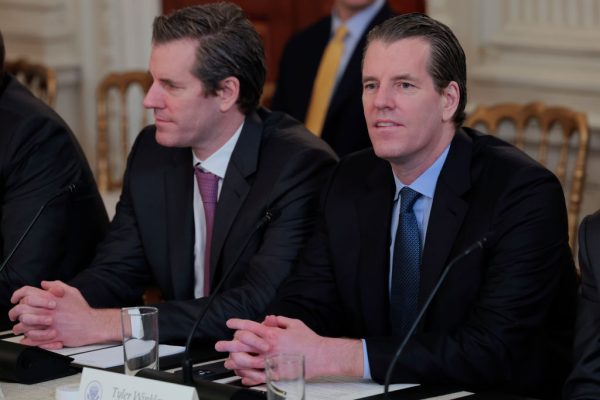
Gemini is led by the billionaire Winklevoss twins and the publicly traded Coinbase is led by CEO Brian Armstrong who is the largest individual shareholder and has what is considered an outsized control through special voting shares.
Regulatory battle over prediction markets
Prediction markets gained popularity during the 2024 U.S. presidential election cycle, when their real-time probabilities were proven to be more accurate than much of the polling. These markets correctly signaled a Trump victory.
Despite New York State’s lawsuit, a broader battle is unfolding over how these markets should be regulated.
Reuters reported that on “April 2, the U.S. Commodity Futures Trading Commission (CFTC) sued Arizona, Connecticut and Illinois to stop them from regulating prediction markets.”
The U.S. Commodity Futures Trading Commission argues that it has “exclusive regulatory authority” over commodity derivative markets, including prediction platforms operated by Coinbase and Gemini.
On April 6, a federal appeals court in Philadelphia ruled that the CFTC has exclusive oversight, and that New Jersey gaming regulators could not ban such markets.
Another case filed in October 2025, which remains pending, targets the New York State Gaming Commission in Manhattan and seeks to preemptively block any move to ban event-based contracts in the state.
Coinbase Chief Legal Officer Paul Grewal responded to the New York lawsuit in a post on X, saying “About the NY lawsuit news – prediction markets are federally regulated national exchanges, registered with the CFTC. This issue is proceeding in New York federal court as we speak. Coinbase will continue to fight for the federal oversight of these markets that Congress intended.”