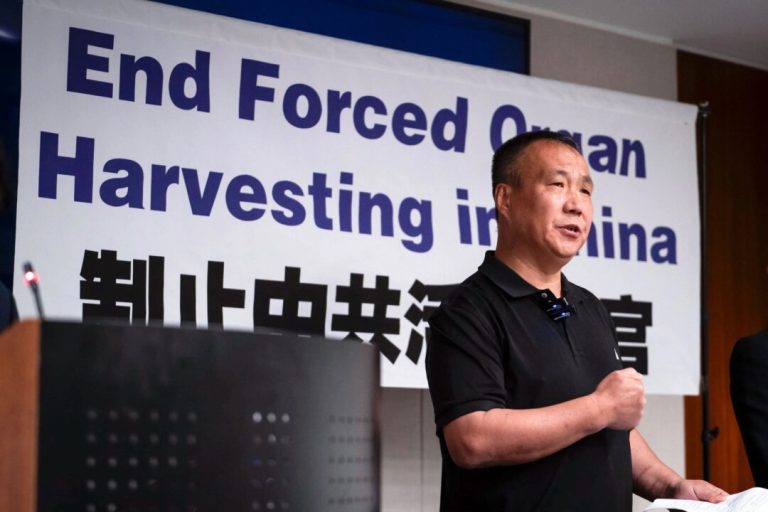
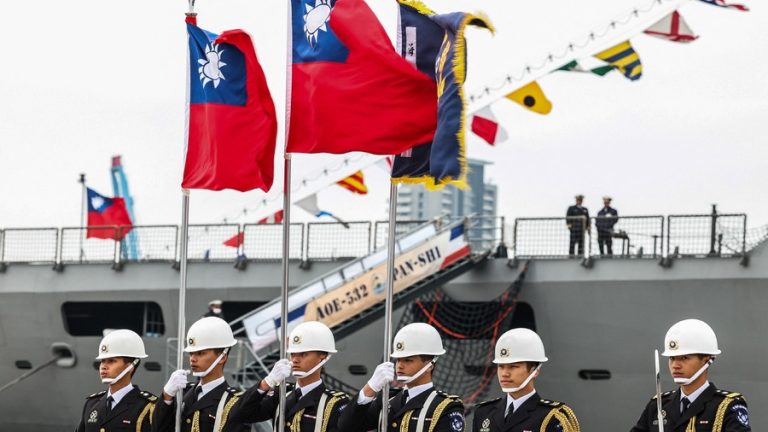
The China Mainland Research Center at the College of Social Sciences at National Taiwan University held a forum on May 19 titled “Post-‘Trump-Xi Meeting’ Developments in U.S.-China-Taiwan Relations and Cross-Strait Dynamics.” Scholars participating in the event argued that, based on interview remarks by U.S. President Donald Trump and U.S. Secretary of State Marco Rubio, the developments are highly favorable for Taiwan. They said that efforts to counter the Chinese Communist Party (CCP) will likely lead to closer military and supply chain cooperation between the United States and Taiwan.
Shen You-chung, Deputy Minister of Taiwan’s Mainland Affairs Council, stated that U.S. policy toward Taiwan remains unchanged, adding that Taiwan does not face an “independence issue,” but rather a question of potentially being “forced into unification.”
Lin Cheng-yi: Trump administration wants Taiwan to strengthen defense
According to Liberty Times, the forum was held May 19 at National Taiwan University’s College of Social Sciences.
Lin Cheng-yi, former Deputy Minister of the Mainland Affairs Council and researcher at Academia Sinica’s Institute of European and American Studies, said Chinese leader Xi Jinping used the Taiwan issue to gauge Trump’s position, raising questions such as whether the U.S. would defend Taiwan in the event of military conflict and urging Washington to halt arms sales to Taiwan — acting almost like a chief intelligence officer probing for information.
Lin noted that Trump did not publicly discuss Taiwan during his China visit. However, aboard Air Force One, Trump reportedly commented that the Aug. 17 Communiqué was a product of the 1980s and outdated. Prior to visiting Beijing, Trump had also indicated that arms sales to Taiwan would be discussed during the summit.
Success
You are now signed up for our newsletter
Success
Check your email to complete sign up
Lin further pointed out that Rubio said during a NBC interview that Trump made no commitments to Xi regarding Taiwan and that U.S. Taiwan policy remains unchanged.
Lin emphasized that U.S. arms sales to Taiwan are not solely determined by Trump, since Congress also has authority to recommend or direct such policies. Therefore, Trump is unlikely to end arms sales to Taiwan. In January 2026, the U.S. Congress proposed a $14 billion arms package for Taiwan, and Taiwan’s legislature approved the government-to-government procurement budget.
Lin Cheng-yi argued that opposition politicians and some media outlets claiming Trump and Xi intend to “jointly manage Taiwan” are overstating the situation. According to Lin, the Trump administration strongly wants Taiwan to improve its self-defense capabilities and increase defense spending.
Lin Tzu-li: US-Taiwan military cooperation will help deter the CCP
Lin Tzu-li, director of the China Mainland and Regional Development Research Center at Tunghai University, said Trump’s China visit appeared more focused on building a personal legacy than creating long-term institutional arrangements between Washington and Beijing, Taiwan Daily reported.
He noted that members of the U.S. delegation reportedly discarded Chinese-issued items because they were prohibited from being brought aboard Air Force One, suggesting deep mutual distrust remains between the two countries.
Lin argued that Trump will continue applying an “America First” transactional approach. Combined with administrative and legislative disagreements within Taiwan over military procurement policies, Trump’s ambiguous position on arms sales reflects deliberate strategic uncertainty.
He said this ambiguity gives Taiwan’s “skeptical of America” political camp material to promote concerns about relying too heavily on Washington.
However, Lin emphasized that if the United States wants to maintain leadership in the Indo-Pacific region, it cannot abandon Taiwan.
“While Trump may maintain strategic ambiguity in his rhetoric, he continues to emphasize that policy remains unchanged,” Lin said. “Military and supply chain cooperation between the U.S. and Taiwan will become even closer to help deter the CCP.”
Tsai Tung-chieh: US policy toward Taiwan continues to evolve
According to Liberty Times, Tsai Tung-chieh, distinguished professor at National Chung Hsing University’s Graduate Institute of International Politics, said both Washington and Beijing continue repeating longstanding positions.
Beijing insists Taiwan is an internal Chinese matter and a red line in U.S.-China relations, while Washington opposes resolving the issue through force and repeatedly states that policy remains unchanged.
Tsai argued that U.S. Taiwan policy, like broader U.S.-Taiwan relations, is constantly evolving, though the pace and direction remain uncertain.
Tung Li-wen: ‘Very positive’ for Taiwan
Tung Li-wen, executive director of the Asia-Pacific Peace Research Foundation, interpreted Trump and Rubio’s interview remarks as “very positive” for Taiwan.
He said Rubio’s central message was a warning: if Beijing attempts to change the status quo through military force or coercion, it would be a “terrible mistake” that would damage not only bilateral interests but global interests as well.
Tung said Trump’s post-summit interview emphasized several points:
- Trump made no commitments to Xi regarding Taiwan.
- Trump did not discuss military action against Taiwan with Xi.
- Arms sales issues would be discussed with Taiwan’s leadership.
- The U.S. does not want Taiwan independence efforts to appear backed by Washington.
- The U.S. does not want to “fly 9,500 miles to fight a war.”
Tung concluded that Washington and Beijing once again expressed differing positions on Taiwan while maintaining the status quo.
Shen You-chung: Taiwan faces a “forced unification” problem, not an independence problem
According to Central News Agency, Shen You-chung stated at the forum that there has been no major shift in U.S. Taiwan policy following the Trump-Xi meeting.
He said Beijing strongly emphasized its Taiwan position, but Trump largely listened without offering commitments. Meanwhile, statements from Rubio and House Speaker Mike Johnson indicate continuity in U.S. Taiwan policy.
Regarding arms sales, Shen said Washington may treat arms sales as a negotiation “bargaining chip” with Beijing, but Trump consistently emphasized that he made no promises to China and instead urged Beijing to “calm down” regarding Taiwan Strait geopolitical tensions.
Johnson also reportedly expressed support for Taiwan maintaining its autonomy and security.
Shen emphasized that deeper Taiwan-U.S. cooperation reflects shared interests: preserving peace, stability, and the status quo in the Taiwan Strait. Taiwan’s government will continue coordinating with Washington and seeking support on arms sales.
After watching Trump’s television interview, Shen said Trump’s reference to “Taiwan independence” appeared to refer specifically to creating a completely new country or changing Taiwan’s national name, flag, or anthem.
Shen concluded: “Taiwan, as a responsible member of the international community, does not have an ‘independence problem.’ We only face the issue of being forced into unification. We will not accept unification under authoritarian China. Our goal is to maintain the status quo.”