Fifty years after the Cultural Revolution ended, competing theories still fight for dominance: was it a mass uprising against bureaucratic privilege? A utopian social experiment? A genuine ideological crusade? Hu Ping, a veteran dissident intellectual and editor of Beijing Spring, works through each claim in turn and dismantles them, before arriving at his conclusion: Mao Zedong launched the Cultural Revolution to consolidate absolute personal power, and the revolutionary ideals he invoked were covered from the start.
How should the Cultural Revolution be defined? The debate has never settled. My view is that the clearest path to understanding what the Cultural Revolution was runs through establishing what it was not. Once the false definitions fall away, the truth becomes considerably clearer.
Mao used mass rebellion as a tool, then crushed it
A widely held view holds that the Cultural Revolution was essentially Mao Zedong’s call to arms for mass rebellion against entrenched Party officials, a movement captured in the slogan “to rebel is justified.” I reject this characterization.
Compared to other political campaigns of the Mao era, the Cultural Revolution did have one striking and unusual feature: for a period, Mao actually encouraged ordinary people to rise up and attack officials at every level. During that phase, people could paste up wall posters, publish unofficial newspapers, form “combat teams” and “battle brigades,” hold rallies and organize marches, and travel across the country in the mass exchanges that the period called “great linkups” — a nationwide mobilization in which Red Guards crisscrossed China to share their revolutionary fervor and consolidate factional networks. Under the banners of “criticizing the bourgeois reactionary line” and “criticizing those in power taking the capitalist road,” crowds could denounce, humiliate, imprison in makeshift detention pens, and strip authority from officials at virtually every rank. Mass rebellion against Party cadres was the Cultural Revolution’s most distinctive surface feature. Treating that feature as the movement’s defining essence, however, misreads history.
Mass rebellion against officials was only one phase of the Cultural Revolution, and a limited one at that; even by the narrow “three-year” periodization of the movement, it occupied only a fraction of the total time. More damning: Mao’s encouragement of mass rebellion was pure political calculation. The masses were a tool. Once the tool had served its purpose, Mao discarded it.
Success
You are now signed up for our newsletter
Success
Check your email to complete sign up
Once the new “revolutionary committees” that replaced the old Party committees had been established across the country and authority was consolidated, Mao launched a series of new campaigns: “Cleansing the Class Ranks,” “Investigating the May 16th Elements,” and “Strike One, Oppose Three.” These were, in practice, systematic reprisals against the very rebel factions Mao had earlier unleashed.
Yang Jisheng, a retired Xinhua journalist whose monumental history The World Turned Upside Down: A History of China’s Cultural Revolution is among the most thorough accounts of the period, wrote that the campaign against alleged “May 16th Elements” was the single longest-running persecution of the entire Cultural Revolution, and the one that claimed the most victims. It began in August 1967, reached its peak in 1970 and 1971, wound down in 1972, and was only formally abandoned in 1976. Tens of millions of people were investigated; at least one hundred thousand were beaten to death or driven to their deaths. The number targeted dwarfed the number branded as “counter-revolutionaries” in the early “fifty days” of the movement. Most grotesquely, many of the rebel leaders who had themselves been labeled counter-revolutionaries in the early phase, then rehabilitated and elevated to revolutionary committees, were in turn branded “May 16th Elements.”
Yang Xiaokai, a dissident intellectual who had been imprisoned on “counter-revolutionary” charges before the campaign was even launched at the highest levels, saw through it immediately. In prison conversations with fellow detainees, Yang observed that the campaign was the persecution of the rebel faction under a false pretext. He identified Mao as the campaign’s true instigator, despite the energetic public role played by Zhou Enlai, Mao’s prime minister and the second-ranking official in the Party hierarchy. Yang also noted the campaign’s built-in flexibility as an instrument of repression: because “May 16th Elements” referred, in theory, to a small and obscure Beijing student organization from 1967, almost no one knew exactly who the real members were, which meant officials could designate virtually anyone they disliked as a “May 16th Element.” The organization had also targeted Zhou Enlai, so the campaign gave Mao a convenient way to ingratiate himself with Zhou while settling scores with others.
Why did Mao reverse course and turn against the rebel factions he had created? He had incited mass rebellion for one purpose: to purge his political rival Liu Shaoqi, the chief of state and the man Mao had originally designated as his successor, along with the network of officials loyal to him. Once that goal was achieved, the rebels lost their usefulness. Mao then needed to restore Party authority and demonstrate that the principle of Party leadership was inviolable, which required suppressing the very “rebel” behavior he had sponsored. Since he could hardly publicly contradict himself, he reached for a catch-all phantom crime. The “May 16th Elements” label provided it. Meanwhile, the cadres who had been humiliated and attacked in the early phase were now back in their seats, still seething. Mao gave them a channel for their anger: the rebels. Those cadres dared not show resentment toward Mao directly, so they vented it on the masses, using the “May 16th” investigation as cover for settling personal scores.
The full story of this campaign remains classified by the Chinese Communist Party today. That secrecy is itself revealing: it means that Lin Biao, Mao’s designated military heir, and the Gang of Four, the four radical leaders later blamed for the Cultural Revolution’s worst excesses, bear little responsibility here. Based on the evidence available, the campaign was led personally by Mao, with Zhou as its operational director. Zhou’s several key speeches transformed “May 16th” from a real organization into an infinitely expandable pretext for persecution. The Ministry of Foreign Affairs, long Zhou’s institutional domain, had half its staff branded “May 16th Elements.” Those who celebrate the Cultural Revolution invariably avoid this campaign entirely, because an honest reckoning with the “May 16th” persecution collapses every idealized account of Mao’s intentions.
In the later phase of the Cultural Revolution, when Mao launched the “Criticize Lin Biao, Criticize Confucius” campaign in 1974, some rebel factions that had gone quiet sensed an opening and began to stir again, pasting up wall posters and attempting to reconstitute their organizations. The authorities shut them down immediately. Even while Mao was still alive, he would not tolerate a second round of mass rebellion.
Mao incited the mass rebellions of the Cultural Revolution. He also crushed them. The suppression began after the revolutionary committees had consolidated power everywhere and Mao’s “revolutionary line” had been declared victorious across the board. At that point the suppression cannot be blamed on “capitalist roaders,” on the bureaucratic faction, or on any anti-Cultural Revolution current. It sits entirely on Mao’s account, on the logic of the Cultural Revolution itself.
Mao reorganized the Party machine; he never tried to destroy it
A closely related view holds that the Cultural Revolution was fundamentally an attack on China’s Party bureaucracy. This argument is almost a mirror image of the “mass rebellion” thesis, and most of the same objections apply.
Describing the Cultural Revolution as Mao Zedong’s assault on a bureaucratic system of which he was both creator and supreme beneficiary is internally incoherent. In the Leninist party-state model, the Party is represented by its leader, and the bureaucracy by its most powerful official. The entire Cultural Revolution was conducted in Mao’s name, which meant it was conducted in the Party’s name. The Party and its leader remained formally sacred and untouchable throughout. When Party organizations and officials were purged by the tens of thousands, the purges were carried out in the name of defending the Party, with the purged charged with being “anti-Party” (specifically, as “three-against elements”: against the Party, against socialism, against Mao Zedong Thought). The military’s Party structure was largely spared. In autumn 1968, the Party’s Central Committee issued a directive restoring formal Party activities in units that had already formed revolutionary committees, and Mao simultaneously called for “replacing the old with the new” in Party membership, opening the rolls to large numbers of new members and promoting a wave of younger officials into leadership. The Cultural Revolution is better understood as a thorough reorganization and transfusion of the Party than as an attack on it.
Mao shared the classic tyrant’s ambivalence toward his own bureaucracy: he resented it and feared it, but he also knew he could not rule without it. The Mao-era Chinese state was a fused party-state; to speak of the Party was to speak of the state machine. When rebel factions in Shanghai seized power during the “January Storm” of 1967 and their leader, Zhang Chunqiao, a senior propaganda official who would later become one of the Gang of Four, proposed naming the new authority structure a “commune,” Mao refused. His reasoning was explicit: if everything becomes a commune, where does the Party fit? There has to be a party, a core. Even at the height of rebel power seizures, even when the slogan “kick aside the Party committees and make revolution” was plastered across every city, Mao never intended to replace the Party with mass organizations, never intended to swap Party committees for something resembling the Paris Commune, never relinquished the Party’s leading role.
The ancient Greek philosopher Aristotle observed that a tyrant differs from a king in this: a king relies on friends to sustain his rule, while a tyrant, knowing that everyone wishes to overthrow him and that only those close to him actually have the power to do so, trusts his friends least of all and watches them most closely. To guard against those who might challenge him from within his own inner circle, a tyrant sometimes turns to the lower classes, to those who have no ambition toward the heights of power and whose resentments are aimed at their immediate superiors rather than at the ruler himself. Communist totalitarianism resembles tyranny far more than it resembles traditional monarchy. The supreme leader depends on a vast Party organization to maintain total control of society; yet that same Party organization, especially its upper ranks, can obstruct the leader’s will and threaten his position. The solution is to use two instruments in alternation: the Party to suppress the people, and the people to discipline the Party. Mao was simultaneously the Party chairman and the largest official in the country, and the self-styled champion of the oppressed masses against the very Party he led. Each role reinforced the other.
Mao launched the Cultural Revolution because he feared that the Party’s cadres were becoming insufficiently obedient. He used the masses to conduct a purge of unprecedented scale; then he rebuilt the bureaucracy as a more personalized and compliant instrument of his own will; then he drove the masses back down. The goal throughout was absolute personal dictatorship.
Mao’s blueprint for a communist society was ignored from the start
A third interpretation holds that the Cultural Revolution was Mao’s attempt to build a communist ideal society, a grand project of utopian social transformation. The strongest evidence for this view is the so-called “May 7th Directive.”
On May 7, 1966, Mao wrote a letter to Lin Biao, his designated military successor and minister of national defense, laying out a vision of Chinese society in which every sector would become a kind of all-purpose school: a place where people studied politics, military affairs, and culture; engaged in farming and sideline production; operated small factories; and criticized the bourgeoisie. This letter became known as the “May 7th Directive.”
In December 2013, Qi Benyu, a member of the Central Cultural Revolution Small Group, the informal cabal of radical loyalists that ran the movement from inside the Party leadership, published a memoir piece recounting how Mao had summoned him along with two other senior officials in May 1966 to solicit their views on the directive. According to Qi’s account, Mao spoke at length about communist civilization as humanity’s highest achievement, invoking Zhang Lu, a warlord-era figure of the late Han dynasty who had reportedly run a proto-communist community where medical care and food were free. Mao described his own vision in similar terms: a society where labor was varied and fulfilling rather than mechanical and specialized, where everyone combined work with study, where leaders periodically returned to manual labor alongside ordinary people, and where material differences existed but remained modest. After this meeting, the directive was formally endorsed by an enlarged session of the Party’s political bureau and declared, in the language of the time, a “new epoch-making development of Marxism-Leninism.” Chen Boda, head of the Central Cultural Revolution Small Group, proposed that the directive be described as a “blueprint for communism,” arguing that all previous utopian socialism had been vague, while Mao had at last produced something concrete.
When the directive was first publicly cited in a People’s Daily editorial on August 1, 1966, it appeared without fanfare, and most people paid it no attention; the Cultural Revolution was then in the grip of “Destroy the Four Olds” fever, with ordinary people’s energies directed at smashing what was old, not building what was new. When authorities in 1967 called on students to return to classes and cited the directive again, students were deep in factional battles and paid it almost no heed. The so-called “May 7th Cadre Schools” that sprang up beginning in 1968, named after the directive and used to send disgraced or sidelined officials to farms for “re-education through labor,” bore almost no resemblance to the directive’s stated vision; they were, in practice, detention farms for politically inconvenient cadres, organized on a principle of punishment, not transformation. Diaries, memoirs, and wall posters from the most fervent years of the Cultural Revolution mention the May 7th Directive rarely, and many make no reference to it at all.
The standard critique of communist movements holds that their mass atrocities were produced by the seductive power of their utopian promises: because the goal was so magnificent, any means became permissible; to build heaven on earth, the gulag had to be constructed first. Yet when Mao’s specific communist blueprint was actually set before people in concrete form, it produced almost no excitement, no mass enthusiasm, no sense of collective mission. The Cultural Revolution’s mass fervor cannot be traced to the May 7th vision. The Cultural Revolution was not a utopian social engineering project.
Mao launched the Cultural Revolution to protect his power and his legacy
Mao’s Great Leap Forward of 1958 to 1962, with its catastrophic “Three Red Banners” policy, produced a famine that killed between thirty and forty million people, one of the worst man-made disasters in human history. From that point forward, Mao was tormented by fear: he feared that power would slip away, that rivals would stage what he called a “coup,” and that after his death he would be condemned as Nikita Khrushchev, the Soviet leader who denounced Stalin in a secret speech after Stalin’s death, had condemned his predecessor. Mao resolved to launch a massive preemptive purge to secure his authority while he lived and protect his historical reputation after he died.
Two texts from the very opening of the Cultural Revolution expose its real character. The first was the article that Yao Wenyuan, a Shanghai Party literary critic and later a member of the Gang of Four, published in the Wenhui Daily on November 10, 1965, attacking the historical play Hai Rui Dismissed from Office by Wu Han, a historian and deputy mayor of Beijing. The second was the speech that Lin Biao delivered on May 18, 1966, at an enlarged session of the Party’s political bureau.
Yao’s attack on Wu Han’s play claimed the play was coded political commentary on recent events. Yao specifically linked the play’s themes to the “temporary economic difficulties” caused by “three consecutive years of natural disasters” (the Party’s sanitized description of the Great Leap famine, which was caused by policy, not weather), to the “anti-China campaigns” being waged by “imperialists, revisionists, and reactionaries,” and to a wave of political opinion he called the “individual farming wind” and the “case reversal wind.” The article inadvertently exposed Mao’s real anxiety: he feared being held accountable for the Great Leap famine. Mao himself thought Yao had missed the essential point. He insisted the key to Hai Rui Dismissed from Office was “dismissal from office,” and that what mattered was that “we dismissed Peng Dehuai from office at the Lushan Conference.” Peng Dehuai was the defense minister who had written Mao a private letter in 1959 criticizing the Great Leap; Mao had Peng purged in retaliation. This confirmed both Mao’s guilty conscience over the Three Red Banners and his intention to use the Cultural Revolution to strike at senior colleagues who had doubted him.
Lin Biao’s May 18 speech was an extended warning against “coup attempts.” Lin declared that domestic threats, specifically threats from within the Party’s upper ranks, posed the greatest danger: “The Soviet Union produced a Khrushchev, and the whole country changed color.” He pledged perpetual loyalty to Mao and warned that anyone who after Mao’s death delivered a “secret report” in Khrushchev’s manner “will certainly be an opportunist, certainly a great villain; the whole Party should condemn him, the whole nation should denounce him.” At the Eleventh Plenum of the Eighth Central Committee, held shortly afterward, Lin stated explicitly that the movement’s purpose was to “remove a number of people from office, elevate a number of others, and protect a number of others,” with an “overall organizational adjustment” to follow. This confirmed the Cultural Revolution’s character as a grand purge aimed at entrenching Mao’s power during his lifetime and preserving his political legacy after his death.
The Cultural Revolution was a power struggle, but more than a pure power struggle. There were real policy differences between Mao and Liu Shaoqi, his designated successor and the chief of state he was intent on destroying. How much of the charge that Liu was pursuing a “capitalist road” reflected genuine policy divergence, and how much was fabricated slander? The evidence suggests that Liu had no serious intention of restoring capitalism; the charge was largely a pretext.
Many of the positions Mao advanced during the Cultural Revolution were either post-hoc justifications for past errors, tactical maneuvers designed for a specific moment, or rhetorical positions he never intended to actually implement. This explains why so many of Mao’s stated prescriptions were either vague to the point of meaninglessness, internally contradictory, or simply abandoned when inconvenient. In economic policy, Mao knew that the Great Leap strategies had failed, but he also needed to frame Liu’s corrective measures as “revisionist” and therefore worthy of condemnation. Since he had nothing coherent to put in their place, he fell back on slogans and political campaigns.
In political theory, the Cultural Revolution’s early documents repeatedly invoked the principles of the Paris Commune of 1871, the short-lived radical workers’ government in France that Marx had celebrated as a model of proletarian self-rule. The wall poster Mao endorsed, written by Nie Yuanzi, a Beijing University lecturer whose broadside Mao personally praised as “China’s first Marxist-Leninist big character poster,” was called a “declaration of China’s Paris Commune of the twentieth century,” and the Sixteen Points directive that formally launched the Cultural Revolution stipulated universal elections on the Paris Commune model. Yet when the rebels who seized power in Shanghai during the January Storm proposed naming their authority structure the “Shanghai People’s Commune,” Mao rejected it. Elections were conducted in some units when forming revolutionary committees, but no regional revolutionary committee, including the Shanghai municipal committee that served as the model for the country, was ever chosen through genuine popular election. By March 1967, Red Flag magazine had quietly dropped any mention of Paris Commune elections; by February 1968, it declared outright that “belief in elections is a form of conservative thinking.”
Mao launched the Cultural Revolution primarily for power. Ideals and principles were instruments. He said himself: “Without destruction, there is no construction; destruction comes first, and construction follows from it.” The Cultural Revolution as actually lived produced far more destruction than construction, far more tearing down than building up. That imbalance reveals that Mao had no mature, coherent vision to offer; what he had was an urgent need to destroy his rivals.
Normal Party politics could not deliver the purge Mao wanted
If the real goal was to destroy Liu Shaoqi, why was the Cultural Revolution necessary? Mao had boasted to Liu’s face: “I only need to lift one small finger to bring you down.” That may have been bluster, but the point stands: bringing down Liu Shaoqi alone did not require a Cultural Revolution.
Following the norms of intra-Party struggle that had governed the CCP since 1949, it was very difficult to destroy an opponent permanently; a disgraced rival could always make a comeback. To prevent any possibility of that, Mao needed a different kind of weapon.
He also needed to act against an enormous number of officials simultaneously. He wanted to elevate a new set of loyalists and protégés, many of whom were too junior to be promoted through normal institutional channels. Conventional Party politics could accomplish none of this. So Mao reached for the extraordinary instrument of a mass movement, manipulating crowds into doing what the Party’s own internal rules would not permit.
In January 1967, when the slogan “Down with Liu Shaoqi” was already echoing across the country, Mao received the general secretary of the Malayan Communist Party and performed elaborate public skepticism about Liu’s fate, suggesting that Liu and Deng Xiaoping, the Party’s organizational secretary and Liu’s closest ally, should perhaps remain on the Central Committee. “There are always left, center, and right in the Party,” he mused; “it’s not good to be too clean.” Then he added: “But it’s very dangerous; the Red Guards may not agree.” We know today that the “Down with Liu Shaoqi” slogan had been scripted by Mao’s own Central Cultural Revolution Small Group and fed to Red Guard leaders through back channels. Mao’s performance of reluctance was theater. He needed the crowds to do openly what the Party machinery could not do officially. The Cultural Revolution was the instrument he chose.
This article was originally published in Beijing Spring. The views expressed are the author’s own.
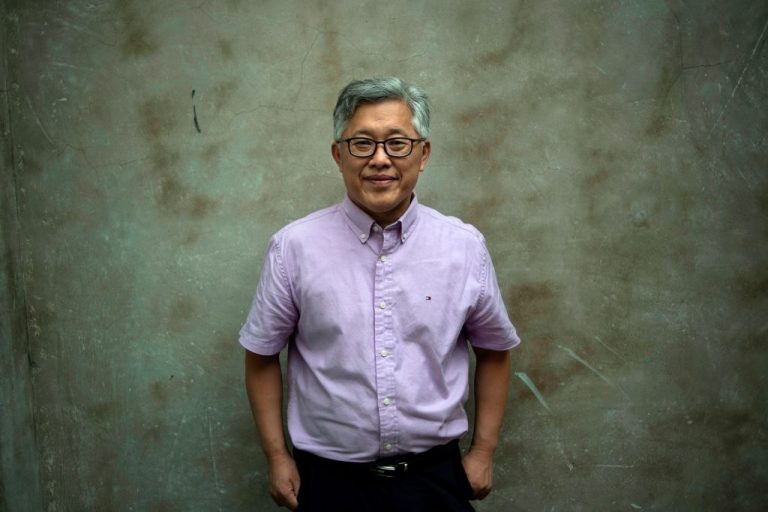
By Hu Ping