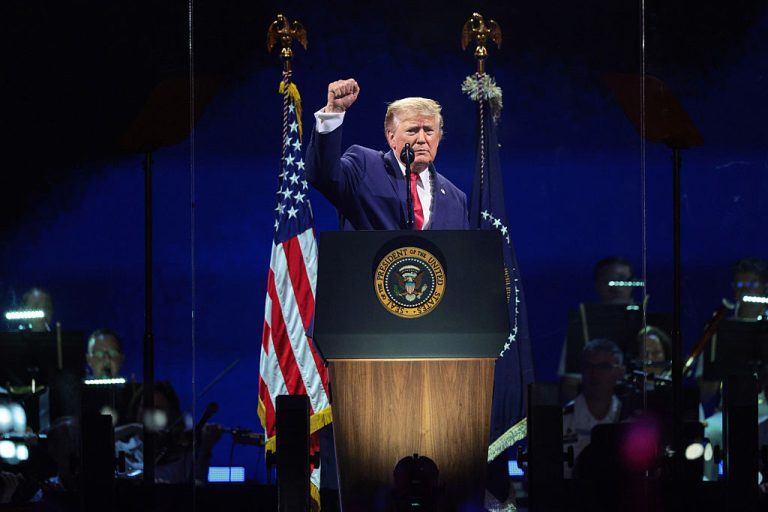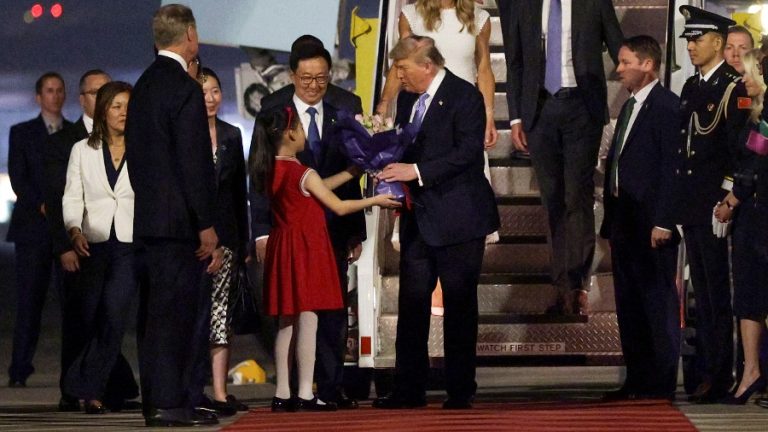
When Xi Jinping opened his summit with U.S. President Donald Trump in Beijing on May 14, 2026, his first question to Trump was whether the United States and China could “overcome the Thucydides Trap and create a new paradigm for major-country relations.” The phrase, coined by Harvard political scientist Graham Allison, describes the historical pattern in which a rising power threatens a dominant one and the resulting fear leads to war. It is now one of the most familiar concepts in U.S.-China analytical discourse, and Xi has been reaching for it for more than a decade.
For Beijing, the framing carries a specific strategic payoff. Describing the U.S.-China contest as a structural rivalry between a rising and a dominant great power repackages what is in fact a contest between a Leninist authoritarian regime and the democratic international order as a routine geopolitical drama. Once the framing is accepted, the responsibility for conflict shifts to both sides equally, U.S. resistance to Chinese expansion becomes “hegemonic arrogance,” and the global anti-CCP coalition becomes nothing more than the world’s reigning superpower trying to suppress a rising one.
Xi has used the Thucydides trap framing since at least 2013
Xi has invoked the concept at least four times across his major appearances on the world stage. According to Bloomberg, he used the term as early as 2013 in conversations with international leaders. The most influential public deployment came in September 2015, during his state visit to Seattle, where he addressed an audience that included former Secretary of State Henry Kissinger and offered a phrase that has been quoted ever since: “There is no such thing as the so-called Thucydides Trap in the world. But should major countries time and again make the mistakes of strategic miscalculation, they might create such traps for themselves.” Xi used the term again in his October 2023 meeting with then-Senate Majority Leader Chuck Schumer, and again in November 2024 in Lima, Peru, at the APEC summit, with then-President Joe Biden.
The May 14 Beijing summit was Xi’s fourth major public deployment of the framing across more than a decade of speeches and meetings with U.S. officials. The pattern is part of a deliberate effort to anchor that vocabulary in how Western diplomats and journalists describe the contest.
The strategic logic of the framing for Beijing
If the U.S.-China contest is described as an ideological struggle between Communist authoritarianism and democratic constitutionalism, the CCP faces an unfavorable coalition. The democratic world, led by the United States, has reasons to organize against the CCP that extend beyond power balance and reach into the moral foundations of how societies are organized. The current global anti-CCP coalition, which spans North America, Europe, the Indo-Pacific democracies, and now extends through technology sanctions, supply chain reshoring, and military alliances, fits exactly this pattern.
Success
You are now signed up for our newsletter
Success
Check your email to complete sign up
If, on the other hand, the contest is described as a rising power and a dominant power struggling to share global space, the framing shifts in Beijing’s favor. The conflict becomes routine geopolitics. Western resistance becomes “containment” of a normal rising state. Western democracies hesitant to choose sides have a face-saving argument for accommodation. And the realist school of Western foreign policy thinking, historically receptive to great-power-management frameworks, becomes Beijing’s most useful constituency.
Miles Yu, who served as Senior China Policy Adviser to Secretary of State Mike Pompeo from 2018 to 2021 and is now at the Hudson Institute, has built this distinction into his analysis of Beijing’s strategy. The CCP’s most successful long-running deception, Yu has argued in multiple Hudson Institute reports, is convincing the world that it represents the 1.4 billion people of China. U.S. policy under the first Trump administration, and now under the second, draws an explicit line between “the Chinese Communist Party” and “the Chinese people,” supporting the prosperity of the latter while resisting the CCP’s use of that prosperity to attack the foundations of free societies abroad.
Taiwan-based China scholar Ming Chu-cheng has pressed the question with a different angle. If the United States genuinely feared a strong China, Ming has asked in public lectures, why did it grant China Most Favored Nation trading status, bring China into the World Trade Organization, and open its leading research universities to Chinese students? The American strategic expectation across three decades was that economic integration would gradually liberalize Chinese politics. The turning point in U.S. policy came not when China’s GDP overtook Japan’s, but when the CCP, after 2012, abandoned Deng Xiaoping’s “hide your strength and bide your time” posture, began large-scale militarized island-building in the South China Sea, weaponized international organizations, and launched programs like the Thousand Talents to extract Western technology through systematic infiltration of research institutions. The shift Western governments responded to was a shift in the operating doctrine of the Leninist party that controls China.
What Allison originally argued
Allison’s own framing of the trap is narrower than Xi’s deployment of it suggests. In his 2017 book Destined for War: Can America and China Escape Thucydides’s Trap?, Allison identified sixteen historical cases of rising powers threatening dominant powers, of which twelve ended in war. His argument was that conflict between the United States and China is a real risk, not an inevitability, and that managing the trap requires deliberate effort by both sides.
Ryan Swan of the Bonn International Centre for Conflict Studies described Xi’s deployment of the term as part of Beijing’s broader effort to present itself as a “responsible great power” capable of peaceful coexistence with the United States. Bonnie Glaser of the German Marshall Fund identified the May 14 summit’s significance as the establishment of what Xi called a “constructive strategic and stable” U.S.-China relationship, which Glaser read as Beijing’s attempt to lock in the terms of the Busan truce reached in October 2025. Former Trump strategist Steve Bannon read Xi’s deployment of the term at the summit’s opening more aggressively. Bannon told Politico that Xi’s choice to lead with the Thucydides reference was “extremely in your grill, especially when this is the opening statement,” and interpreted it as a Taiwan-related warning.
Trump’s own response, posted to Truth Social shortly after the summit’s opening, treated Xi’s invocation as a comment on American decline rather than as a warning. “When President Xi very elegantly referred to the United States as perhaps being a declining nation, he was referring to the tremendous damage we suffered during the four years of Sleepy Joe Biden,” Trump wrote. “Two years ago, we were, in fact, a Nation in decline.” The CCP’s framing had partially landed, even on a U.S. president known for resisting Chinese rhetorical framings.
A civilizational contest, not a routine great-power rivalry
The international order established by the United States after the Second World War rests on free trade, human rights guarantees, and freedom of navigation. CCP expansion is not “rising” inside that order. It is constructing a parallel one. The propaganda evolution from imperial Japan’s “Greater East Asia Co-Prosperity Sphere” to Beijing’s “Community of Common Destiny for Mankind” tracks the same pattern at a different scale. The CCP exports digital authoritarianism, debt traps, and the political conditions for accepting both.
The current global anti-CCP coalition is not the product of American anxiety about a strong China. It is the product of Beijing’s behavior. The unpredictability of CCP foreign policy, the open challenge to human rights and universal values, the militarized rejection of established maritime law, and the use of economic coercion as a routine foreign-policy tool have collectively driven the formation of a coalition that did not exist a decade ago.
Xi’s repeated invocations of the Thucydides Trap are an attempt to downgrade that contest. As Ming Chu-cheng has argued, the CCP wants Chinese citizens to believe that the United States is attacking China because America fears Chinese prosperity. The truer reading, Ming has said, is that the United States and its allies are reacting to the CCP’s wolf-warrior behavior, which threatens to drag the international system back toward a darker historical pattern.
The CCP’s broader rhetorical strategy follows the same template. Beijing reaches for Western academic vocabulary, including the Thucydides Trap, “spheres of influence,” “multipolarity,” and “non-interference,” to deconstruct the value framework on which the Western international order rests, using the prestige of Western terminology to dress an authoritarian project in language the West finds familiar and difficult to refuse.
The international system genuinely welcomes a strong China that is democratic, rule-bound, and constitutional, as Japan and Germany became after the Second World War. The system has demonstrably refused to accommodate a strong Leninist regime that coerces neighbors, represses its citizens, and exports corruption. The Thucydides Trap framing tries to obscure that distinction. The longer the framing holds, the longer the underlying contest is fought on terms favorable to Beijing.