Most of us spend our days envying someone else’s life, someone else’s job, someone else’s house, someone else’s car, without stopping to realize that we, too, are the object of someone else’s envy. We fixate on what we don’t have. We forget to be grateful for what we do.
Most people treat gratitude as nothing more than a cheerful attitude, a corporate song played at company retreats, a feel-good sentiment with no real effect. Almost no one understands how it actually works. As a result, gratitude becomes hollow and ineffective. The people who apply the law of gratitude see their lives transform.
A parable of two brothers and a jar of rice
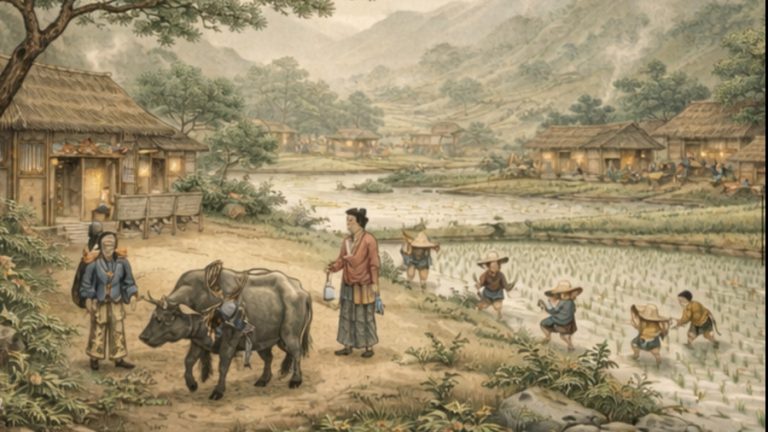
There is a story about two brothers living in poverty. One day they discovered that the jar of rice in their home held barely enough for a single day.
The older brother’s face fell. “We have nothing left for tomorrow,” he said. “We toil all day and can’t even eat our fill. When will this misery ever end? Heaven has been cruel to us.”
The younger brother saw the same jar. “We still have rice,” he said. “Heaven hasn’t forgotten us. I’m grateful. At least today, we will eat.”
Success
You are now signed up for our newsletter
Success
Check your email to complete sign up
The two brothers eventually went their separate ways. The younger brother’s circumstances changed quickly. The older brother remained in poverty.
The older brother’s attention never left his sense of lack. He lived in the feeling of “not enough,” and that feeling, unchallenged, became his interior weather: worry, anxiety, fear, complaint. The younger brother’s attention rested on what he possessed. His interior weather was abundance, warmth, and love. Each brother’s inner world shaped the outer one.
What you see in a half-full glass determines what you get from life
Consider the familiar image of a glass half filled with milk. A person without gratitude sees what is missing. A person with it sees what remains.
When your mind focuses on what you already have, it generates feelings of fullness and love. Those feelings, in turn, attract and create more of the same. When your mind rests on what you lack, it generates scarcity, and scarcity reproduces itself.
There is a scene in The Godfather that illustrates this well. A young Vito Corleone returns home one evening with nothing but a single apple. His wife holds it up and marvels at it. She saw the good in what was there.
Gratitude directs your attention, and attention determines what grows
When you place your attention on what you already possess, you release feelings of love and appreciation, and those feelings create more.
No one is truly without anything. The moment you shift your focus from “what I lack” to “what I have,” your emotional state changes. Gratitude surfaces naturally.
Say two colleagues receive year-end bonuses. One receives 1,000 yuan, the other 1,500. The person without gratitude thinks: I got 500 less than my colleague. The person with it thinks: My employer gave me 1,000 yuan. He could have given me nothing. I’m genuinely thankful.
The grateful person never gets caught up in the gap. Her attention stays on what she received, and her emotional state stays in the register of abundance. Whatever you are grateful for, you are feeding. Whatever you ignore or resent, you starve.
Genuine gratitude is felt in the body, not repeated as words
Many people have practiced gratitude exercises for years and seen no results. The reason is almost always the same: they are going through the motions. They repeat the words, but they don’t feel them. Genuine gratitude is felt in the body. If you are truly grateful, it can move you to tears. Your heart fills. Something shifts.
If you practice gratitude with that depth, you begin to notice something: the world around you seems to orient toward you rather than against you. Even difficult events, even things that happen to others, carry something for you, a lesson, an opening, an unexpected gift. Without gratitude, you see only what is wrong, and “wrong” is all you get back.
Once the shift happens, the things worth being grateful for reveal themselves everywhere. Peace in your country. A functioning economy. Years of life still ahead of you. A complete family. The air the earth provides without asking anything in return. Sunlight that arrives every morning without fail. Each of these is real. Each of them, felt rather than merely noted, generates love. And love, directed outward, creates.
Survivors of disaster understand what ordinary life is actually worth
You may feel that nothing in your life is worth particular gratitude, that what you have is simply what you deserve, nothing remarkable. Ask someone who has survived a disaster, a flood, a fire, a serious illness. Without exception, survivors emerge with a completely different relationship to ordinary life. In the middle of catastrophe, they would have given anything to return to the very existence they previously took for granted. Surviving changes them. They understand, in their bones, that life itself is not ordinary.
Most of us live inside that miracle without knowing it. We do not feel the fortune of a healthy body until we imagine losing a limb. Many people with disabilities say they would give everything they own for the health that able-bodied people treat as unremarkable.