By Li Qingcheng, Vision Times
One unexpected topic that emerged during the high-profile visit of U.S. President Donald Trump to China and his summit in Beijing with Chinese leader Xi Jinping was the historical influence of Confucian philosophy on the founding values of the United States itself.
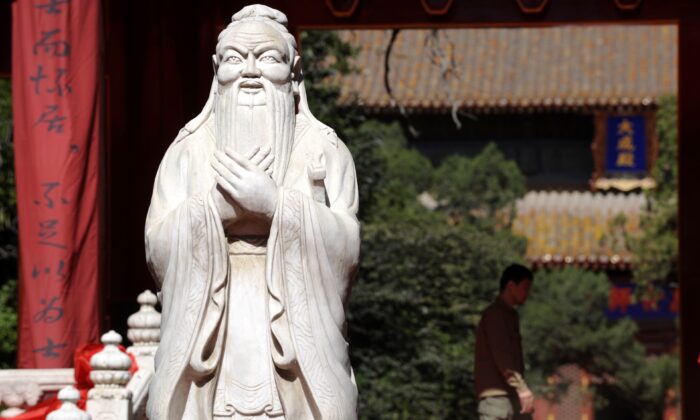
During the May 14 state banquet in Beijing, Trump referenced Confucius, an official and teacher in ancient times whose ideas and sayings influenced China and other Asian countries for thousands of years.
“From the beginning, our citizens have shared a deep sense of mutual respect,” Trump said during the event. “Founding Father Benjamin Franklin published the sayings of Confucius in his colonial newspaper, and today, a sculpture recognizing that ancient Chinese sage is carved into the face of the United States Supreme Court very proudly.”
RELATED: Trump’s Warning Against ‘Taiwan Independence’ Seen as Tactical Play in Talks With Beijing: Analysts
Enlightenment encounters with Chinese philosophy
Success
You are now signed up for our newsletter
Success
Check your email to complete sign up
Historians have long documented Franklin’s fascination with philosophy, ethics, and systems of governance outside Europe. In the early 18th century, Franklin worked as a printer and publisher in colonial Pennsylvania. During that period, he encountered translated works on Confucian teachings that had circulated through Europe after Jesuit scholars introduced Chinese classics to Western audiences.
One text frequently cited by researchers is the 1691 English translation The Morals of Confucius, which helped expose Enlightenment thinkers to Confucian ethical philosophy.
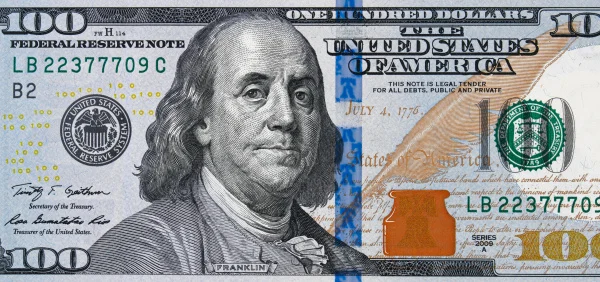
Franklin later published essays promoting virtues such as self-discipline, humility, honesty, moderation, and moral self-cultivation, values many scholars say parallel the core Confucian concepts centered on personal virtue and ethical leadership. His famous “13 Virtues” system, introduced in 1733, emphasized principles including sincerity, restraint, order, and benevolence.
Influence on US political values
Confucian ideas appealed to some early American thinkers because they offered an alternative to the rigid European aristocratic tradition. Though emphasizing the need for sons to respect their fathers and subjects to serve the sovereign, Confucian political philosophy stressed the importance of merit and virtue.
For instance, Confucius in speaking with his disciple Zeng Shen noted that if a noble — including even the king — did not have anyone around him who would dare to point out his errors, he would lose his position.
Likewise, “if a father has a son who will complain to him [of his errors], he will not fall into unrighteousness,” Confucius said in remarks recorded in the Classic of Filial Piety.
Some historians have argued that several American founders, including Thomas Jefferson, John Adams, and George Washington, were exposed to discussions of Chinese governance and Confucian ethics during the Enlightenment era, when traditional Chinese texts circulated widely among European and American intellectuals.
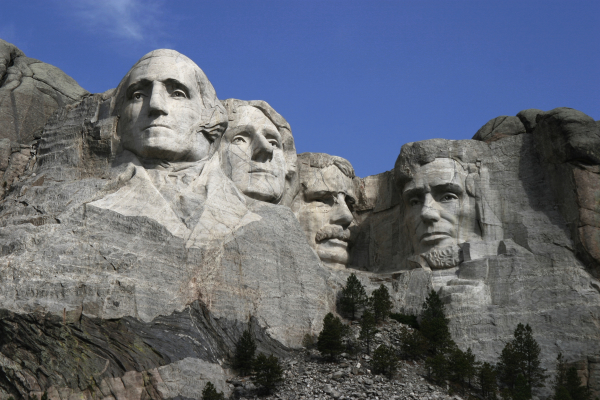
While the U.S. Constitution was primarily shaped by European Enlightenment thought, British common law, and theories of separation of powers, scholars have argued that admiration for aspects of China’s merit-based civil service system also circulated among intellectual elites at the time.
Confucius at the US Supreme Court
One of the most visible symbols cited in the discussion is the image of Confucius displayed at the Supreme Court Building in Washington, D.C. Above the east entrance to the building are depictions of three historical figures associated with legal and philosophical traditions: Moses, Confucius, and Solon of Athens.
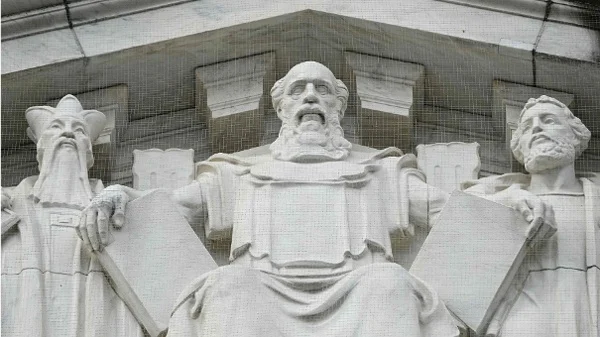
Confucius is intended to represent Chinese ethical philosophy and Eastern legal thought, while Moses symbolizes the Judeo-Christian legal tradition and Solon represents the foundations of Western democratic law.
The inclusion of Confucius does not mean American law was directly based on Confucianism. However, it reflects the recognition that non-Western philosophical traditions also contributed to global discussions surrounding morality, governance, and justice.
A modern political symbol
Trump’s remarks also carried modern political symbolism. At a time when U.S.-China tensions remain high over trade, Taiwan, technology, and military competition, references to Confucius and shared intellectual heritage offered a softer cultural dimension to an otherwise tense geopolitical relationship.
The visit also featured several Chinese cultural elements among members of the American delegation, drawing attention online. Social media users noted that members of Trump’s entourage incorporated traditional Chinese-inspired clothing and language references during portions of the trip.
Ultimately, the renewed attention surrounding Confucianism’s historical influence reflects a broader reality: Even amid intensifying strategic rivalry, the intellectual and cultural connections between China and the United States remain deeply intertwined.