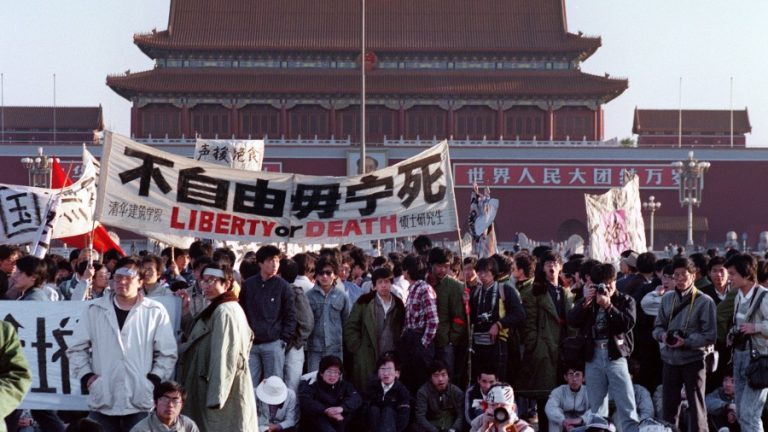
For three decades, one small, heavily policed act of remembrance had been permitted. Bereaved parents and relatives who lost family members in the 1989 Tiananmen Square massacre were allowed, each June 4, to visit a Beijing cemetery and read aloud statements commemorating their dead. This year, even that was stopped, Radio Free Asia (RFA) reported.
The ban, the first in the group’s history, has been met with a formal legal protest from the families. It is part of a broader security crackdown across Beijing and several provinces as the 37th anniversary of the massacre approaches.
Bereaved families formally barred, surveillance began five weeks out
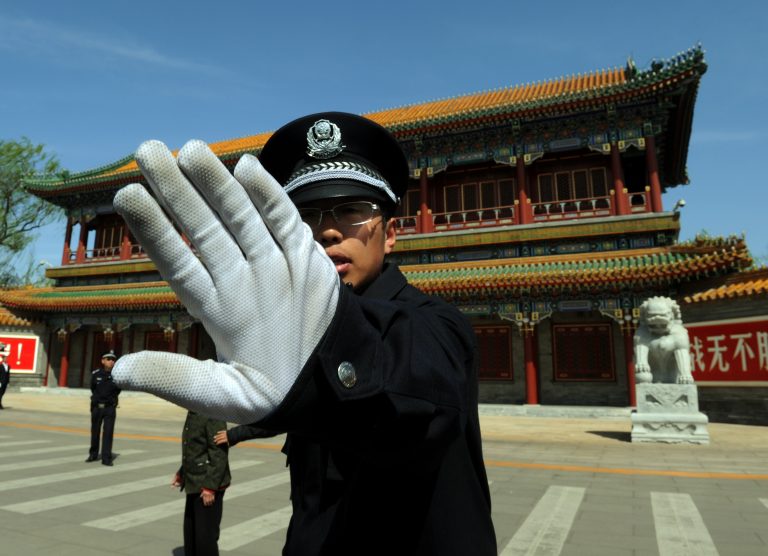
Members of the Tiananmen Mothers, a group of bereaved parents and relatives who have documented the victims of the 1989 massacre and pressed the CCP for accountability ever since, received official notification from the Beijing Municipal Public Security Bureau that they would not be permitted to visit Wanan Cemetery on June 4, and could not hold their customary memorial ceremony there.
On June 1, the families issued a written protest declaring that the restrictions violate China’s own constitution, existing law, and basic human decency, and demanding the ban be lifted.
Zhang Xianling, a Tiananmen Mothers member whose son was killed in 1989, told RFA on June 2: “They won’t let us go to Wanan Cemetery now, nor will they let us read sacrificial texts or eulogies. These actions, which used to be routine, are no longer permitted. Now we aren’t even allowed to go there, which is something that has never happened before.”
Success
You are now signed up for our newsletter
Success
Check your email to complete sign up
For decades, the group had traveled to Wanan Cemetery each June 4, escorted by police, to read statements commemorating their children and spouses. The ritual was constrained, supervised, and stripped of any political platform, but it was permitted. This year, even that was taken away.
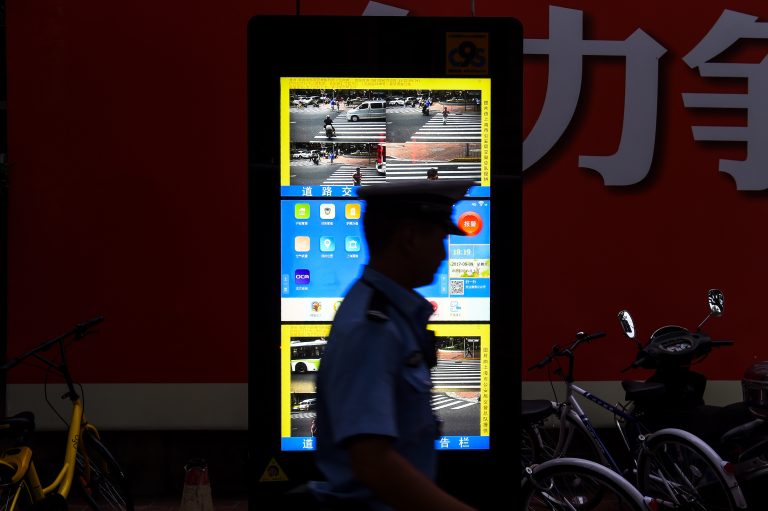
The security apparatus moved early. Zhang said monitoring of her neighborhood began on May 28, more than a week before the anniversary: “There are two security guards at the community entrance, two police officers downstairs, and two cars — one police car and one civilian police car. The precautions are so strict, not to mention phone calls from foreign journalists.”
Authorities in Guizhou Province round up rights activists ahead of anniversary
According to RFA, in Guizhou, a southwestern province, more than ten members of the Guizhou Human Rights Forum, a dissident group that has operated under near-constant surveillance for three decades, have been detained or restricted in the days before the anniversary. Every year around June 4, authorities designate members of the group as “key persons,” assigning minders who shadow them almost continuously.
A forum member identified only as He told Radio Free Asia that the sweep began last week: “Liao Shuangyuan, Shen Youlian, Zeng Ning, and Huang Yanming, some have been taken to the suburbs on forced trips, others are under surveillance at home. Chen Xi, who was recently released from prison, and Yang Shaocheng, a university professor, are being closely watched. Chen Xi in particular is followed by police wherever he goes.”
Tiananmen Mothers publish annual accountability statement through New York partner
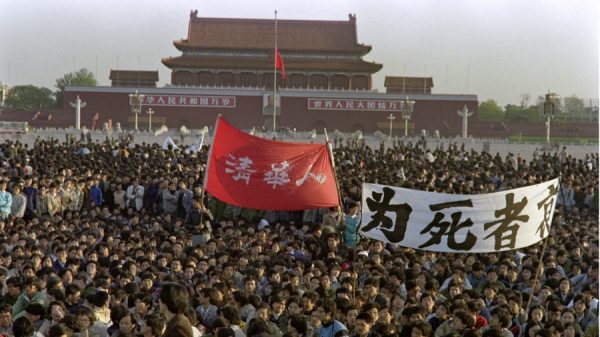
On May 27, the Tiananmen Mothers authorized China Human Rights (人权在中国), a New York-based advocacy organization, to publish their annual memorial statement on the platform X. The statement marks the 37th anniversary of the June 4 massacre, the bloody military crackdown ordered by a small group of senior CCP leaders against students and citizens engaged in peaceful protest in Tiananmen Square.
The statement describes the massacre as an act of state violence that violated China’s own constitution, trampled on basic human rights, and destroyed countless families. Thirty-seven years later, the families write, no resolution is in sight: the authorities continue to avoid accountability, refuse to engage with victims’ families, and suppress all public discussion of the events.
The Tiananmen Mothers reiterated three demands they have made every year since 1990: full public disclosure of the truth; fair compensation for victims and their families; and legal accountability for those who ordered and carried out the killing.
What happened on the night of June 3–4, 1989
In the early hours of June 4, 1989, the CCP deployed nearly 300,000 troops under martial law and sent tanks, armored personnel carriers, and soldiers armed with assault rifles into central Beijing to crush a weeks-long pro-democracy protest centered on Tiananmen Square. Troops fired on civilians in the streets surrounding the square.
In the immediate aftermath, CCP officials claimed no one had died. Under intense domestic and international pressure, they later acknowledged approximately 300 deaths. The figure has never been credible.
Declassified documents from the United States and British governments point to a far higher toll. A British diplomatic cable from the night of the massacre put the death count at approximately 10,000 civilians. American government estimates have varied but consistently pointed to figures well above the official Chinese count. The CCP has never released its own figures, conducted an independent investigation, compensated victims’ families, or acknowledged any wrongdoing. Within China, the subject remains among the most heavily censored topics the Party polices.