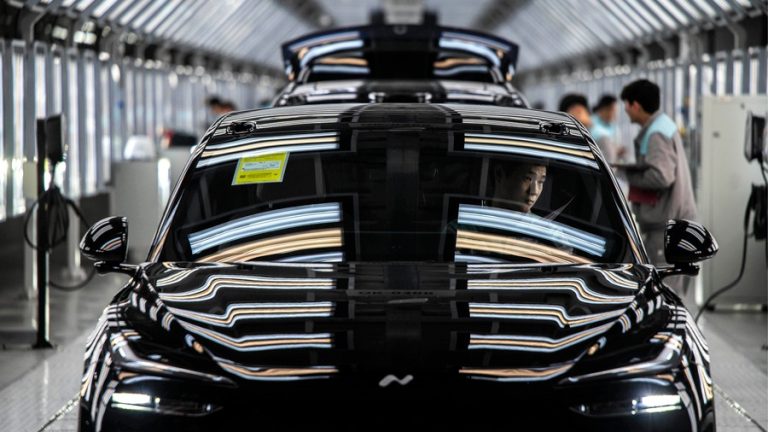
On April 28, 2026, more than 70 U.S. Democratic and Republican members of Congress jointly sent a letter to President Trump, urging him to make “banning Chinese automakers from producing vehicles in U.S. factories” a “firm and non-negotiable priority.”
The letter, led by Representative Debbie Dingell, warned that any move to allow Chinese automobiles into the U.S. market—including permitting vehicles manufactured in China to be assembled in Canada or Mexico and then exported to the United States—would pose a “serious threat” to U.S. manufacturing, labor, and national security, and that this threat could be “permanent and irreversible.”
This bipartisan action highlights the growing strategic concern in the United States over China’s rapid expansion in the electric vehicle (EV) sector. Even during Trump’s second term, concerns about Chinese EVs and their supply chains have continued to intensify. Mainstream media outlets and advocacy organizations have widely reported on the issue, reflecting an emerging consensus in U.S. politics about the “China EV threat.”
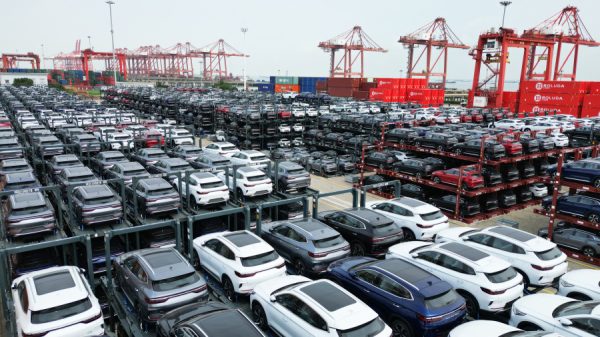
According to a Wall Street Journal report on April 28, 73 members of Congress explicitly urged the Trump administration to maintain strict restrictions on Chinese automakers, including not only import bans but also blocking so-called “backdoor” vehicles produced in other countries for the U.S. market. The lawmakers emphasized that Chinese automakers are supported by the Chinese Communist Party (CCP), and allowing them to establish factories in the United States would grant them an “insurmountable economic advantage.”
Bipartisan support
Reuters also reported the same day that earlier in April, Senators Tammy Baldwin and Elissa Slotkin, along with Senate Majority Leader Chuck Schumer, had jointly written to Trump expressing a similar position. They argued that allowing Chinese automakers to build factories in the United States or North America would deal a devastating blow to the American auto industry.
Success
You are now signed up for our newsletter
Success
Check your email to complete sign up
Conservative groups and Republican lawmakers have taken an equally hardline stance. Republican Senator Bernie Moreno of Ohio plans to introduce legislation further expanding restrictions on Chinese automobiles, covering hardware, software, and affiliated partnerships. In a statement he said that “Chinese vehicles can never be allowed into the U.S. market—the fate of the American auto industry and countless autoworkers depends on it.”
These actions build on remarks Trump made in January during a speech at the Detroit Economic Club. At the time, he said that if Chinese automakers wanted to build factories in the United States and hire American workers, he would “welcome it.” This position triggered strong pushback from the United Auto Workers (UAW) and several members of Congress.
Trump’s policy approach in his second term shows a clear tension in his China auto strategy. On one hand, he continues to support tariffs—maintaining a 100 percent tariff on Chinese imported EVs—and has strengthened regulations banning Chinese-made software and hardware in connected vehicles, citing national security risks, including concerns that Chinese vehicles could collect sensitive data or be remotely controlled. Fox News has described these vehicles as “computers on wheels” posing serious espionage risks.
On the other hand, Trump’s “America First” manufacturing revival agenda makes him open to foreign companies building factories in the United States if they create American jobs. As he stated at the Detroit Economic Club, “If they want to come in and build a plant and hire you and hire your friends and your neighbors, that’s great. I love that.”