A 21-year-old woman who returned to Hong Kong from Australia has been charged by authorities over allegations that she possessed laser devices and spray paint in 2019. She has been charged with possession of an offensive weapon in a public place and possession of articles with intent to destroy or damage property.
The case was mentioned again on June 2 at the Eastern Magistrates’ Courts. The defendant pleaded not guilty, and the trial has been scheduled to begin on June 29. She was allowed to remain on bail under her existing conditions, according to the South China Morning Post.

Woman charged six years later with two offenses
According to court-reporting outlet The Witness (法庭线), the defendant, Chan Yuk-ching (21), a casino employee, faces two charges: Possession of an offensive weapon in a public place and possession of articles with intent to destroy or damage property.
The charges allege that on Sept. 8, 2019, in a public area of Oil Street between 218 Electric Road and 147 King’s Road in the Fortress Hill area of Hong Kong, Chan possessed, without lawful authority or reasonable excuse, two devices capable of emitting laser beams; and had in her possession or under her control three cans of spray paint, allegedly intending, without lawful excuse, to use them—or permit others to use them—to destroy or damage property belonging to another person.
The defendant formally entered her plea on Tuesday (June 2), pleading not guilty to both charges.
Success
You are now signed up for our newsletter
Success
Check your email to complete sign up
The prosecution stated that it intends to call seven witnesses. Prosecutors also confirmed that the case does not rely on any interview records, written statements, or oral confessions. Instead, the prosecution’s case is based solely on allegations that police officers stopped the defendant and found the items in question during a search of her person.
The defense stated that it only needs to call three police officers for cross-examination, with the main dispute focusing on the defendant’s alleged intent in possessing the items.
The defense also raised concerns about the chain of custody of the laser devices, questioning the handling procedures from the moment they were seized to their transfer for forensic examination. It will challenge the continuity and integrity of the evidence.
Chief Magistrate Johnny Chan Chi-wei adjourned the case until June 29 for trial, with a one-day hearing scheduled. The defendant was granted bail under existing conditions in the meantime.
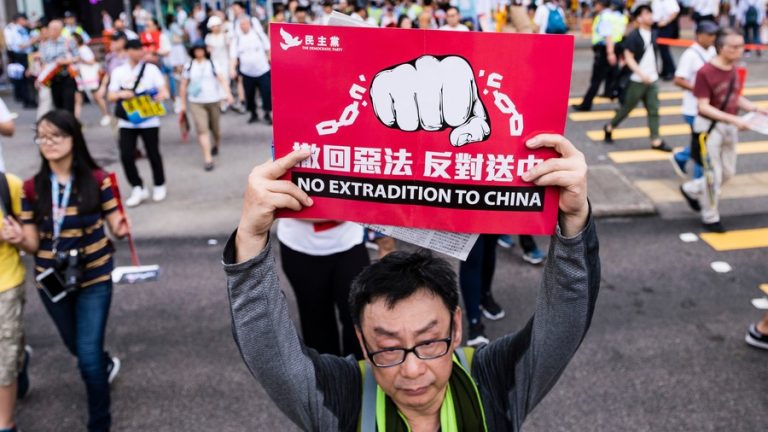
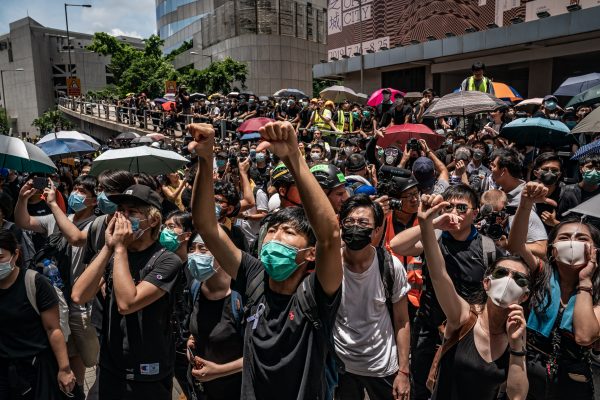
According to the report, Hong Kong’s “anti-extradition” movement and the subsequent implementation of the Hong Kong National Security Law triggered large-scale judicial prosecutions and political crackdowns by the Hong Kong government.
From street protests during the movement to the activities of pro-democracy figures after 2020, the authorities have carried out what critics describe as retrospective prosecutions using various charges.
The report concludes by introducing a list of several high-profile “retrospective justice” and National Security Law-related cases as examples.
‘47 district councillors case’ (Democratic primaries case)
Forty-seven pro-democracy politicians and scholars were charged for organizing or participating in the July 2020 Legislative Council “pro-democracy primary elections,” the Hong Kong Free Press reported. Authorities alleged that the participants sought to gain a majority in the legislature in order to indiscriminately veto budget proposals and paralyze government operations, thereby committing “conspiracy to subvert state power.”
In 2024, the verdict was delivered. The BBC reported that 45 of the defendants were convicted and sentenced to imprisonment ranging from 4 years and 2 months to 10 years. Among them, Benny Tai was sentenced to 10 years in prison, Joshua Wong received 4 years and 8 months, and Tiffany Yuen was sentenced to 7 years and 9 months.
Legislative Council storming case (July 1 incident)
According to Voice of America, during the July 1, 2019 protests of the “anti-extradition movement,” some demonstrators entered and occupied the Hong Kong Legislative Council complex for about three hours, during which they spray-painted slogans and damaged facilities.
Several individuals were later charged with rioting. Actor Tony Wu Tsz-tung was convicted of rioting and sentenced to 6 years and 2 months in prison. Civic Group spokesperson Ventus Lau and activist Tiffany Yuen received prison sentences ranging from about 4.5 to over 5 years in separate related cases.
Hong Kong Alliance case (Support for patriotic democratic movements of China)
Members of the now-disbanded Hong Kong Alliance in Support of Patriotic Democratic Movements of China were prosecuted after organizing or participating in events commemorating the June 4 Tiananmen Square crackdown, and for allegedly refusing to submit organizational information requested by national security authorities, the Hong Kong Free Press reported.
Former chairmen and vice-chairmen of the alliance, Lee Cheuk-yan, Albert Ho, and Chow Hang-tung were charged with “inciting subversion of state power” and remain in custody or under trial.
Chow Hang-tung and others were initially convicted for refusing to submit information, but in 2025 the conviction was overturned on appeal by Hong Kong’s Court of Final Appeal.
Media and free speech-related cases
Several media outlets and political figures seen as pro-democracy have been prosecuted for alleged violations of the National Security Law or sedition-related offenses.
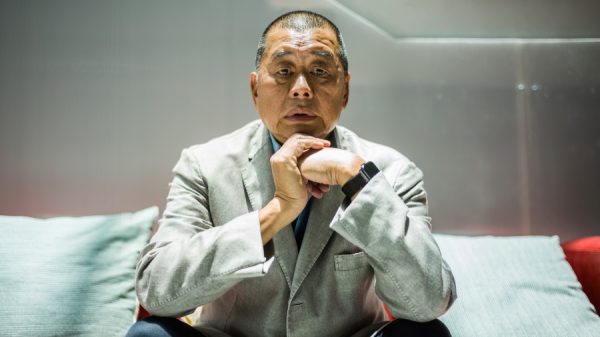
Apple Daily founder Jimmy Lai was charged with “conspiracy to publish seditious materials” and two counts of “conspiracy to collude with foreign forces,” according to the BBC. On Feb. 9, 2026, he was sentenced by the Hong Kong High Court to 20 years in prison. The case has been widely viewed by international media as a key test of Hong Kong’s judicial independence.